Following the Trade Treasury Payments Awards, we continue our review of this year’s winners across trade, treasury, and payments.
In this instalment, the focus turns to digital trade platforms, financial inclusion initiatives, sustainable trade finance programmes, and the institutions working to strengthen market infrastructure across both established and frontier economies.
Best Trade Finance Software Provider
Highly Commended: CGI
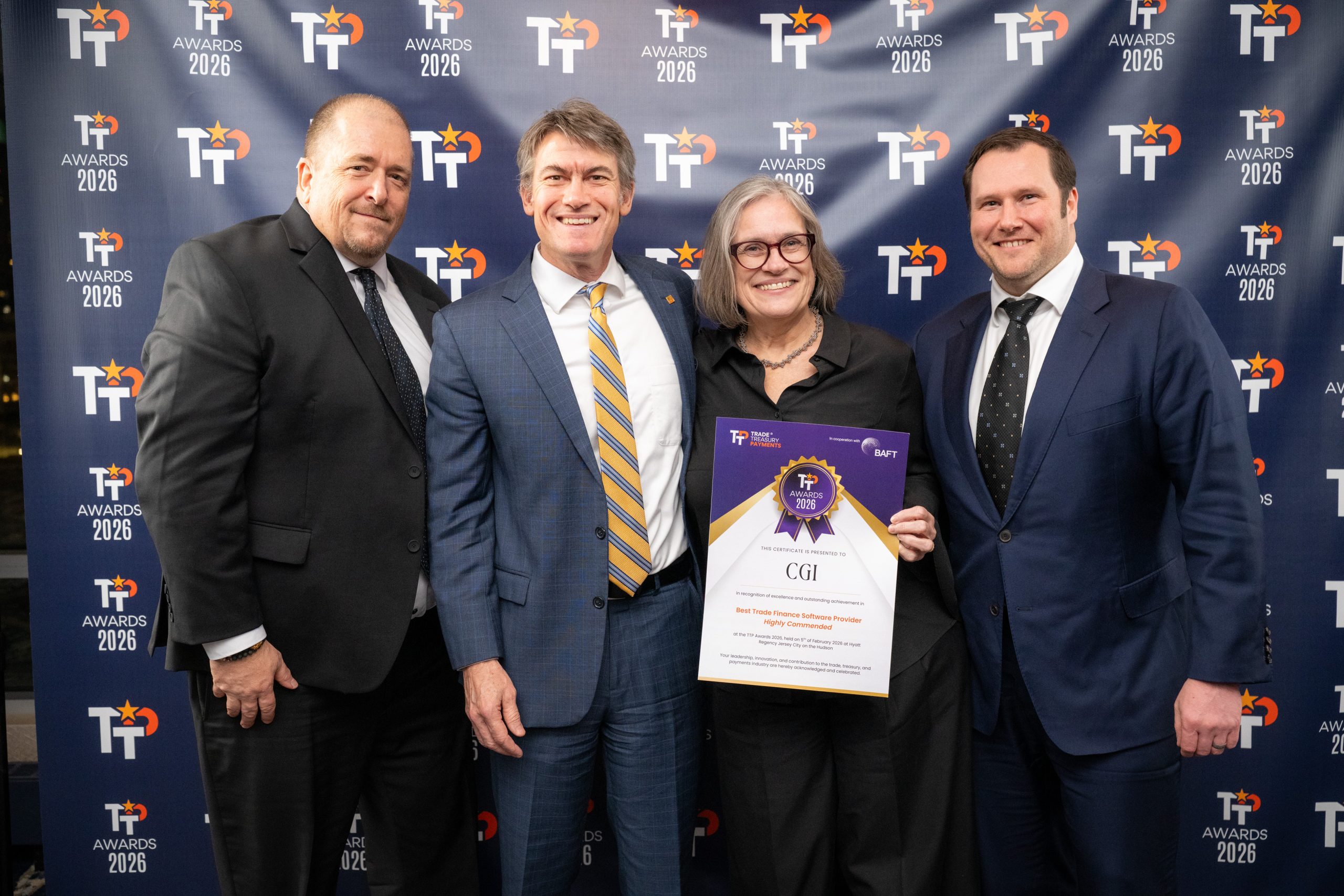
CGI was highly commended in the Best Trade Finance Software Provider category for steadily modernising the technology that sits behind many banks’ day-to-day trade operations.
At the centre of its work is the Trade360 platform, which acts as the core processing engine for letters of credit, guarantees, receivables finance, and supply chain programmes. Over the past year, CGI focused less on adding features for their own sake and more on making the platform easier to connect, automate, and scale. Expanded APIs and embedded integrations now link banks directly with networks and providers such as Komgo, as well as document specialists, compliance tools, and data services. For users, this connectivity means that they are more often able to complete tasks without jumping between systems. For banks still running paper-heavy or fragmented set-ups, it means faster turnaround times and fewer internal hand-offs.
The platform continues to operate at a meaningful scale, supporting institutions across more than 90 countries and processing millions of transactions each year. Recent rollouts and renewals with global and regional banks are a sign of its role as core infrastructure for trade finance providers.
By making trade systems more interoperable and easier to work with, CGI has helped banks move complex trade finance processes closer to the digital, connected model the industry has long been aiming for.
Winner: Komgo
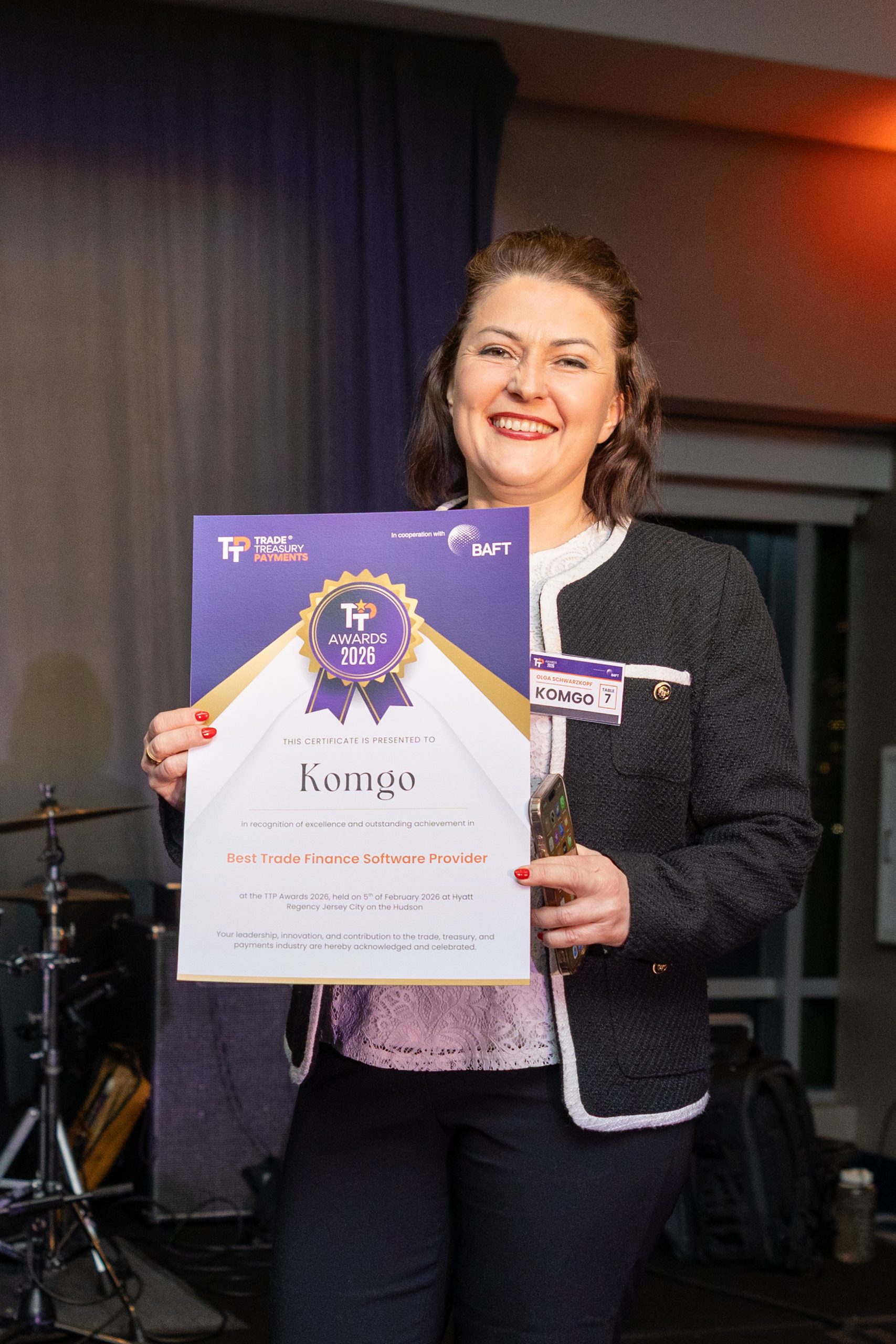
Komgo was recognised as the winner of this year’s Best Trade Finance Software Provider award for taking on the joint trade finance problems of too many portals, too many emails, and too much manual chasing between corporates and banks
Rather than adding yet another tool into the mix, Komgo focused on creating a single digital platform, named GTK, which brings guarantees, letters of credit, and other instruments into one structured environment that can replace scattered spreadsheets and inboxes.
For corporates, that shift has been tangible. Industrial groups such as ANDRITZ are rolling GTK out to hundreds of users across dozens of countries to manage multi-bank relationships in one place, while TK Elevator has automated around 70% of its guarantee portfolio and cut average issuance times by half.
Alongside GTK, Komgo’s Konsole acts as a secure communication layer between corporates and their financing partners. This means that instead of sending documents back and forth over email, stakeholders can now send them through authenticated and traceable channels that connect directly into bank back-office systems.
Integrations with Deutsche Bank and Santander Mexico, alongside technology partnerships with CGI and FIS, have helped ensure that connectivity is embedded into everyday processes.
Digital Trade Transformation Award
Winner: MonetaGo

MonetaGo has been selected for the Digital Trade Transformation Award for its work in combating duplicate financing and document fraud, both of which are issues that have long held back full digital adoption in trade finance.
The company’s Secure Financing system, which was developed in collaboration with SWIFT, provides a shared, standards-based way for lenders to check whether an invoice or trade document has already been financed elsewhere, without exposing sensitive underlying data. Instead of exchanging documents, the system creates encrypted fingerprints that can be compared across institutions in near real time.
With this system in place, rather than discovering issues after losses occur, banks can identify potential duplicate financing at the point of decision, which gives them greater confidence to extend working capital, particularly to SMEs, which are often deemed as higher risk.
More than 40 institutions now participate in a shared trade finance registry built on MonetaGo’s technology in Singapore, while similar infrastructure is being rolled out in India and Bahrain.
By creating a common digital infrastructure that builds trust between participants, MonetaGo has helped remove one of the key barriers to electronic trade documents and end-to-end digital processes.
Sustainable Trade Finance Initiative of the Year
Winner: EBRD Trade Facilitation Programme
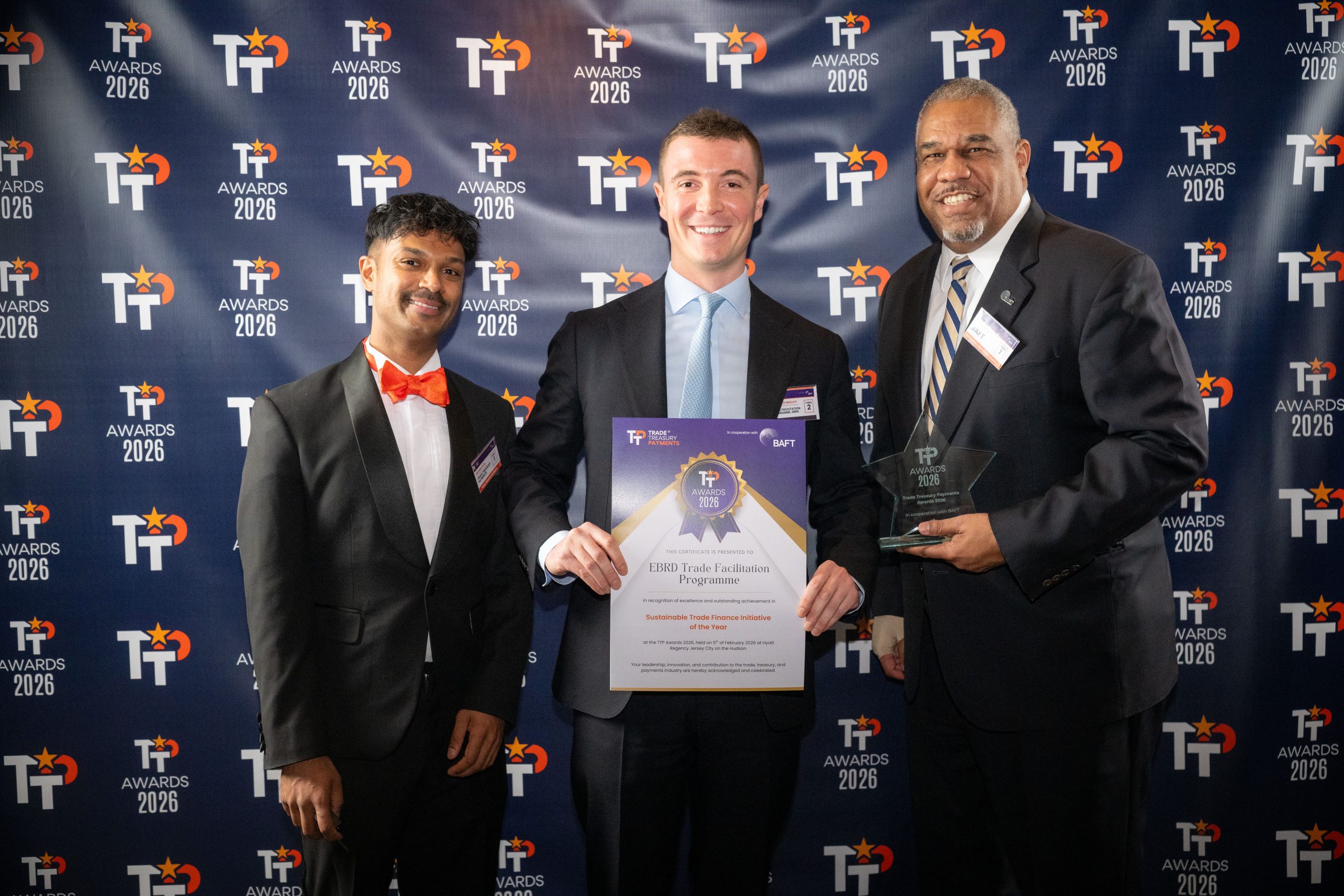
The European Bank for Reconstruction and Development’s (EBRD) Trade Facilitation Programme (TFP) has won the Sustainable Trade Finance Initiative of the Year for its work promoting Green TFP.
Across many of the EBRD’s markets, banks and their clients face higher funding costs and fewer policy incentives than their peers in more developed economies, which can make sustainable imports harder to justify commercially. Rather than rely only on longer tenors or one-off structures, the TFP introduced a dedicated pricing discount for eligible green trade transactions.
The mechanism reduces the cost of trade finance for certified green goods and technologies, giving partner banks a direct reason to prioritise these deals and making it easier for corporates and SMEs to choose cleaner equipment or materials. In effect, sustainability becomes part of the economics of the transaction.
Since the pilot launched, 54 green transactions have benefited from discounted pricing, representing more than €430 million in turnover in 2024 alone. In the initial seven pilot markets, green volumes rose sharply, including year-on-year increases of more than 50 per cent in Armenia, 60 per cent in Uzbekistan, and over 130 per cent in Egypt.
SME Inclusion Initiative of the Year
Highly Commended: MonetaGo
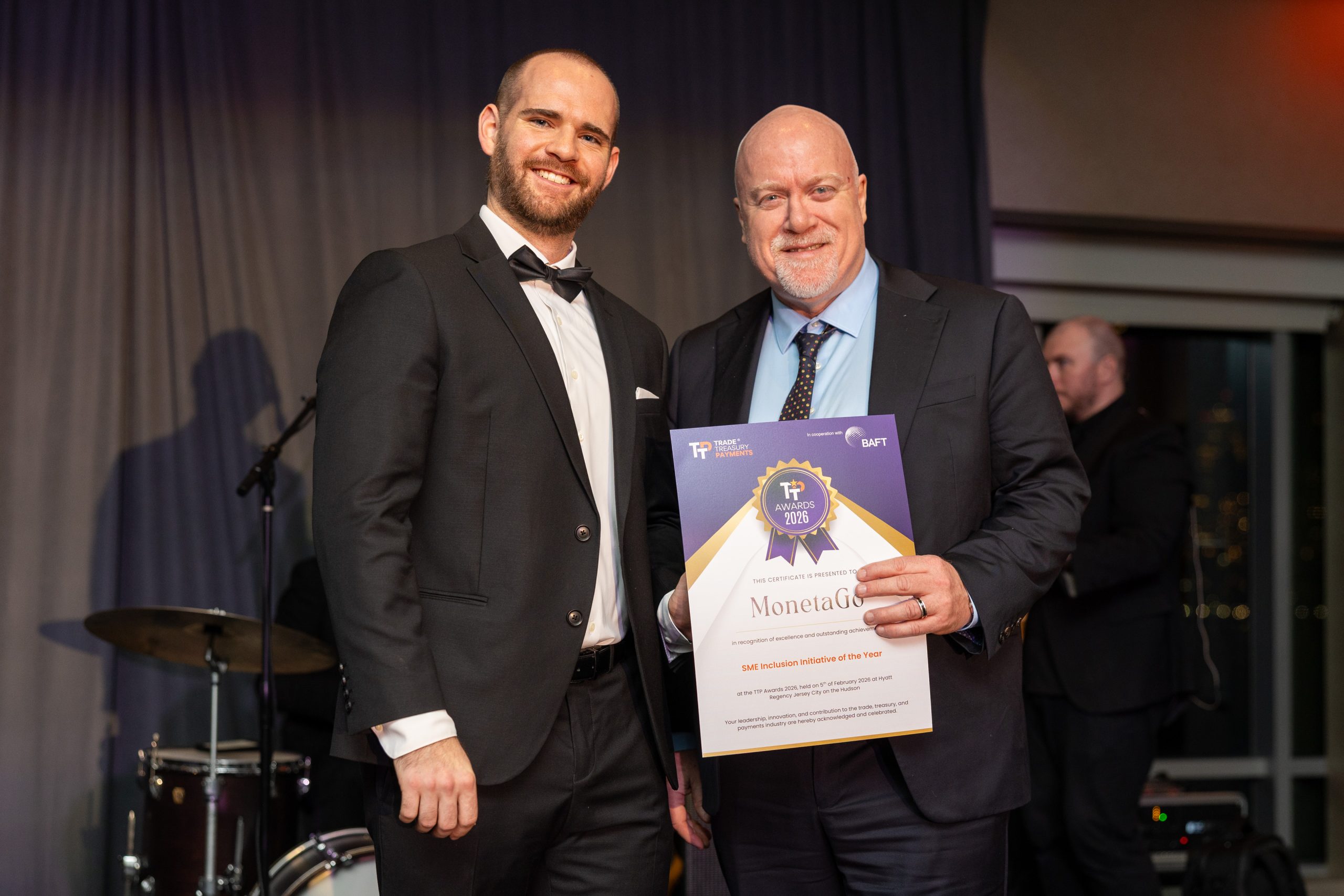
MonetaGo was highly commended in the SME Inclusion Initiative of the Year category for helping unlock lending to smaller businesses by addressing fraud risk for banks.
In India, its Secure Financing infrastructure supports large-scale MSME finance platforms backed by the Reserve Bank of India and SIDBI. When an SME brings an invoice to a lender, the lender can check whether that same invoice has already been used to acquire financing from another lender. Importantly, its technology does this without sharing the underlying document or sensitive client data.
Since the start of 2023, the number of MSMEs receiving financing through platforms secured by MonetaGo’s technology has risen by 216%, alongside a 41% increase in the number of financiers participating.
MonetaGo is now extending the same approach into Bahrain, where SMEs make up most businesses and confidence in trade finance is still heavily shaped by how well fraud is controlled.
Winner: HedgeFlows
HedgeFlows has won the award for SME Inclusion Initiative of the Year for its work addressing the fact that most mid-sized companies simply do not have the time, tools, or specialist knowledge to run a proper treasury function.
While large corporates deploy full treasury management systems and dedicated teams, many businesses in the £5 million to £200 million revenue range still rely on spreadsheets and manual bank processes.
HedgeFlows has designed a platform specifically for that segment. Its cloud-based platform integrates directly with accounting systems such as Xero, QuickBooks, NetSuite, and Microsoft Dynamics, which allows finance generalists to manage their treasury functions in one place without heavy IT projects or specialist support. Implementation typically takes days (rather than the months required for other larger tools), and the entry price point removes the cost barrier that has historically kept treasury tools out of reach.
The company’s clients have reported cutting the time spent on payment runs and reconciliations by around 80%, freeing up hours each month for planning and analysis. More importantly, companies that previously avoided hedging have been able to adopt structured, policy-driven FX strategies, helping protect margins and giving management greater certainty when expanding into new markets.
HedgeFlows’ suite of offerings has helped make treasury management a normal part of running a mid-market business, and, in the process, widened access to the kind of financial resilience that smaller firms often need most.
Best Multilateral Development Bank
Winner: EBRD Trade Facilitation Programme
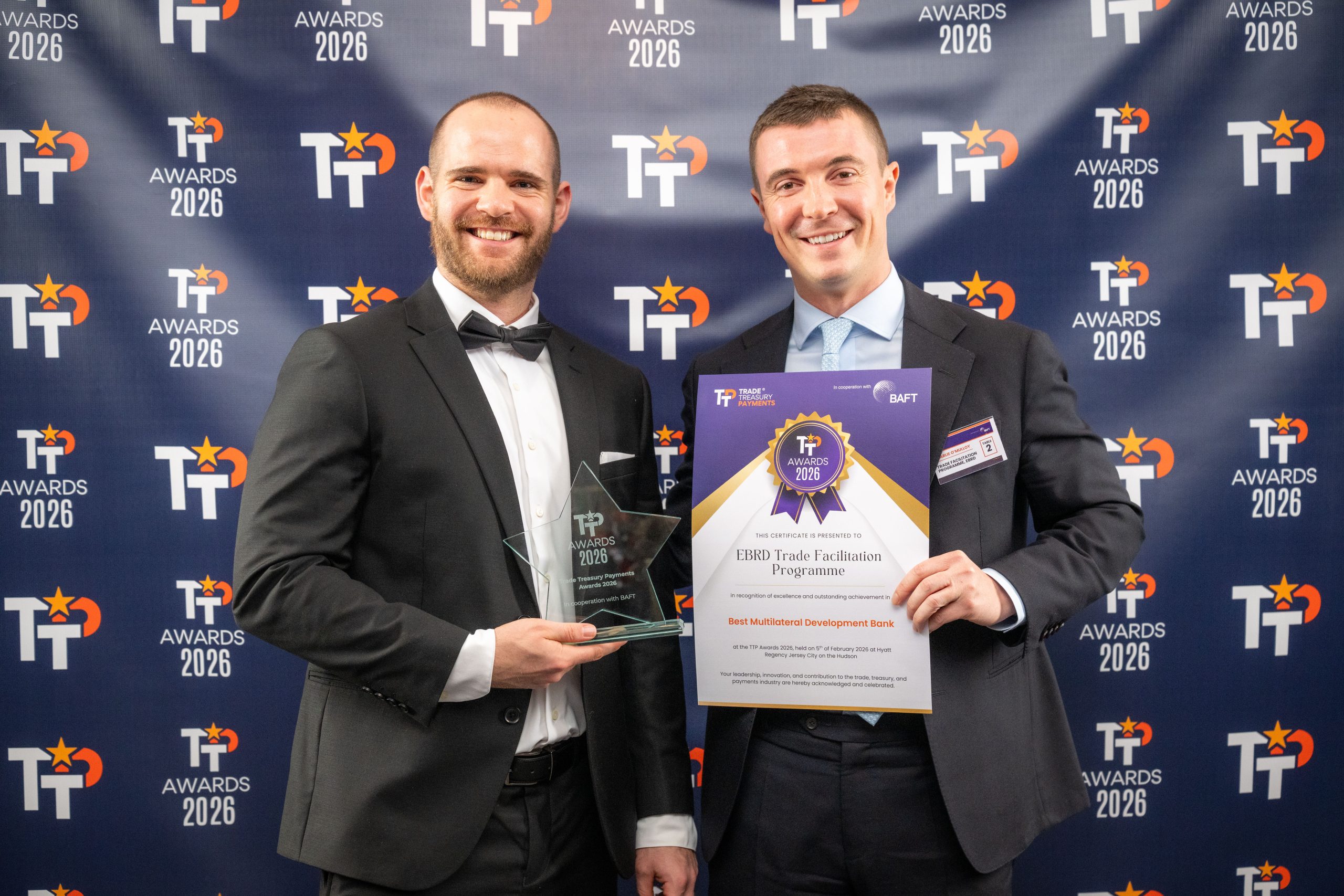
The EBRD’s Trade Facilitation Programme (TFP) was awarded the title of Best Multilateral Development Bank for the role it plays in facilitating trade in markets with private risk appetite.
Today, the TFP works with more than 125 issuing banks across 26 countries and over 800 confirming banks worldwide, supporting annual limits above €3 billion. In 2024, the programme delivered €4.6 billion in trade finance across more than 1,800 transactions in its countries of operation.
The impact was perhaps most notable in Ukraine, where €472 million of support was used to help maintain imports of critical goods such as food, healthcare supplies, and energy equipment as the country contended with wartime conditions.
By offering trade finance in local currencies (including in Georgia, Armenia, and Mongolia), the programme has helped to reduce foreign exchange risk for SMEs that would otherwise struggle to hedge, thereby making trade more affordable for them.
Beyond financing, the programme invests heavily in market capacity through activities like training, advisory work, and partnerships with industry bodies. Collectively, these have reached thousands of bankers and helped strengthen risk management and rebuild correspondent relationships across their operating markets.
Through these efforts, the EBRD TFP has helped make trade finance available where it is needed most, often at moments when it would otherwise disappear.
Frontier Market Inclusion Award
Winner: Crown Agents Bank

Crown Agents Bank was recognised with the Frontier Market Inclusion Award for supporting critical food imports into Burkina Faso at a time of acute shortage and rising food insecurity.
Over the course of a year, the bank completed seven trade finance transactions totalling more than €47 million to facilitate the import of rice into the country. It provided liquidity through letter of credit discounting, forfaiting, and trade refinancing loans, working alongside local commercial banks and exporters whose access to risk capacity had become constrained.
By extending credit lines to local banks, Crown Agents Bank strengthened its ability to finance importers. At the same time, it engaged directly with exporters in markets where correspondent banks had limited appetite for Burkina Faso exposure, helping ensure shipments could continue despite heightened perceived risk.
A distinctive feature of the programme was the option for repayment in local currency. As a major provider of emerging market foreign exchange, the bank was able to manage hard currency flows externally while accepting settlement domestically. This reduced pressure on Burkina Faso’s foreign currency reserves and gave importers greater flexibility in managing their obligations.
In frontier economies, inclusion often means staying present when others step back. In this case, that presence meant food on the table for families in need.
Best Supply Chain Finance Bank
Winner: Bank of America
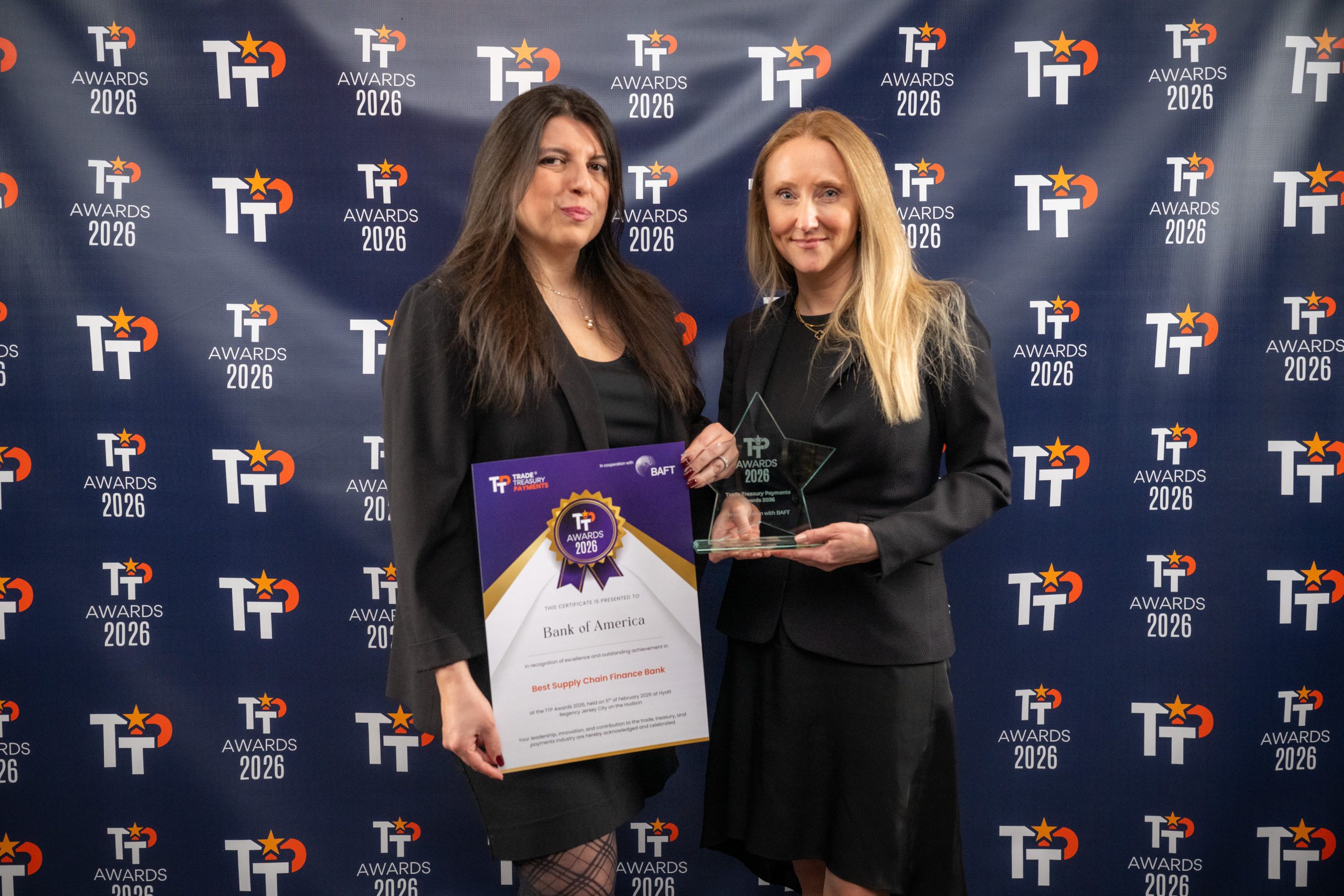
Bank of America was recognised as Best Supply Chain Finance Bank for the role it has played in reshaping the way that supply chain finance programmes are implemented.
Chief among these has been the expansion of its Supply Chain Finance Corporate Payment Undertaking (SCF CPU) model. Under this structure, the bank, operating as a payment agent, pays suppliers against their approved invoices without purchasing the receivable. Since there is no receivables transfer, the amount of documentation required is lighter, and the onboarding process is less cumbersome. In many cases, suppliers can be onboarded in days, often with little more than an email acknowledgement.
Alongside this, the bank has digitised and streamlined its supplier onboarding processes, using third-party databases for verification and enabling online documentation with e-signature. Pilot programmes showed a 76 per cent overall reduction in turnaround times when compared with more traditional processes.
The bank also expanded its Open Account Automation platform across EMEA and integrated it with CashPro Supply Chain Solutions. In parallel, multi-funder models and API integrations have given clients greater flexibility to connect preferred service providers while still leveraging Bank of America’s balance sheet.
By reducing friction at the entry point and broadening access to early payment, Bank of America has enabled a wider range of suppliers to participate in structured working capital programmes.
The full list of award winners is now available on the TTP Awards Winners page