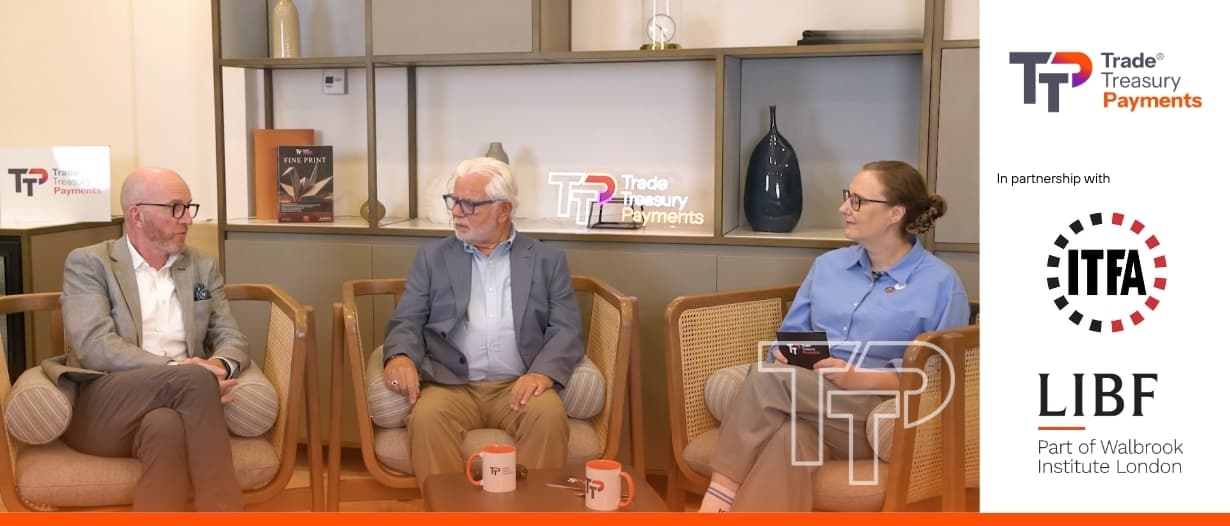

About This Video
At the Tashkent International Investment Forum, Trade Treasury Payments (TTP) spoke with Izzet Gormez, Senior Project Development and Investment Executive at KOC Construction, to discuss the company’s unique development model, local economic contribution, and approach to sustainability in Uzbekistan’s growing urban centres.
Gormez, a civil engineer originally from Istanbul, has been working on large-scale infrastructure and development projects across the CIS for over three decades. Today, much of his focus is on Tashkent, where KOC Construction has made major investments in real estate and mixed-use developments.
Gormez said, “We’re currently building one of our milestone projects, very visible from the airport. It’s a mixed-use building with residential, office, retail, and hotel components, about 160,000 square metres in total. It’s entirely our own investment.”
Founded 55 years ago, KOC Construction began as a general contracting and MEP company before expanding internationally. The company has executed major projects in Turkey, Libya, and Russia, and in the past eight years has become a prominent real estate investor and developer in Uzbekistan. Unlike many international contractors, KOC maintains full ownership over its projects and engages heavily in the local economy.
Gormez explained, “We’ve taken a different approach here. We act both as EPC contractor and as real estate developer. Most of our workforce of over 6,000 people is local. That includes engineers, architects, and labourers. We also try to minimise imports and instead work with what’s available in the market, using local suppliers and helping to build up the construction sector.”
That approach has clear implications for economic development and skills transfer. But it also supports the company’s sustainability ambitions. In a region grappling with urban air pollution, KOC is working to incorporate environmentally responsible design and construction practices.
Gormez said, “Our engineering team is focused on using sustainable materials. We’re working toward LEED certification, which is becoming increasingly important in Uzbekistan. For the people living in our buildings, we also build green areas like sports trails, outdoor space, and facilities that support a natural, healthy lifestyle.”
That emphasis on local impact and sustainability was one of the reasons KOC chose to sponsor the Tashkent International Investment Forum, now in its second year. The event has attracted growing interest from foreign investors, multilateral institutions, and international consultants exploring opportunities in the Uzbek market.
“We were excited from the start,” said Gormez. “This forum has brought in a lot of foreign interest. We’re seeing new players coming in, just like we did eight years ago, and I believe many of them will stay. With continued government support and cooperation, Uzbekistan has a lot of room to grow. We’re ready to support that development.”
Key Topics
- International construction and project delivery
- Real estate development in emerging markets
- Building local capacity in labour and supply chains
- Sustainable construction and urban living
- Investment growth in Uzbekistan
Expert Analysis
Koc Construction’s journey reflects this shift. What began as a general contracting and MEP company has grown into a fully integrated EPC contractor and property developer. This approach allows them to manage everything from design and engineering through to construction and delivery, giving them greater consistency across projects. A key part of their model is a strong focus on localisation. By employing thousands of local workers and engineers and working closely with domestic suppliers, they are helping to develop the construction ecosystem in Uzbekistan while reducing reliance on imports. Their Pyramid project in Tashkent is a good example of this in practice. It is a large mixed use development combining residential, office, retail and hotel space, and represents a major long term investment in the city. Sustainability is also moving higher up the agenda. With air pollution a growing concern, there is increasing pressure to adopt greener building methods. The company is already working towards internationally recognised standards such as LEED, while also incorporating green spaces and community areas into its residential developments. At the same time, Uzbekistan is becoming more visible to international investors. Government support, improving infrastructure and events that bring together global partners are helping to position the country as an attractive and growing market.— Izzet Gormez
Key Findings
- Koc Construction has evolved into both an EPC contractor and real estate developer
- The company employs over 6,000 local workers and prioritizes local sourcing
- The Pyramid project is a 160,000 m² mixed-use development fully self-financed
- Sustainable construction practices and LEED certification are key future goals
- Uzbekistan is attracting increasing foreign interest due to government support and market potential
Implications
- Increased localization may strengthen Uzbekistan’s construction industry and reduce reliance on imports
- Integrated EPC and development models could become the standard for large-scale projects in emerging markets
- Sustainability requirements will likely drive innovation in materials and construction practices
- Foreign investor interest is expected to accelerate infrastructure and real estate growth
- Landmark projects may serve as anchors for broader urban and economic development