TF COP 2026 Summit opens in Split, local currency solutions key to eliminating SME financing gap

Deepesh Patel
Editor in Chief, Trade Treasury Payments
Published 8 Sept 2026
Live Updates
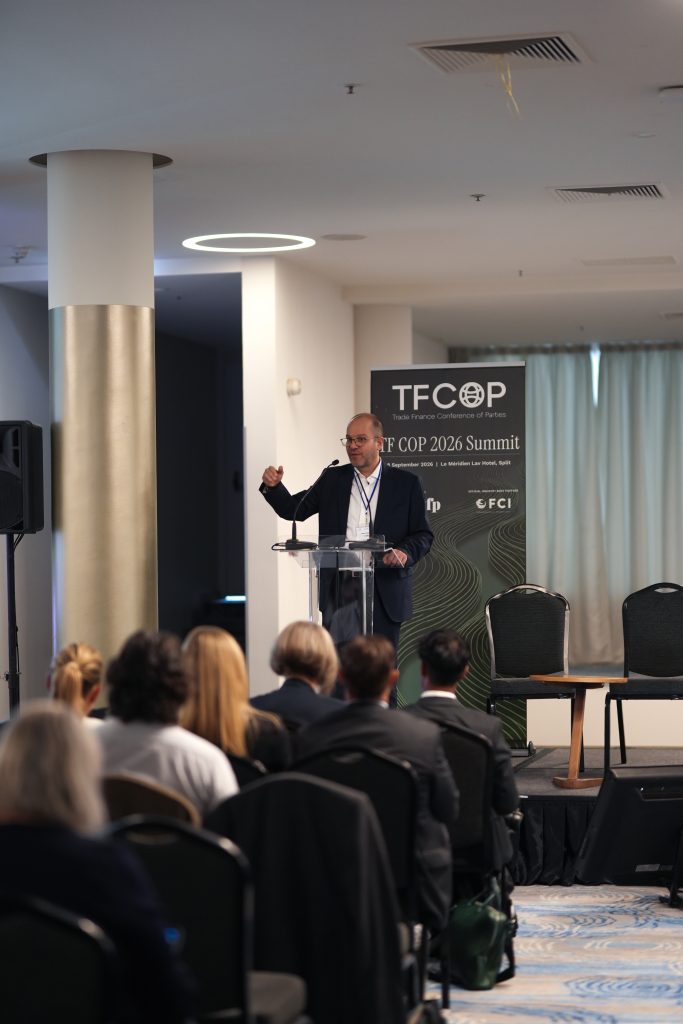
MDB heads gather to discuss local currency lending solutions
At TF COP, multilateral development bank heads gather to discuss how to scale local currency lending, and other initiatives to close the SME trade finance gap
EBRD Trade Facilitation Programme, Shona Tatchell explained the three focus pillars: green finance, economic inclusion and digitalisation, as well as the launch of a new Innovation Lab helping their partner banks.
IFC, Makiko Toyoda showcased local currency solutions spanning 71 countries, plus a trade finance securitisation drive that has piqued interest amongst shareholder countries to engage in trade finance as an asset class.
AfDB, Lamin Drammeh focused on how local currency lending is becoming a core principle under NAFAD, with the binding constraint named as asset allocation. African savings sit in government paper, so guarantees and vehicles like TCX are needed to crowd capital down to SMEs.
BII, Wahid Ben Tanfous talked through a strategy built on frontier markets and mobilisation, with risk sharing facilities across emerging Africa, showing that DFIs have to reach SMEs through layers of partners.
A refreshing update, focusing on local currency hedging and swaps, risk transfer and the last mile for trade and supply chains.
TF COP 2026 Summit showcases four sandboxes
Twelve months on from coalition building to implementation, TF COP’s ‘Solutions and Sandboxes’ session in Split showed four live pilots, each attacking a different part of the SME trade finance gap.
1️⃣ Nigeria Invoice Registry, from Ian Milne of MonetaGo. Nigeria has 39.7 million MSMEs, 96.9 per cent of all businesses, and a factoring and supply chain finance opportunity worth about US$27 billion, yet under 1 per cent of Africa’s factoring market. Receivables sit unused because financiers need confidence that an invoice is genuine, has not already been financed and can be legally assigned. The registry is the infrastructure that lets capital deploy with that confidence.
2️⃣ Packaged Capacity Building on the Trade Finance Ecosystem, from Ahanna Anaba of TF COP Africa. A standardised playbook that equips Tier 2 and Tier 3 domestic banks to lend more to local SMEs, now deepening with specialist modules from FCI on factoring, ICISA on trade credit insurance and surety, the Berne Union on export credit, ATIDI on African risk mitigation and UKEF on ECA products.
3️⃣ Viaservice Shipment Liquidity Facility, from Morgan Lépinoy of ViaTrans. A transaction level liquidity facility that finances the entire shipping chain, from discharge through transport, customs and warehousing, commodity agnostic and built to replicate across markets.
4️⃣ SME Lending Capital Mobilisation in Local Currency, from Vikrant Yadav of Crown Agents Bank with Open Capital. An entirely local currency SME loan securitisation, funded by a DFI syndicate with potential for a philanthropic mezzanine and a first loss layer. Local banks are constrained by capital rather than liquidity, and park spare capacity in government paper. The structure gives them regulatory capital relief, freeing up room to lend to SMEs, using DFI balance sheets while the market for hedging these currencies is still being built.
Closing the trade finance gap through institutional partnership
The bodies that set the standards, write the rules and build the capacity have to do it together.
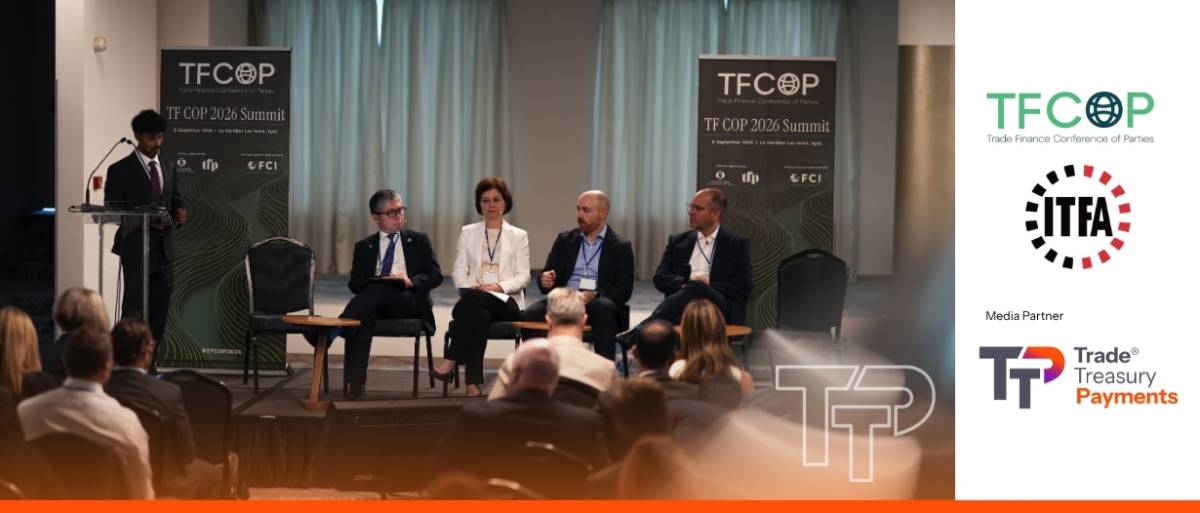
At TF COP 2026, a coalition of market practitioners collectively aimed at eliminating the trade finance gap, TTP Editor in Chief Deepesh Patel moderated the Industry Associations Update, with BAFT, the Berne Union, FCI, ICISA and ITFA.
These are the five associations and industry bodies that founded TF COP, aimed at making SME trade assets more visible, financeable, hedgeable, insurable and investable, through transaction banking advocacy, export credit and investment insurance, factoring and receivables rails across emerging markets, trade credit insurance and surety, as well as the digital and legal reform agenda.
After two years of dialogue since TF COP was established in 2024, association leaders discussed market updates around capital relief, invoice registries, local currency solutions and capacity building that help SMEs.
Follow TTP for coverage across the week from Split.
Pictured: Tod Burwell, Aysen Cetintas, Daniel de Búrca, Sean Edwards, Yuichiro Akita, Deepesh Patel
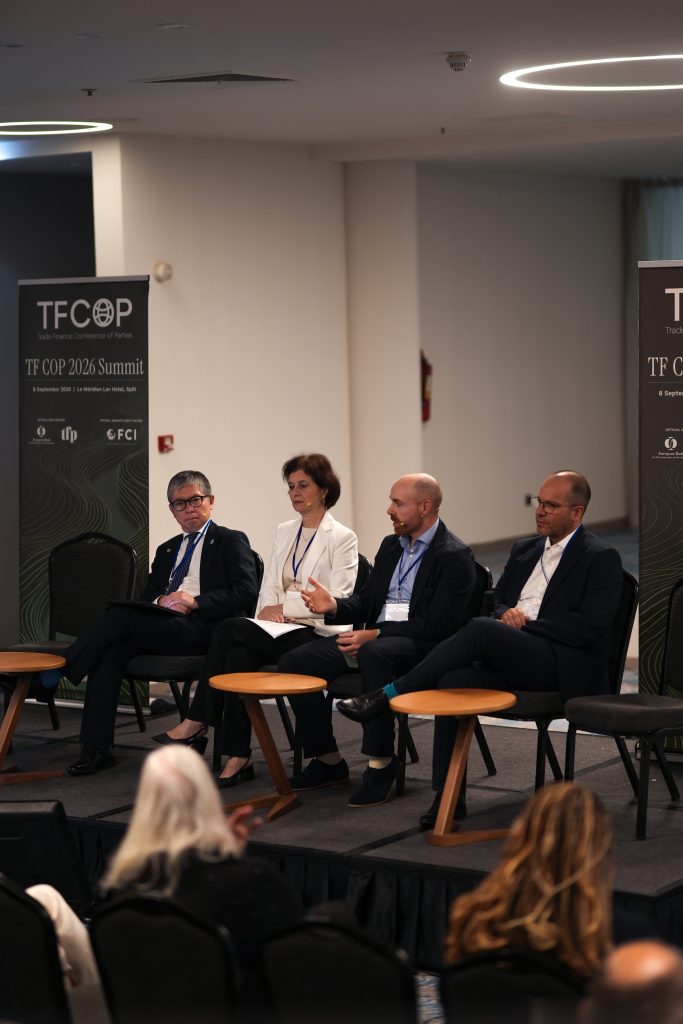
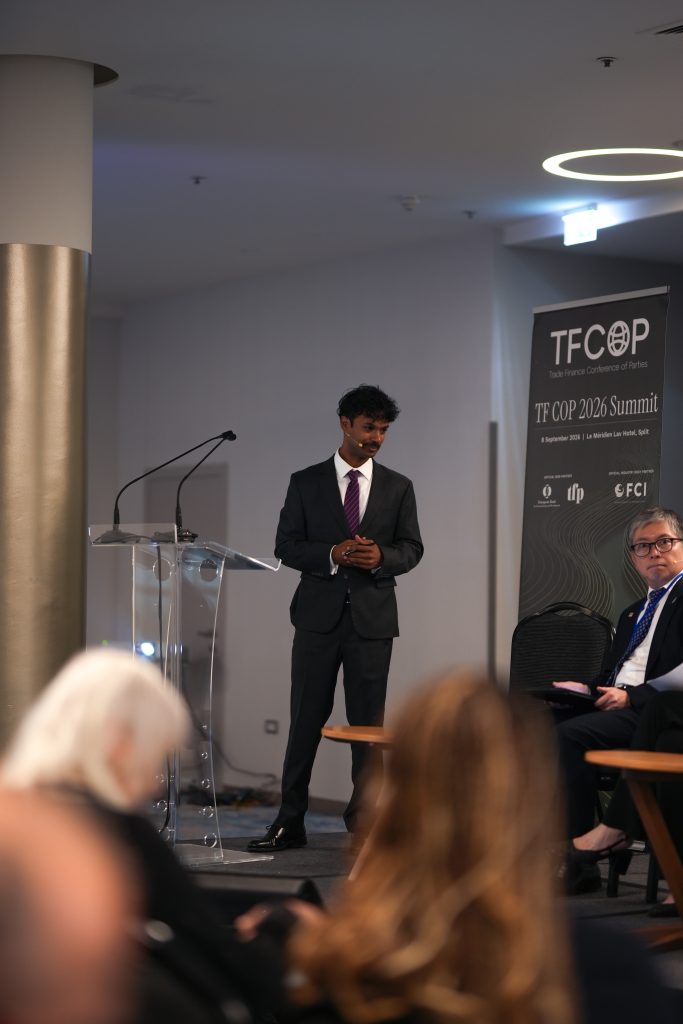
Addressing local currency SME lending head on.
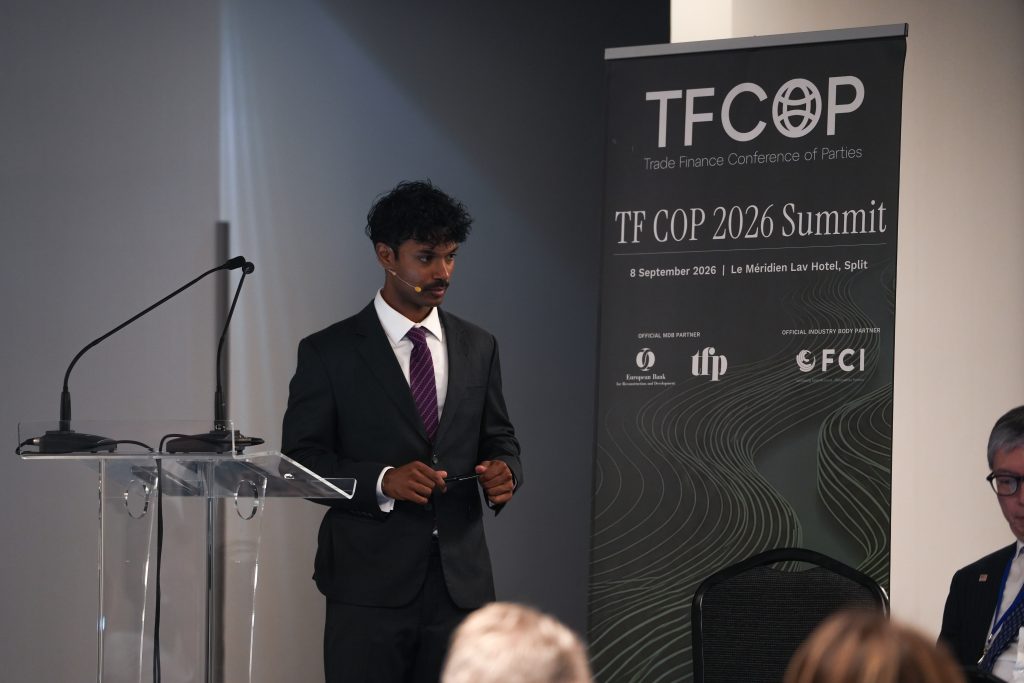
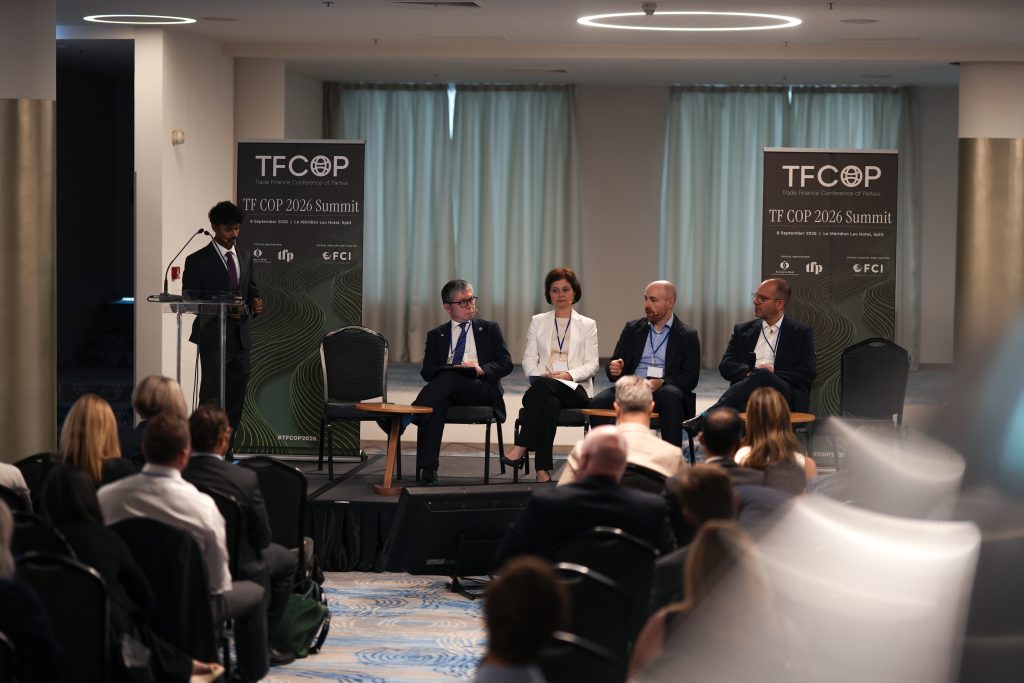
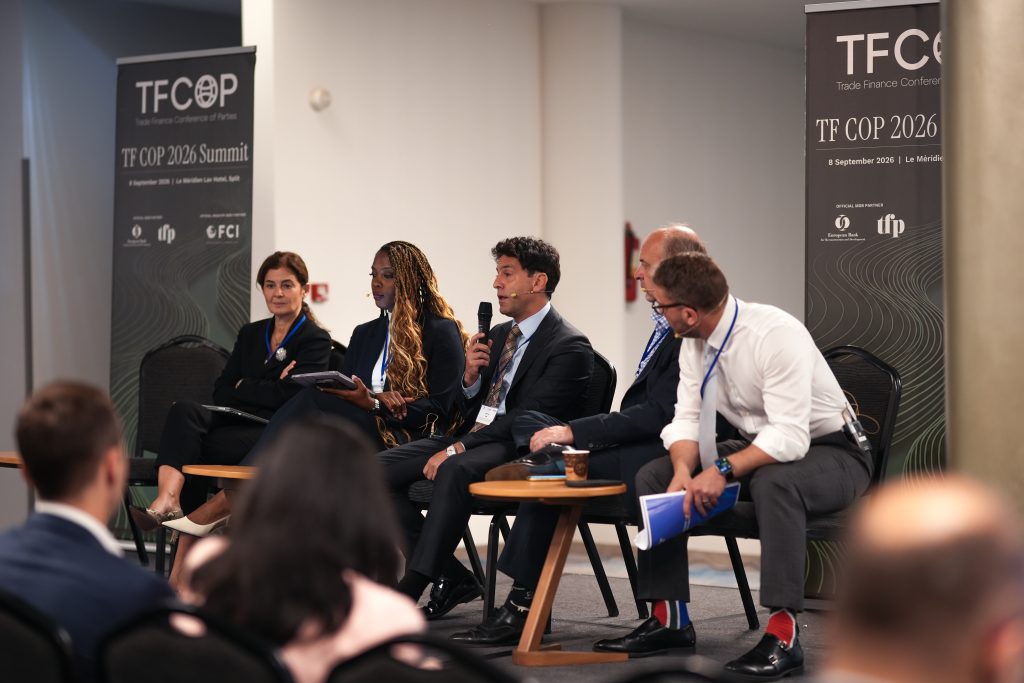
On a local currency lending panel at TF COP 2026, moderated by Duarte Pedreira with George Wilson, Ahanna Anaba, Gursu Keles (EBRD), Sean Edwards (ITFA) and Betül Kurtulus (FCI), local currency SME lending was discussed in detail.
The African Development Bank’s latest Trade Finance Report puts unmet demand at $74bn to $92bn in 2024, and warns it could widen to as much as $102.6bn by 2027.
Yet the reality on the ground is overwhelmingly local currency. Panelists argued that as much as 70 to 90 per cent of real trade finance and working capital in Africa is in local currency, trapped in billions of invoices across all 54 countries, in naira, shillings and cedi, for up to 90 days.
The constraint is not hard currency, but capital relief in local currency and a mechanism to distribute it, which is precisely the problem the FI Trade 3.0 Schema was designed to solve.
TTP heard from George Wilson in January, discussing the FI Trade 3.0 Schema Trade. Read more here: https://tradetreasurypayments.com/articles/unlocking-africas-sme-trade-potential-the-fi-trade-3-0-schema
Pictured: Duarte Pedreira, George Wilson, Ahanna Anaba, Gursu Keles, Sean Edwards, Betül Kurtulus
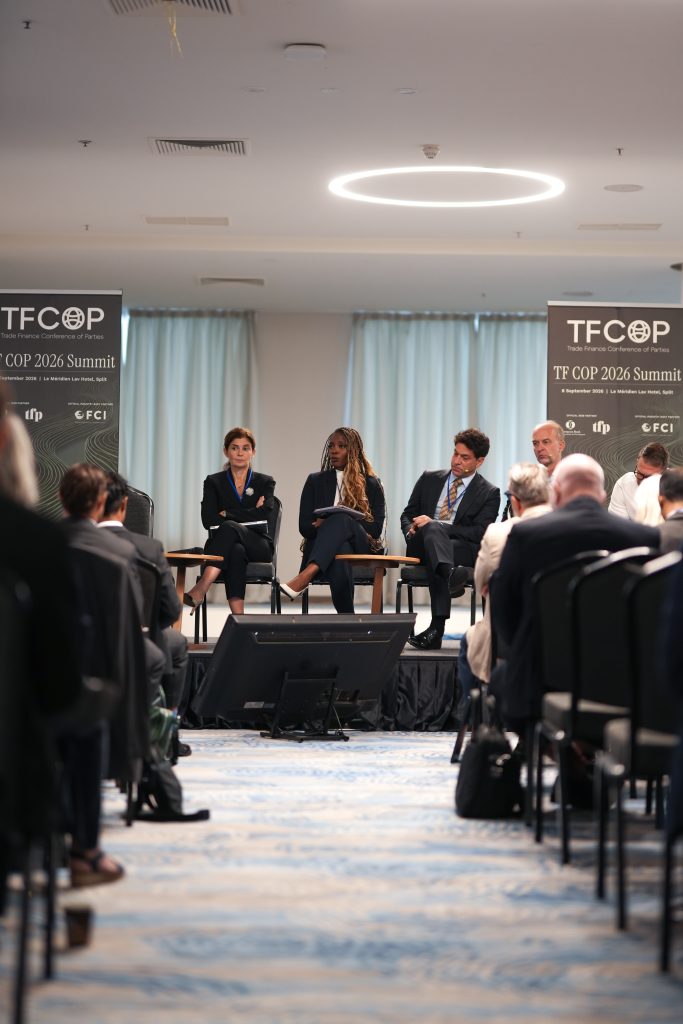
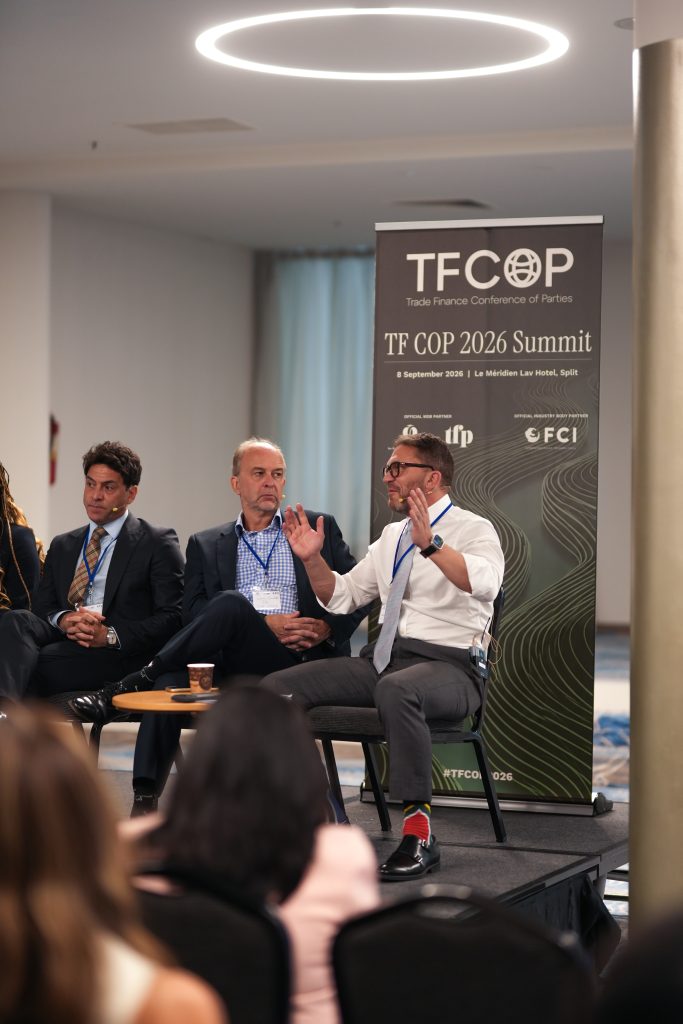
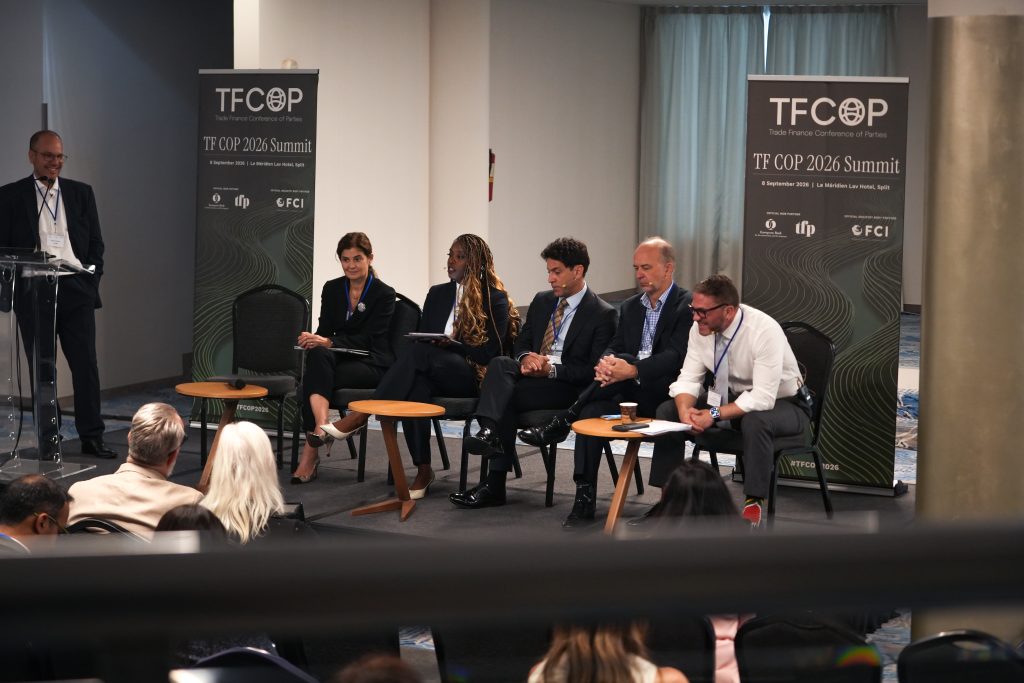
The Trade Finance Conference of Parties (TF COP) is gathered today in Split, Croatia—a coalition of financial institutions, multilaterals, trade associations and technology companies—collectively addressing market gaps in SME finance.
Established in 2024 under ‘The Washington Declaration’, TF COP recognises the SME trade finance gap as a local-currency problem, because SMEs typically earn, spend and repay in local currency.
Panelists have described the bottleneck; local lenders lack the capital relief and FX hedging tools to move surplus capital safely into local-currency assets.
TF COP’s conclusion is that both gaps (non-G10 FX hedging and SME capital relief) must be solved in parallel, and in the meantime MDBs and DFIs are the immediate channel to fund, hedge, guarantee and provide local-currency capital-relief solutions that let local lenders extend more to SMEs.
Last week, Wilton Park launched its report “Local Currency Finance: what works, what scales, what’s next?” — the product of a July 2026 FCDO-convened dialogue, concluding that development finance must provide affordable local-currency finance while building the onshore FX infrastructure needed to hedge and manage currency risk.
Crucially, the report validated the TF COP thesis—the SME financing gap cannot be solved as a hard-currency problem—embedding the coalition’s market-architecture framing (capital, risk, distribution and FX infrastructure) into conclusions that now call for local-currency finance to become core to MDB reform, private capital mobilisation and the G20 agenda.
Trade Treasury Payments are delighted to be media partners of TF COP, and will be reporting throughout this summit, supported by EBRD Trade Facilitation Programme and FCI.