

Time flies! The Currency Research’s 10th Central Bank Payments Conference wrapped last week in Istanbul after two and a half days of discussion, debate and, importantly, some very practical conversations about where payments are heading. Note that Chatham House rules apply, so no specific views are attributed to a particular person, role, or country. You will just have to attend next year!
The theme, “Payments Without Borders in a Fragmented World,” was right on message. Nearly 300 people from central banks, regulators, financial-market infrastructures, banks, technology companies, and fintechs came together around a fundamental challenge: how do we keep money moving more seamlessly across borders when the world around us is becoming more fragmented?
What struck me was how much the conversation has changed. We are no longer talking about AI, stablecoins, CBDCs, tokenisation, instant payments, and digital public infrastructure as a collection of interesting technologies sitting somewhere out into the future. It’s all here, my friends, and increasingly, they are beginning to intersect. That creates a different series of challenges.

The five things I took away from Istanbul
1. We have moved from experimentation to integration.
The question is no longer simply whether AI, tokenisation, or stablecoins will matter. They already do. The harder question is how these technologies coexist with regulated money, existing payment rails, settlement systems, and the responsibilities of central banks and regulators. The next chapter of payments will be less about inventing another technology and much more about making the pieces work together and when they don’t need to.
2. Interoperability is the biggest payments issue of the next several years.
We have built some extraordinary domestic payment systems around the world. Many can move money almost instantly. But fast does not automatically mean connected. Connecting these systems requires more than technology. It requires common standards, governance, identity, compliance, directories, FX mechanisms, and, most importantly, trust between participants. Easy to say, challenging to deliver if at all. That is where much of the real work now sits.
3. Cross-border payments need to be judged by results, not announcements.
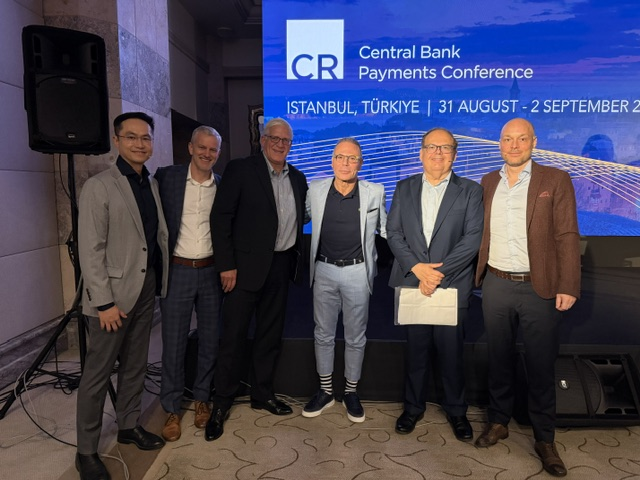
You have heard me bang on this topic before. With Sibos on our doorsteps, we are bound to see a lot of sizzle; the test is real substance. This was at the heart of the panel I had the privilege of moderating: “Cross-Border Payments: From High-Level Promises to Tangible Progress,” with Choo Tatt Saw, Michael Boele, Andrew McCormack, Richard Dzina, and Angelo Duarte.
Years after the G20 roadmap, too many cross-border payments remain expensive, opaque, and unnecessarily complicated. Compliance costs, FX, exceptions, and payment repairs remain very real.
But there was also genuine reason for optimism. The interlinking of instant-payment systems is beginning to demonstrate what is possible. We are moving from talking about faster, cheaper, and more transparent cross-border payments to actually building the infrastructure capable of delivering them. The discussion turned to debate on whether this is always appropriate. Some views looked at some domestic real-time applications that may not wish to be connected beyond their borders. Ultimately, the message I heard was to deliver what the users need and include all in its design and delivery. The emphasis now needs to be on execution….tangible progress.
4. Central banks are increasingly becoming architects of ecosystems.
One theme came through repeatedly: building the rail is not enough. CBDCs, instant payments, tokenised settlement, and digital public infrastructure all demonstrate that technology by itself does not guarantee adoption. Governance, incentives, merchant acceptance, and interoperability matter. Most importantly, trust matters. That puts central banks in an increasingly important position, not simply overseeing payment systems, but helping shape the ecosystems developing around them.
5. Fragmentation itself has become a payments risk.
There is a paradox here. We could end up with extraordinarily fast and sophisticated domestic and regional payment systems while simultaneously creating a more fragmented global financial system. Different digital currencies, regional networks, regulatory frameworks, and geopolitical interests can all pull the system in different directions. That makes interoperability more than a technical challenge. It is becoming an economic and strategic one.
My biggest takeaway
I left Istanbul convinced that the payments industry does not have an innovation shortage. We have instant payments, an increasingly capable AI, stablecoins, and tokenised money to name a few. We have seen the overhaul of dozens of domestic infrastructures into real-time domestic juggernauts. And there is plenty more innovation coming.
What we have is an execution, interoperability, and governance challenge.
The next phase is about connecting these capabilities safely, responsibly, and economically, across institutions, systems, and borders as appropriate. If I had to reduce two days of discussion to one thought, it would be this:
The race is shifting from who can build the next payment technology to who can make the emerging payments ecosystem actually work together.
That is a considerably harder challenge. Yours truly has seen a number of programs over the years fail under the weight of politics, divergent views, and trying to “boil the ocean.” Optimistically, I think we have learned a lot, which is where the real opportunity lies.
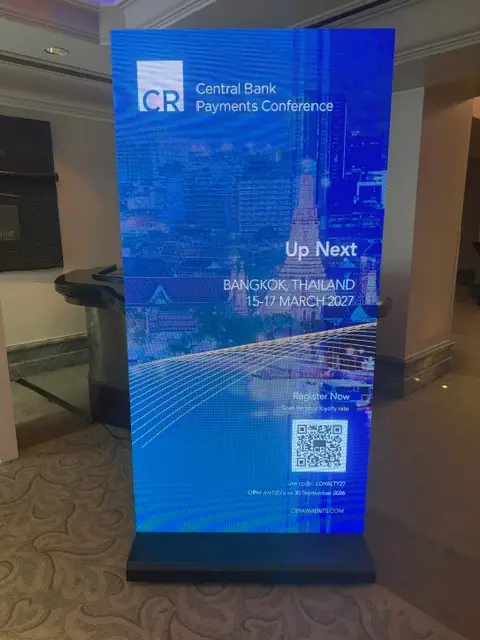
A sincere thank you to Currency Research for a dynamite conference, and I look forward to seeing your growing group in Bangkok in March 2027. I think I can speak for all participants when I say thanks to the speakers for sharing your IP, opinions, and time. It is a real commitment to get nearly 300 senior central bankers and ecosystem players to make the trip to Istanbul for a worthwhile few days; many of them presenting. The conversations were candid, the perspectives genuinely global, and there was a refreshing focus on moving beyond policy statements and ambitious promises toward responsible, tangible results.