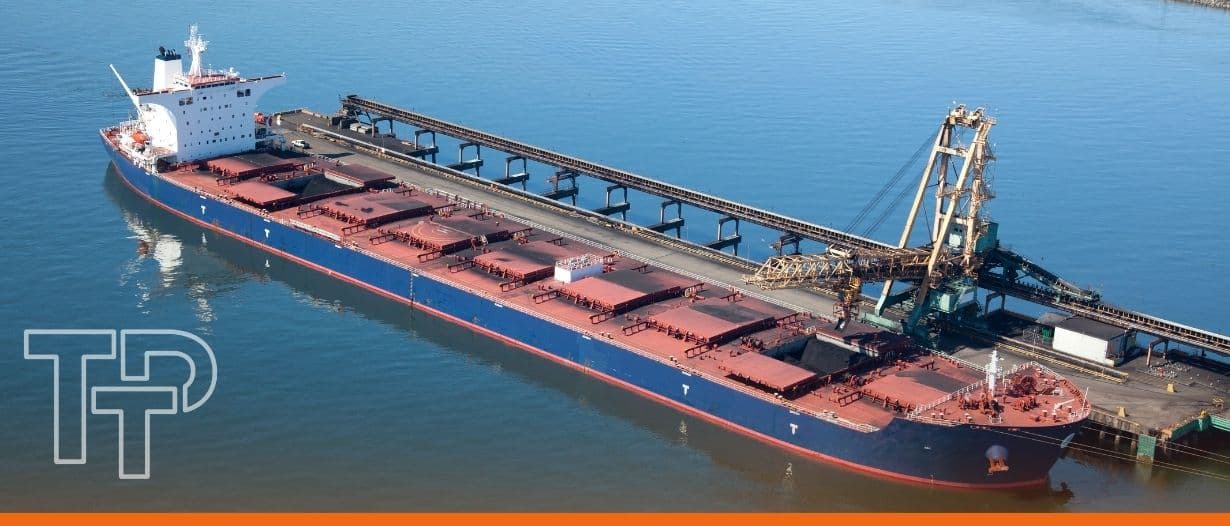
When a US$10 million coal cargo stalls at anchor and liquidity is trapped at sea, the pressing question for commercial enterprises becomes which court will move quickly enough to preserve its cash value.
On 26 November 2025, Singapore’s Court of Appeal provided an answer with a judgment that will resonate well beyond the country’s legal community. In Avra International DMCC v Dava Pte Ltd [2025] SGCA 53, the Court was asked a deceptively simple question about a shipment of Indonesian steam coal aboard the MV Milos: when a judge orders cargo to be sold in aid of arbitration, how and when can that order be challenged on appeal? TTP obtained and reviewed the Court of Appeal’s judgment in full; what follows is our analysis of its reasoning and commercial implications.
Beneath that question sits a familiar reality for banks, traders, freight forwarders and insurers. Cargo can get stranded mid-route, counterparties can fall out, and courts are increasingly asked to sell goods early and hold the proceeds while arbitrators work through the underlying dispute. The Court’s answer in Avra was clear. These applications are treated as being in a ‘self-contained box’ procedurally. In practice, this means the court treats the application as a standalone dispute whose outcome has immediate commercial effect, rather than as a step buried inside a longer lawsuit.
Orders granting or refusing such applications are final decisions for appeal purposes, so permission is not required. At the same time, the Court drew a sharp line against tactical attempts to seek ‘insurance’ from the court through unnecessary applications.
For the wider trade and treasury ecosystem, the ruling strengthens a part of the plumbing that keeps cross-border liquidity and risk management functioning when disputes erupt.
How courts support arbitration when cargo is stuck
The background was straightforward. Dava, the voyage charterer, had chartered the MV Milos to carry Indonesian steam coal to Bangladesh. The charterparty contained an arbitration clause in favour of London. After the vessel was loaded, “complications arose and the Vessel eventually sailed from Indonesia to Singapore instead.”
With the cargo now in Singapore, Dava filed an originating application in the General Division of the High Court under section 12A of the International Arbitration Act (IAA) (power to sell disputed property) and Article 9 of the UNCITRAL Model Law (interim protection measure). Under those provisions, Singapore courts can grant interim measures to preserve assets or evidence where arbitration is on foot or contemplated, including orders for the “interim custody or sale of any property” that is the subject of the dispute.
Article 9 of the Model Law confirms that a party may request interim protection from a court without breaching its arbitration agreement. The provision exists because arbitral tribunals often take time to form and lack coercive powers over third parties. A court may therefore step in to preserve assets, evidence or cargo value during the gap period before a tribunal is constituted and able to act.
In plain terms, interim measures in aid of arbitration allow a court to step in as a stabiliser. If cargo is sitting at anchorage or in storage while a dispute drags on, it deteriorates physically and commercially. A court-ordered sale converts the asset into cash, which is then held pending the arbitral outcome. That preserves value for whoever ultimately wins.
Dava’s application sought precisely that. The High Court ordered the coal to be sold and the net proceeds paid into court, with all existing claims and liens transferring from the cargo to the proceeds.
Avra, named in the charterparty as supplier or shipper but not a party to it, later filed its own High Court action for conversion and applied to vary or set aside the sale order. That application, SUM 1742, was dismissed. Avra then sought to appeal and, crucially, asked the Court of Appeal for a declaration that it did not require permission to do so.
The case became less about coal and more about procedure. Was this the kind of decision for which permission to appeal is required, or did the appeal lie as of right?
Why “self-contained” matters for appeal rights and risk
Under Singapore’s Supreme Court of Judicature Act, parties generally need permission to appeal against interlocutory orders. Those are orders made along the way in a larger lawsuit. The alternative is a final order, which concludes an entire set of proceedings. Final orders can be appealed without permission.
The Court of Appeal held that Dava’s original application for a sale order, and Avra’s follow-on bid to vary or set it aside, fell firmly into the latter category. They were, in the Court’s words, “self-contained and complete in [themselves].” Once the High Court decided whether to allow the sale, “the entire subject matter” of those proceedings was “spent.”
The judges drew a direct analogy with Maldives Airports Co Ltd v GMR Malé International Airport Pte Ltd, where an injunction in support of arbitration was treated as a stand-alone proceeding. In both cases, the substantive dispute would be determined in arbitration, not by the Singapore courts. The court’s task was limited to preserving value while that happened.
This classification has a practical effect. It means that orders granting or refusing interim relief in aid of arbitration are final for purposes of appeal. They sit in a dedicated procedural box rather than floating as interlocutory steps in a wider action. No permission is required to appeal them.
For banks and traders, that matters for two reasons.
First, it frees the cargo from being tied up by interim orders that cannot realistically be challenged. Appeals can be brought directly, offering a clearer path to finality. Second, it clarifies the roadmap by reducing room for argument about which appellate route applies when assets are in play. In a market where structures often involve multiple lenders, insurers, and layered security, certainty about the appeal channel becomes part of the risk framework.
Declarations are not a safety net when the law is already clear
Avra did not simply file a notice of appeal. It also asked the Court of Appeal to declare that no permission was needed. The judges used that request to restate when such declarations are appropriate.
They noted that a declaration is only warranted where there is “genuine uncertainty” as to whether permission is required and stressed that this is judged “objectively,” not by how nervous a party or its lawyers feel. A misunderstanding of clear law, even by counsel, does not qualify. The Court stressed that counsel’s caution or concern about potential missteps does not create legal uncertainty. The test is objective, and subjective unease cannot expand a party’s appellate rights.
The Court went further and criticised what it sees as an emerging practice. It pointed to previous cases where parties had been advised that permission was not needed, yet still sought declarations “for the avoidance of doubt.” In this judgment, the Court described that tactic as “tantamount to seeking insurance from the court,” adding bluntly that “this is not our role” and that such an application “would be an abuse of the court’s process.”
In the Avra case, the Court found no genuine uncertainty. Existing case law, including Maldives Airports, already indicated that an originating application seeking interim measures in aid of arbitration is not interlocutory. The legal position was settled enough that no further declaratory relief was needed.
Timing, liquidity and the real cost of getting procedure wrong
The more immediate risk to Avra did not come from the classification of the order. It came from timing. Because Avra chose to wait for the declaration to be decided before filing its notice of appeal, it was out of time once the Court held that no permission was required.
Appeal windows in Singapore are short. A notice of appeal generally must be filed within 14 days of the decision. In a dispute involving cargo, that period runs alongside demurrage, storage, price movements, and the opportunity cost of capital tied up in immobilised goods. A missed deadline can translate directly into lost access to sale proceeds or impaired recoveries for lenders.
Here, the Court recognised that an older passage from an earlier case may have contributed to confusion about the proper sequencing. It therefore exercised discretion and granted Avra an extension of time. But it also used the moment to lay down a clearer protocol for future disputes.
Where there is genuine doubt about whether permission is needed, parties should “file [their] notice of appeal and a Composite Application concurrently.” The Composite Application combines two requests: a declaration that permission is unnecessary and, in the alternative, a request for permission if the court decides it is required. If permission is granted, the appeal is already safely within time. If permission is refused, the notice can be struck out or withdrawn.
As the Court observed, this approach has “the added advantage that the appellant need not seek an extension of time,” regardless of the outcome on permission. In effect, the Court has told the market how to hedge procedural risk without undermining deadlines.
For trade finance desks and treasury teams, the takeaway is clear. When cargo or receivables are under interim orders, timing is part of the exposure. Procedural missteps can reshape the ultimate loss profile just as much as market moves or counterparty default.
A cleaner framework for cross-border disputes built on assets
Taken together, the Avra judgment does more than settle one appeal. It tightens a section of Singapore’s arbitration framework that is increasingly used in cross-border commodity and shipping disputes.
It confirms that interim measures in aid of arbitration occupy their own space. They are designed to preserve value, not to host the substantive fight. They are final for appeal purposes. And they should be approached with speed and discipline rather than with speculative applications for extrajudicial reassurance.
For a cross-border B2B ecosystem where liquidity, collateral and risk transfer move through multiple jurisdictions, that clarity matters. Banks underwriting inventory-backed facilities, freight forwarders managing title and liens, and insurers looking at aggregation risk all depend on courts that can act quickly without sowing confusion about the appeal route.
Similar questions are arising in other major trade finance jurisdictions, from London to New York, where courts also balance arbitration autonomy with the urgent need to preserve assets. Singapore’s ruling will therefore be closely read as part of a broader shift toward clearer, faster interim relief procedures.
As these regions grapple with comparable issues in arbitration and interim measures, the Singapore ruling might offer a clearer framework for handling cross-jurisdictional disputes, potentially harmonising legal procedures and enhancing certainty for stakeholders across the global market.
Trade has long relied on legal and procedural infrastructure, from the standardisation of bills of lading to modern rules on documentary credits. Singapore’s latest judgment fits into that lineage. It refines the way national courts support arbitration when assets are at stake, helping keep value moving even when commercial relationships falter.