
Global supply chains are entering 2026 under significant pressure as procurement professionals report that cost volatility in shipping, energy, and essential inputs is becoming a permanent condition rather than a temporary disruption, says the latest Chartered Institute of Procurement and Supply (CIPS) Pulse Survey.
The survey conducted worldwide in the final quarter of 2025 signals growing instability that is expected to push consumer prices higher throughout the year.
Rising cost volatility at the frontline of procurement
The CIPS Pulse Survey shows short-term concern about supply disruptions is at its highest level in two years. It scored 4.59 out of 7 for the next three months, up from 4.36 in the previous quarter.
The concern for the next 12 months has decreased slightly to 4.80, which still remains higher than any level recorded in 2024.
This heightened anxiety reflects the reality that volatility, not stability, is now the default assumption for procurement planning.
Sharp increases in freight and logistics costs in early 2026 confirm these concerns, forcing procurement teams to build higher cost buffers into contracts. These additional costs will inevitably be passed on to manufacturers, retailers, and ultimately consumers.
Ben Farrell, CEO of CIPS, said: “Procurement professionals are often the first to see cracks forming in the global trading system. What this survey showed at the end of 2025 and what January 2026 has already confirmed is that volatility is no longer an exception. When logistics costs can swing by 20–30% in weeks, those pressures inevitably ripple through to businesses and consumers alike.”
Shipping and logistics cost swings confirm survey warnings
The Pulse Survey identified shipping and logistics as the category most likely to experience significant price increases, with 22% of respondents reporting cost rises exceeding 10% by the end of 2025. Data from the Freightos Baltic Index (FBX), a leading benchmark for global container spot prices, illustrates the scale of recent volatility on major trade lanes between Asia and key markets.
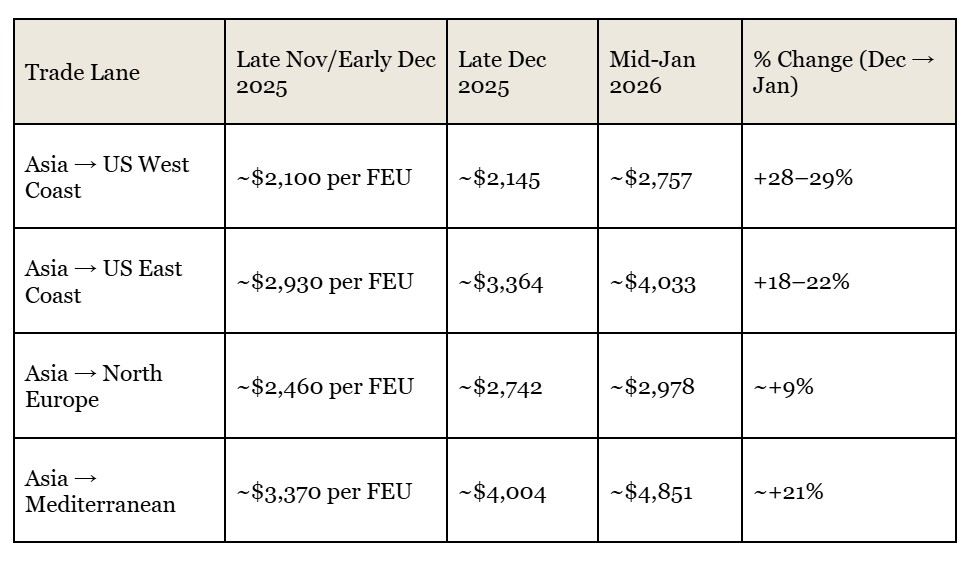
These figures highlight the rapid and substantial price swings procurement teams must absorb, particularly on Asia-outbound routes where demand for manufactured goods is concentrated.
Return routes usually have lower volumes and come at a discounted price, leading to unbalanced shipping costs. As a result, procurement teams, manufacturers, and retailers face higher expenses on outbound lanes, which will impact product prices.
Multiple cost pressures converge to fuel inflation risk
Shipping and logistics are not the only areas facing inflationary pressure. Procurement professionals also reported or anticipated price increases above 10% in several other critical categories during the fourth quarter of 2025.
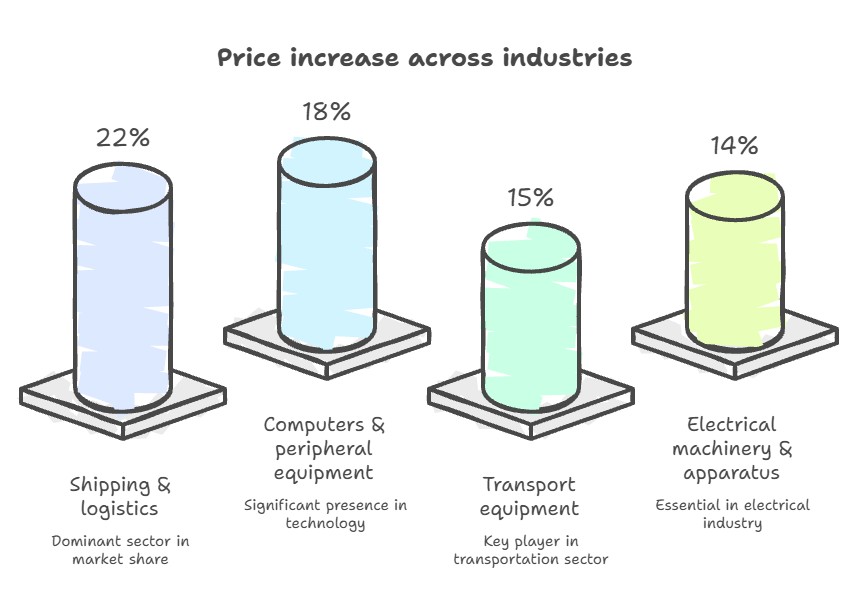
The simultaneous rise in costs across these inputs increases the risk that procurement-level volatility will translate into renewed inflationary pressure for consumers in 2026.
Building resilience in an era of persistent volatility
Trade policy is a key source of volatility. The survey stated that 42% of respondents see U.S. protectionism as a major risk, while 39% view ongoing U.S.–China trade tensions as a significant threat to supply chain stability.
Procurement teams are actively monitoring shifting trade rules and pricing amid uncertainty, using higher risk premiums, diversified sourcing strategies, and longer-term contracts designed to withstand sudden policy changes.
In response to sustained cost and supply volatility, organisations are accelerating resilience strategies. These include supplier diversification, longer contract terms, and selective inventory increases. While these measures improve supply security, they also raise the overall cost base of global trade.
Dr John Glen, Chief Economist at CIPS, said, “Volatility itself is inflationary. Even when prices fall back, the uncertainty forces organisations to plan for worst-case scenarios. In 2026, global procurement is being reshaped by the need to operate in an environment where disruption, cost swings and policy uncertainty are the norm rather than the shock.”
What is store ahead?
The CIPS Pulse Survey and recent market data confirm that procurement cost volatility will remain a defining feature of global trade in 2026. Procurement professionals and supply chain managers must continue to adapt by building resilience and managing risk proactively to navigate this challenging landscape.