Updates from Lisbon at IFC’s Women in Trade and Supply Chain Finance Roundtable
Live Updates
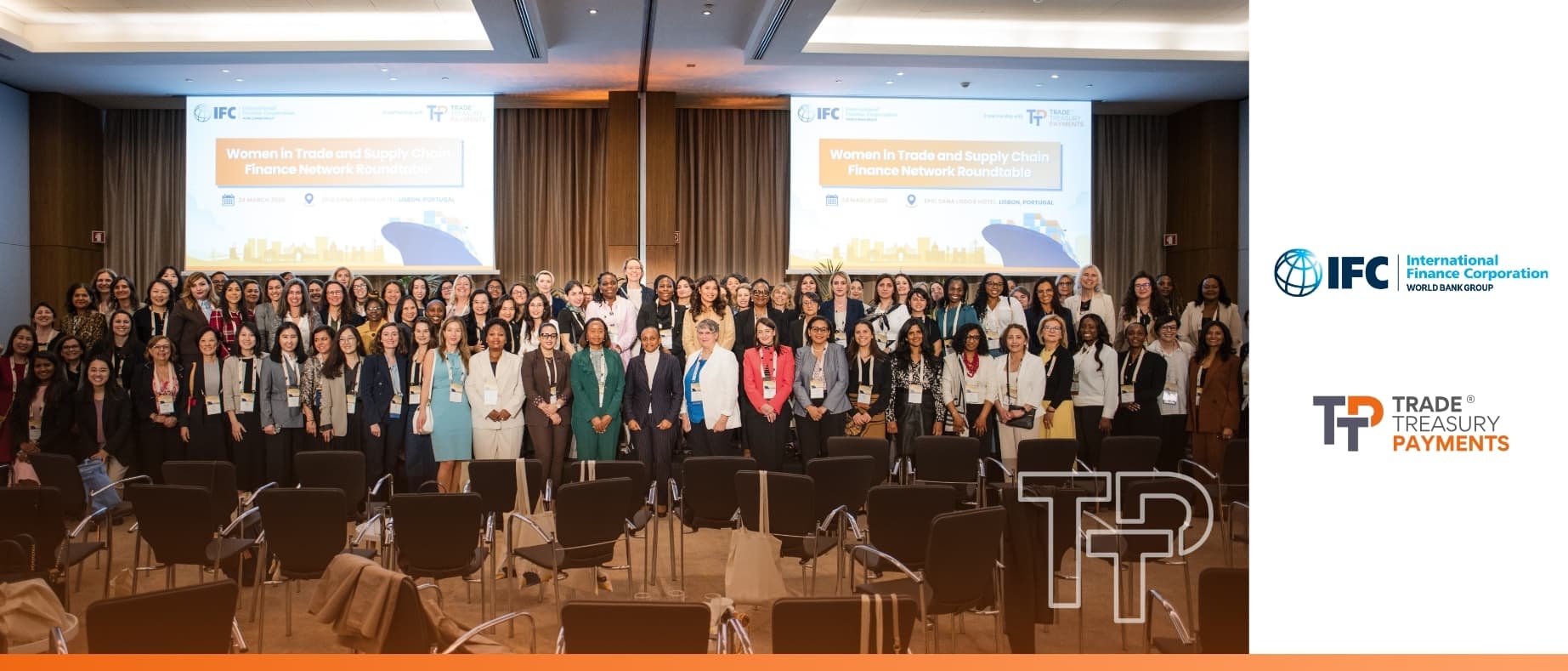
It’s a wrap! We were delighted to partner with IFC to bring together over 100 women leaders from across development finance, global banking and industry..
More interviews and insights from Lisbon coming soon.
(Photo: Participants of the IFC Women’s Trade Network roundtable)
Closing
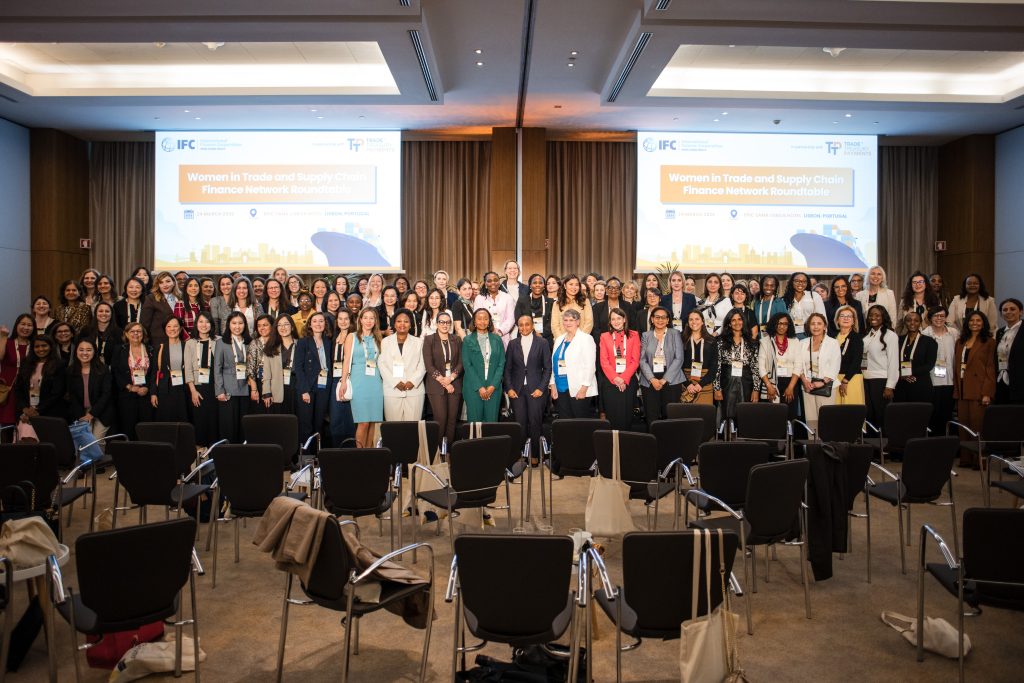
The open discussion session at the Women’s Trade Network roundtable brought together over 100 women participants from banks, development institutions and industry to share practical experiences.
Co-moderated by Joy Macknight and Deepesh Patel (TTP), the discussion explored:
- Real barriers institutions face when financing women-led SMEs
- Lessons from existing programmes and pilots
- Opportunities for collaboration with IFC and industry partners
- The role of supply chain finance structures in expanding access
Open Discussion
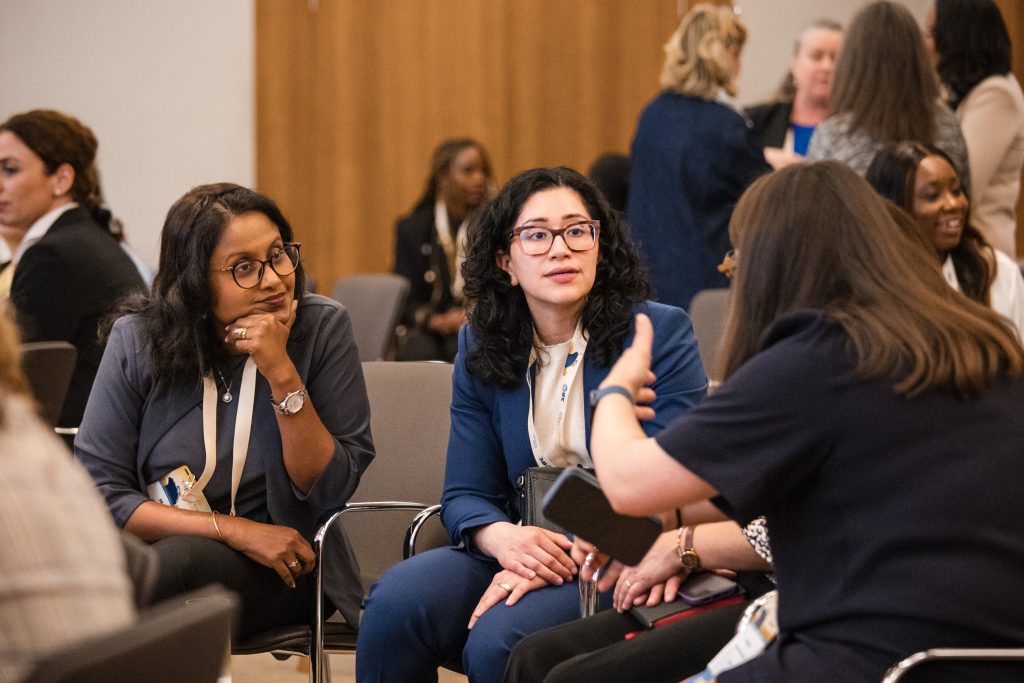
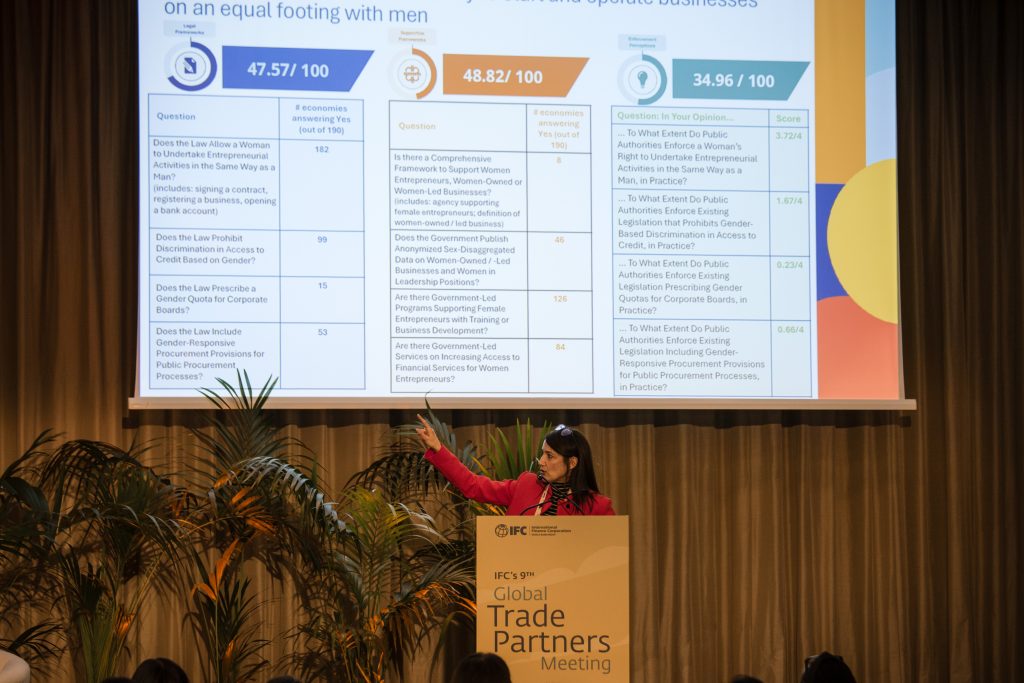
Montserrat Ganuza (IFC) shared updates on the evolution of the Women’s Trade Network and the practical work underway to expand access to trade and supply chain finance for women-led businesses.
Referencing data from the Women, Business and the Law 2026 report, discussions highlighted the persistent gap between legal reforms and real economic participation.
Key themes included:
- Progress in legal frameworks supporting women’s economic participation (67/100)
- The continued gap in supportive institutions and programmes (47/100)
- Ongoing challenges in enforcement and practical implementation (53/100)
- Why access to finance remains a critical missing link between policy progress and market participation
The discussion reinforced that improving inclusion in global trade requires more than advocacy — it requires measurable programmes, institutional coordination and practical financing solutions.
Read the World Bank report here:
https://openknowledge.worldbank.org/server/api/core/bitstreams/2d98382b-4cc6-43ba-b140-06ea4ca9a51e/content
TTP was proud to support the session as an event partner at IFC’s Global Trade Partners Meeting in Lisbon.
Women, Business and the Law 2026 report
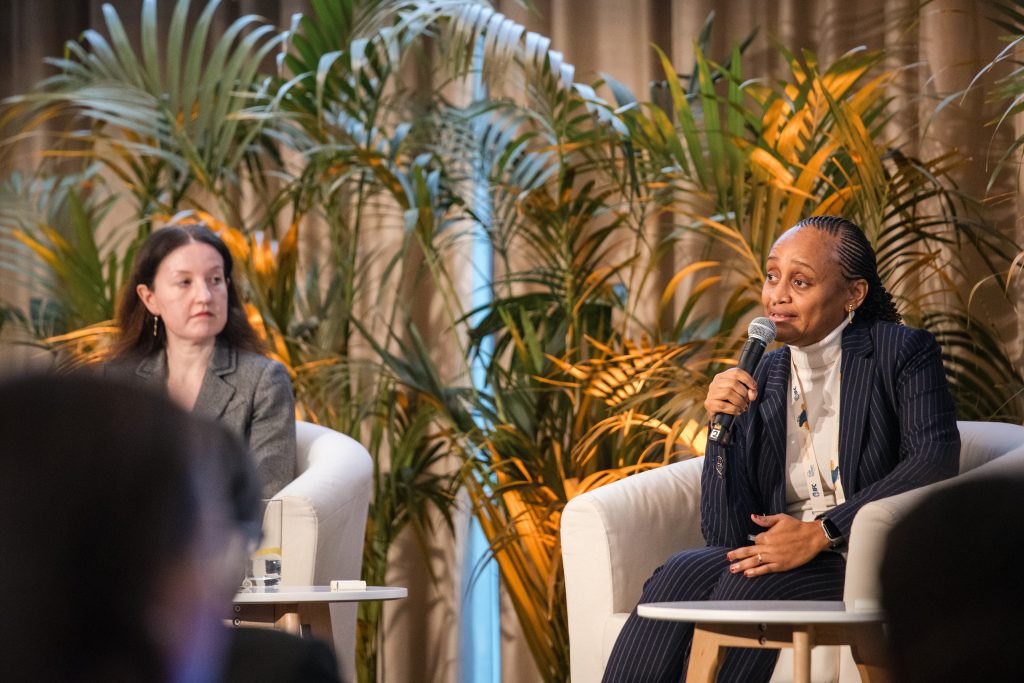
One of the highlights of the Women’s Trade and Supply Chain Finance Network roundtable at IFC’s Global Trade Partners Meeting was a fireside discussion exploring how supply chain finance can become more inclusive.
Moderated by Joy Macknight (TTP), the conversation featured Natasha Condon (J.P. Morgan) and Professor Neema Mori (CRDB Bank / University of Dar es Salaam).
Key themes included:
- Barriers women-owned businesses still face in accessing trade and supplier finance
- The role global banks can play in scaling inclusive programmes
- Regional challenges and opportunities, particularly across African markets
- How partnerships between MDBs, banks and corporates could accelerate progress
A strong focus throughout was on moving from commitments to outcomes.
Fireside Discussion
At the IFC Global Trade Partners Meeting in Lisbon, TTP partnered with IFC to support the Women’s Trade and Supply Chain Finance Network roundtable, focused on expanding access to trade and supply chain finance for women-led businesses. The event welcomed over 100 women leaders from around the world.
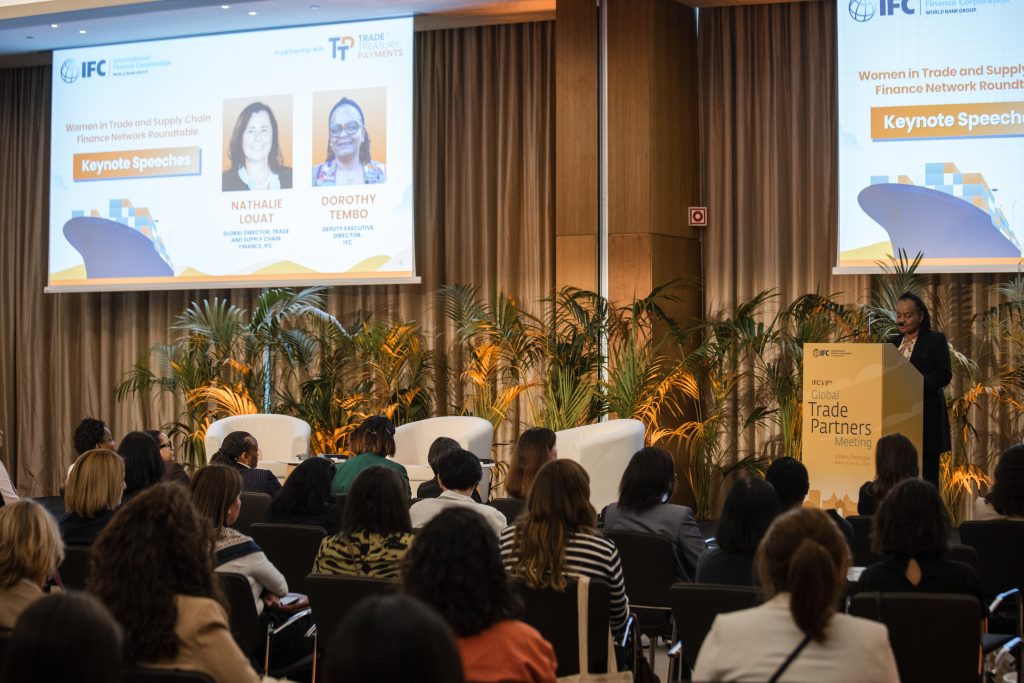
The session opened with remarks from Nathalie Louat (IFC) and Dorothy Tembo (ITC), highlighting the role of multilateral cooperation, targeted financing initiatives and ecosystem support in closing persistent access-to-finance gaps.
Joy Macknight (TTP) set the scene by outlining why inclusion in global supply chains remains both a development priority and a commercial opportunity for the transaction banking sector.
Opening