TF COP 2025 kicks off in London

Deepesh Patel
Editor in Chief, Trade Treasury Payments
Published 21 Nov 2025
Developing story
Live Updates
New TF COP 2025 Website goes live
Designed by ITFA’s Emerging Leader Gregor Mihelac
As the global initiative to bridge the estimated $2.5 trillion trade finance gap ramps up, the official website — tf-cop.com — has now launched. The platform was developed pro bono by Gregor Mihelac, honoured in 2024 as the International Trade & Forfaiting Association (ITFA) Emerging Leader of the Year.
According to the site, it serves as a central hub for the TF COP initiative, delivering:
- detailed descriptions of the TF COP Task Force structure (Think Tank + Incubator)
- profiles of working-groups and pilot streams (Insurance, Legal & Regulatory, Liquidity, Digital)
- registration pathways for membership and participation
- access to news, event agendas, and resource libraries
Trade Treasury Payments will continue its media partnership with TF COP and provide ongoing coverage of new project launches, working-group reports and pilot outcomes as the coalition matures.
It’s sunset, and groups are breaking out at TF COP

During the breakout roundtables, delegates were divided into moderated working groups focused on designing pilot-ready solutions to the SME financing gap. Each room aligned with one of the four pillars of the TF COP operating model and was tasked with developing actionable next steps.
1. Legal Frameworks and Instruments
Leads: Geoff Wynne & Simon Cook
Focused on legal definitions, enforceability, assignment of receivables, and structural reforms needed to scale cross-border SME trade finance.
2. Free-Flow Solutions 4
Lead group
Examined cross-cutting operational and policy barriers, generating unconstrained (“free flow”) proposals to boost SME access.
3. Africa-Focused Solutions
Leads: Ahanna Anaba, Anne-Marie Woolley & Tedd George
Developed solutions tailored to African markets, including LCY liquidity, aggregator models, NBFI integration, and deep-tier visibility.
4. NBFI-Led Solutions
Leads: Ian Henderson & Rima Kalai
Explored how fintechs, factors, and specialist lenders can expand SME financing capacity and complement bank-driven channels.
5. Bank-Led Solutions
Leads: John Omoti & Claudia Lopes
Focused on how banks can scale SME portfolios through improved onboarding, risk frameworks, and distribution mechanisms.
6. Free-Flow Solutions 3
Leads: Johanna Wissing & Harsha Mehta
Generated open-format proposals unconstrained by institutional or regulatory silos.
7. Tech and Data-Led Solutions
Leads: Michael Vrontamitis & Anastasia McAlpine
Addressed digital identity, data standards, interoperability, and analytics-driven SME risk assessment.
8. Sustainability Agenda
Leads: George Wilson & Tod Burwell
Explored sustainability-aligned trade finance structures, ESG data requirements, and models to bring green liquidity into SME supply chains.
9. Free-Flow Solutions 2
Leads: Deepesh Patel & Vikrant Yadav
Open discussion generating inventive, cross-functional solutions to overcome the SME financing gap.
10. Insurance-Led Solutions
Leads: Daniel de Burca & Paul Heaney
Focused on capacity, risk appetite, regulatory treatment, and operational models to scale credit insurance for SME trade.
11. Free-Flow Solutions 1
Leads: Sean Edwards & Johnny Hansen
A free-form working group synthesising insights across legal, liquidity, FX, data and institutional coordination.
It’s pitch time at TF COP.
Morgan Lepinoy, Product Lead, TF COP Incubator — Product
Morgan Lepinoy outlined a milestone-based liquidity facility designed around how African SMEs actually trade, financing each operational step from discharge and customs to transport and storage. By embedding logistics data and routing repayments through escrow, the structure derisks execution, enabling banks and DFIs to fund SMEs at scale across markets and sectors.
Ahanna Anaba, Chair, TF COP Africa Working Group; Head of Sales, Finverity — Capacity Building
Ahanna Anaba presented a standardised digitisation playbook to help mid-tier banks and NBFIs adopt SME financing products more efficiently. The framework clarifies workflows, data requirements, cost expectations, and technical-assistance pathways, giving institutions a clear picture of “what good looks like” and accelerating readiness for invoice discounting and other MSME tools.
George Wilson, Chair, TF COP Sustainability Working Group; CEO, ARM Africa Trade Finance Fund — Pipeline
George Wilson advanced a five-layer capital-multiplication model that treats the trade finance gap as structural rather than credit-driven. By using African banks as portfolio aggregators and securing revolving liquidity against government bonds, the FI Trade 3.0 approach converts fragmented SME exposures into investable, super-senior FI trade assets capable of attracting institutional capital at scale.
The Development Banks Panel (IFC, ADB, EBRD, IDB Invest, MIGA, AfDB, BII)

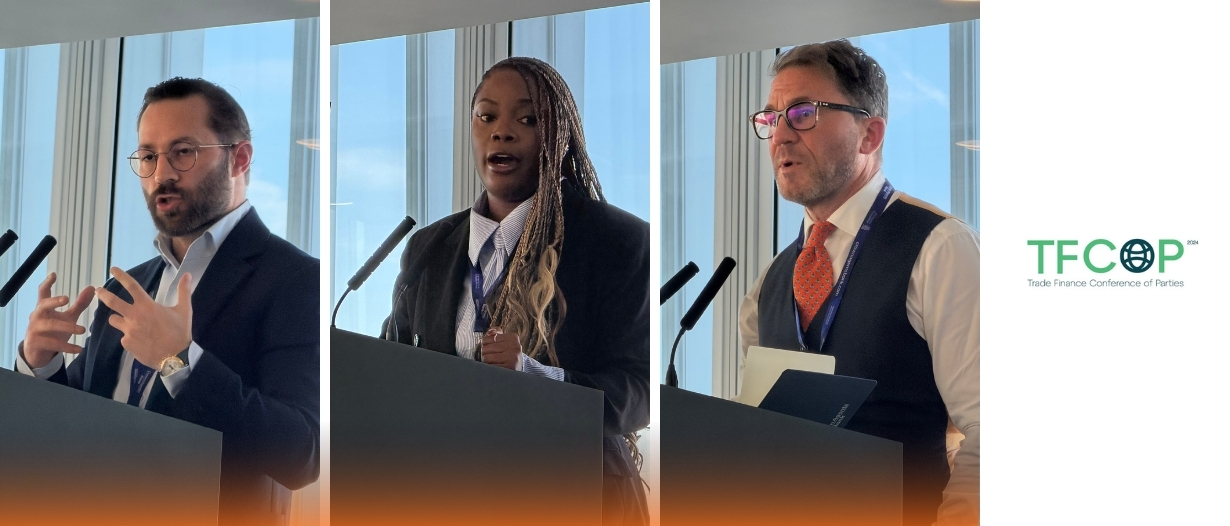
The session brought together Florian Wicht (IFC, Moderator), Lamin Drammeh (AfDB), Marco Nindl (EBRD), Alba Quílez Lois (IDB Invest), Wahid Ben Tanfous (BII) and Clarine Stenfert (MIGA), with ADB’s Steven Beck and Neha Noronha joining virtually.
The ADB preview of the 2025 Trade Finance Gap Survey confirmed the global gap holding at $2.5 trillion, with liquidity still the top constraint. 80% of banks expect demand to rise, and local-currency trade finance is becoming increasingly important.
MDBs highlighted persistent obstacles: weak legal and digital infrastructure, limited credit data, compliance costs, and difficulty identifying SMEs within supply chains. One institution noted financing 5 million MSMEs, yet this remains a fraction of market need. Digital adoption in parts of Africa remains low (~28%), and SME rejection rates still range between 35–40%.
Channels are shifting, bank-intermediated lending has fallen from 90% to 50%, with fintechs and anchor buyers now essential to scale. Geopolitics, sanctions, FX volatility and state-bank fragility continue to restrict risk capacity in several regions.
MDBs agreed on four priorities:
(1) Scale supply chain finance;
(2) Broaden SME liquidity access;
(3) Develop deep-tier and local-currency structures;
(4) Strengthen the Trade Finance Register and digitalisation momentum through 2030.
Redefining “True Trade” and the legal architecture for SME lending
The legal and regulatory session brought together Geoffrey Wynne (Sullivan), Jacqueline Cook (Mills & Reeve) and William Brydie-Watson (UNIDROIT) to examine how the sector can simplify and strengthen the foundations of SME trade finance.
The panel argued for a return to basics: trade is fundamentally about suppliers and buyers, yet decades of defensive structuring and technical layering have made trade finance unnecessarily complex. This complexity contributes to unclear risk profiles, inconsistent standards, and difficulties scaling financing for smaller companies.
A key theme was the need to establish a clear, limited definition of “true trade” to support more recognisable, financeable assets. The group explored how such a definition could underpin legal and contractual reforms, including options for priority treatment of SME trade-finance claims in insolvency, lower transaction-cost burdens (such as stamp duties and registration fees), and more consistent secured-transactions frameworks.
UNIDROIT’s work, particularly the MAC Protocol, enabling asset-based finance for mining, agricultural and construction equipment, was highlighted as a concrete example of how harmonised law can unlock liquidity. The panel also pointed to the need for broader adoption of digital identifiers and LEIs, ensuring that suppliers and buyers are properly identifiable within future regulatory and digital frameworks.
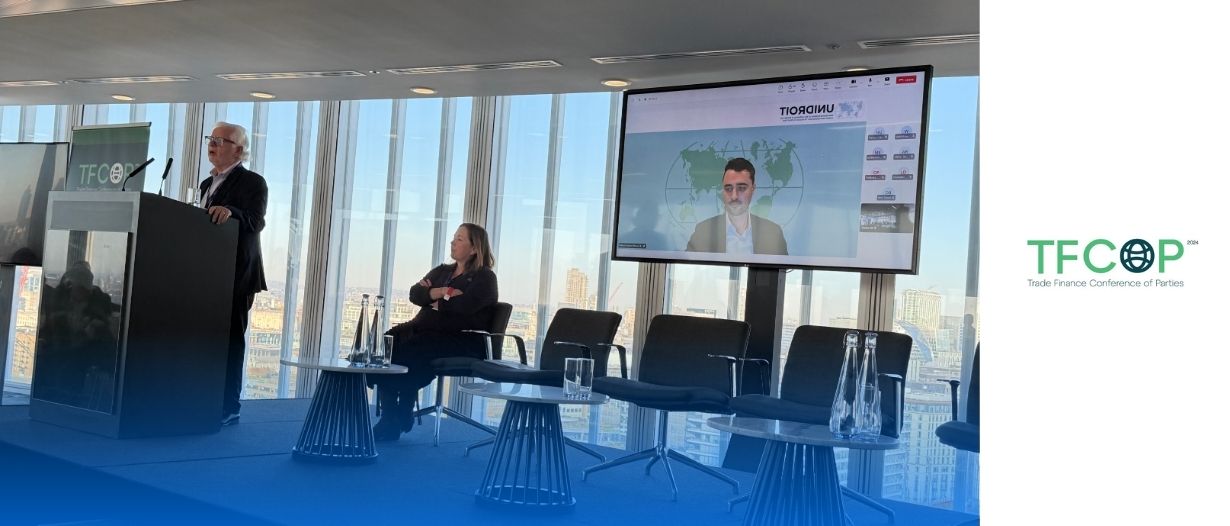
Reel | In this reel, Ahanna Anaba explains why TF COP – Trade Finance Conference of Parties is becoming an engine for closing the trade finance gap.
Recently elected to the ITFA Africa Regional Committee working group, outlines the progress, which has brought together banks, DFIs, and service providers to identify the root barriers preventing SME financing at scale.
Several pilots and workstreams are now ready to be presented to the wider TF COP community, with the aim of refining solutions and expanding collaboration.
A core focus is product design, developing trade-finance instruments built specifically for SMEs rather than retrofitting structures intended for large corporates.
Shona Tatchell, Director of the Trade Facilitation Programme (TFP) at EBRD, set out an agenda for what multilaterals can contribute to closing the trade finance gap. Beyond guarantees and capacity-building, she highlighted the need for identity signatures, AI-enabled compliance, dynamic risk-scoring models, smart-contract frameworks, digital identities, and fully electronic settlement to reduce friction across markets.
Her remarks built directly on the themes explored in our recent TF COP podcast with her, where she and IFC’s Makiko Toyoda unpacked why fragmented legal frameworks, manual processes, and uneven digital readiness continue to constrain liquidity. Today, she reinforced that multilateral leadership must go beyond diagnostics and actively accelerate the infrastructure, standards, and technologies that make scalable solutions possible.
Listen to the podcast here.
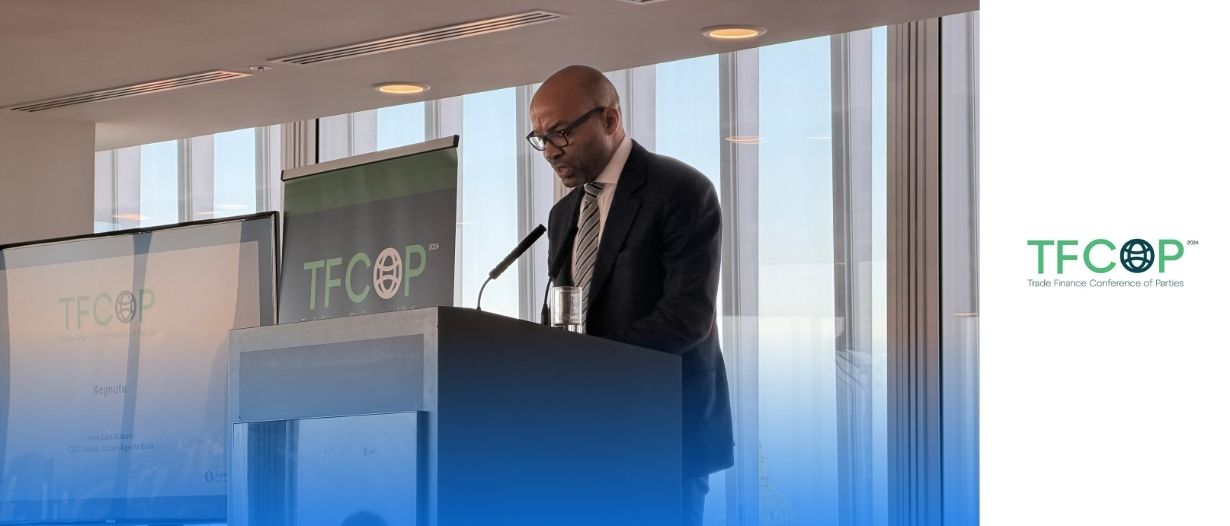
John Samkubam, CEO for Africa, Crown Agents Bank delivers headline speech at TF COP.
Duarte Pedreira, Chair, opened TF COP 2025 by reframing the $2.5 trillion trade finance gap as a human challenge affecting one billion people whose livelihoods, growth, and stability depend on access to finance. He reiterated the Washington Declaration targets: halving the gap by 2030 and eliminating it by 2040, while securing UN recognition of the gap as a formal barrier to the Sustainable Development Goals. He highlighted the coalition’s scale, 5 trade associations, 14 development banks, and broad private-sector participation, uniting to shape the next 12 months of solutions.
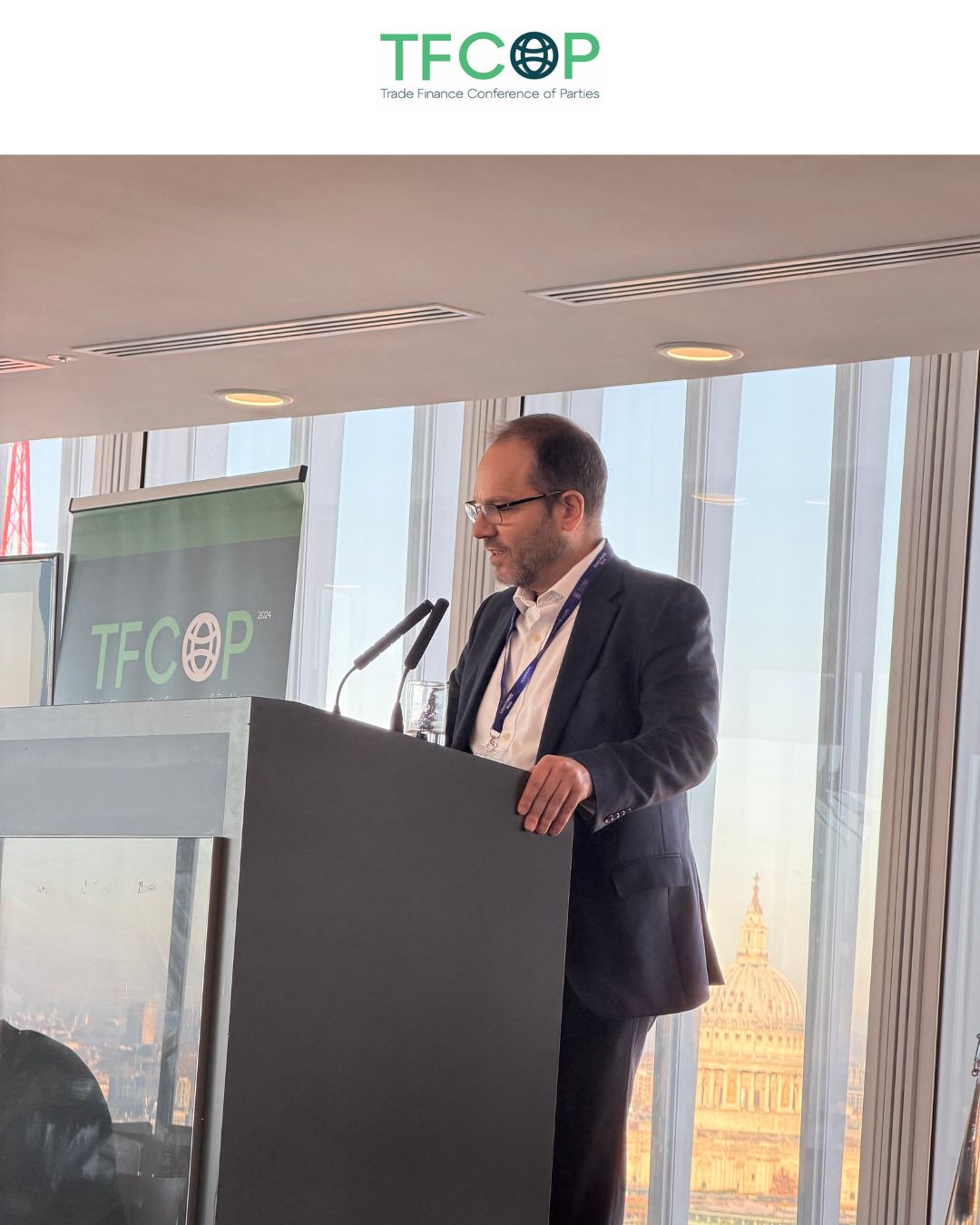
Trade Treasury Payments is the exclusive media partner for TF COP 2025, where global development banks, commercial institutions, insurers, fintechs, and regulators convene to design practical solutions to the $2.5 trillion trade finance gap.
Today’s agenda covers EM FX liquidity, new regulatory pathways for SME lending, insurance capacity, sustainability, pilot-design through the TF COP Incubator, and association updates from BAFT, Berne Union, FCI, ICISA, and ITFA.
We’ll be reporting breaking updates, insights, and interviews throughout the day. Follow this thread for real-time coverage from TTP.