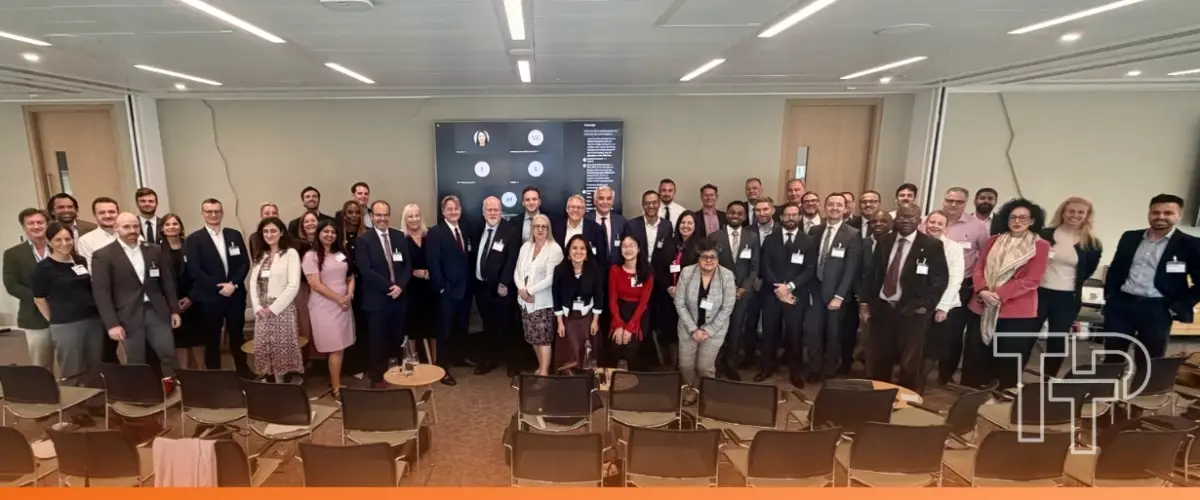
Local currency moves to centre of debate as TF COP leaders convene in London

Deepesh Patel
Editor in Chief, Trade Treasury Payments
Published 12 Jun 2026
Live Updates
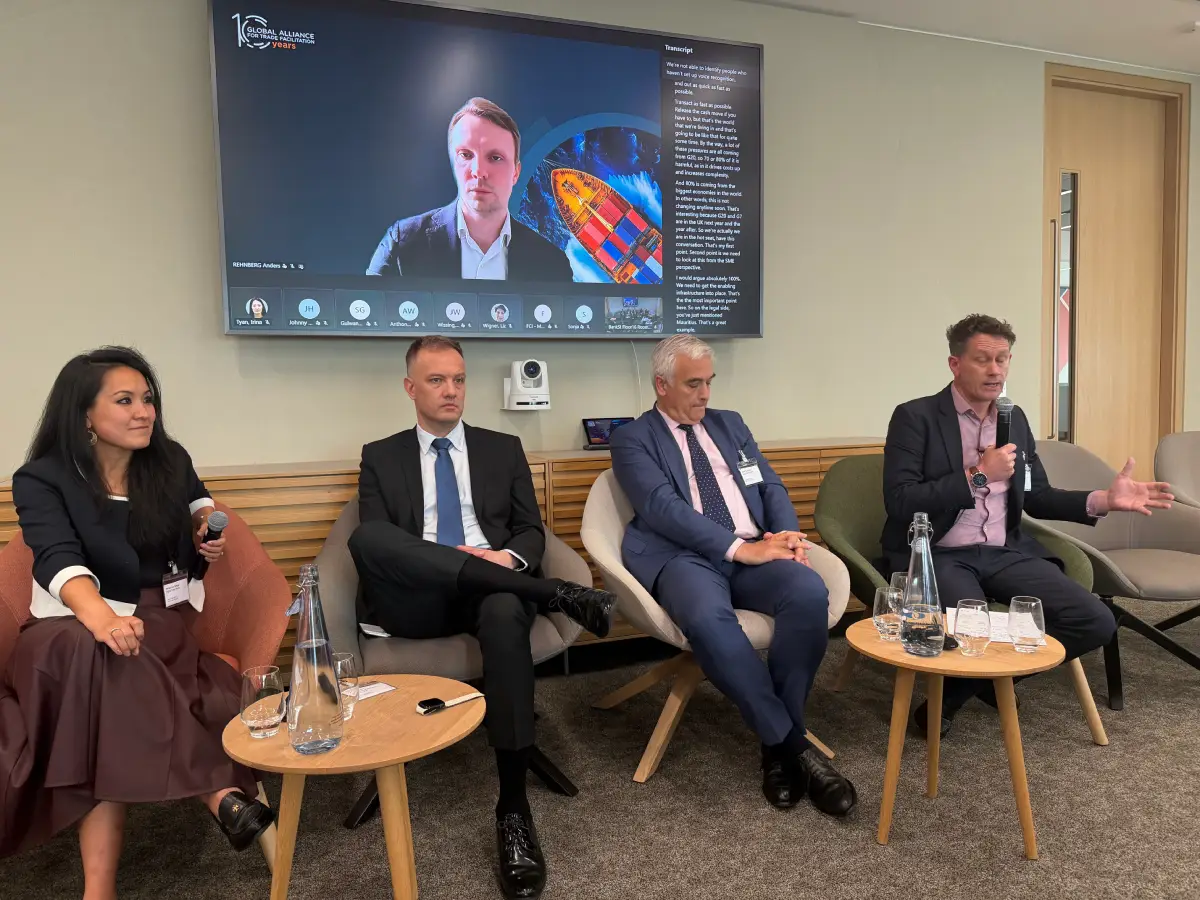
The TTP Global Advisory Panel took to the hot seat at today’s TF COP open meeting in London for a current state of play on trade digitalisation.
The session, moderated by Shona Tatchell of the EBRD Trade Facilitation Programme, moved quickly past the familiar case for digitalisation and into the harder question on why, after years of pilots and proofs of concept, has system-wide adoption still not arrived.
Three blockers dominated:
1) Interoperability. The trade finance industry remains the only sector whose response to fragmentation has been to ask everyone to join the same platform. It hasn’t worked. The parallel drawn was to early computing, where the solution wasn’t platform consolidation, it was coming up with common formats. The industry needs its equivalent of the Save As PDF function. Standards that allow records produced at one end to be read at the other, regardless of system.
2) Fragmentation. Digitalisation efforts within governments routinely produce systems that don’t talk to each other, let alone to the private sector. A digital certificate that works in one country, one region or one process but not the next creates a chain that is only as strong as its weakest link.
3) Trust. Legal infrastructure remains uneven. A growing divide is emerging between jurisdictions with comprehensive frameworks for electronic contracts, signatures and transferable records — the UK, US, UAE, Singapore, Mauritius — and those without.
Awareness is the start of any adoption curve. If SMEs disengage at that stage, the industry has already lost.
 TF COP Open Meeting | EBRD London | June 2026
Shona Tatchell, Anders Rehnberg, André Casterman, Chris Southworth, Merisa Lee Gimpel, Oswald Kuyler, EBRD, BAFT, ITFA, ICC United Kingdom, Digital Trade Works, Asian Development Bank, TF COP
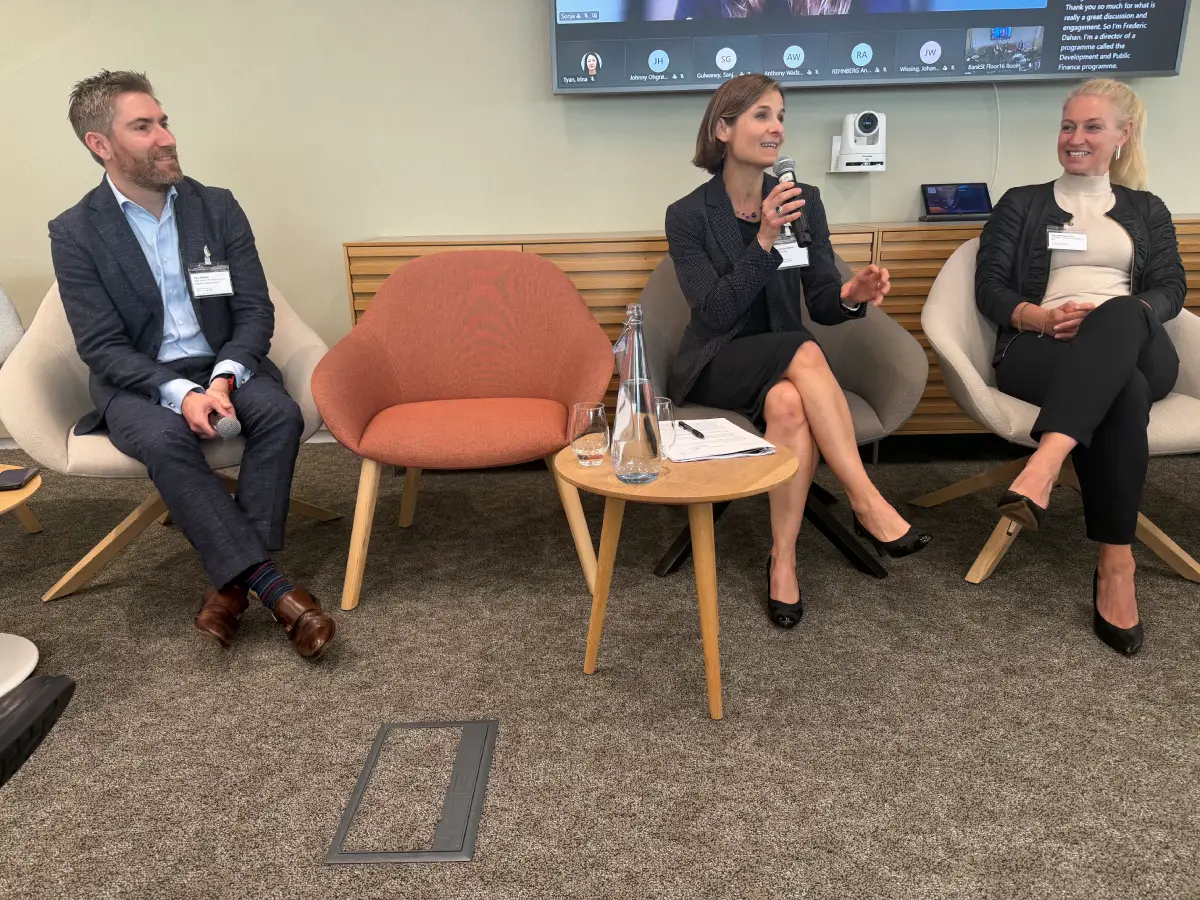
Blended finance has been discussed as a solution to the trade finance gap for years. A panel at today’s TF COP open meeting in London asked why it still isn’t working at scale.
The session, on blended finance and the trade finance gap, moderated by Paul Heaney of the Berne Union, brought together development finance experts, structuring specialists and capital markets practitioners to discuss why concessional capital is not reaching trade finance in meaningful volumes.Blended finance directed at trade is almost invisible in the data. Of all concessional finance globally, only 2% goes to blended structures, and within that, trade finance represents a fraction. Most DFI blended finance flows to SME lending through financial institutions, not to trade instruments. The risk profile difference, shorter tenors and the absence of granular obligor data were all cited as reasons, but no single explanation was definitive.Liquidity reaching banks does not automatically reach SMEs. A bank that received a USD facility might not deploy those dollars to an SME, because it lacked the products, credit frameworks and internal confidence to do so.The harder point, made from the floor, was that trade finance is not inherently attractive to local banks in frontier markets.
Monetary policy, liquidity concentration among tier-one banks and the absence of risk management infrastructure — derivatives, close-out netting, benchmarks — mean liquidity flows elsewhere.
CTA: Aggregate. Share the data. Make SMEs bankable.
TF COP Open Meeting | EBRD London | June 2026
Paul Heaney, Sonja Riedke, Marjolein Valentin, Frederique Dahan, Berne Union, Frontclear, Open Capital, ODI Global, TF COP
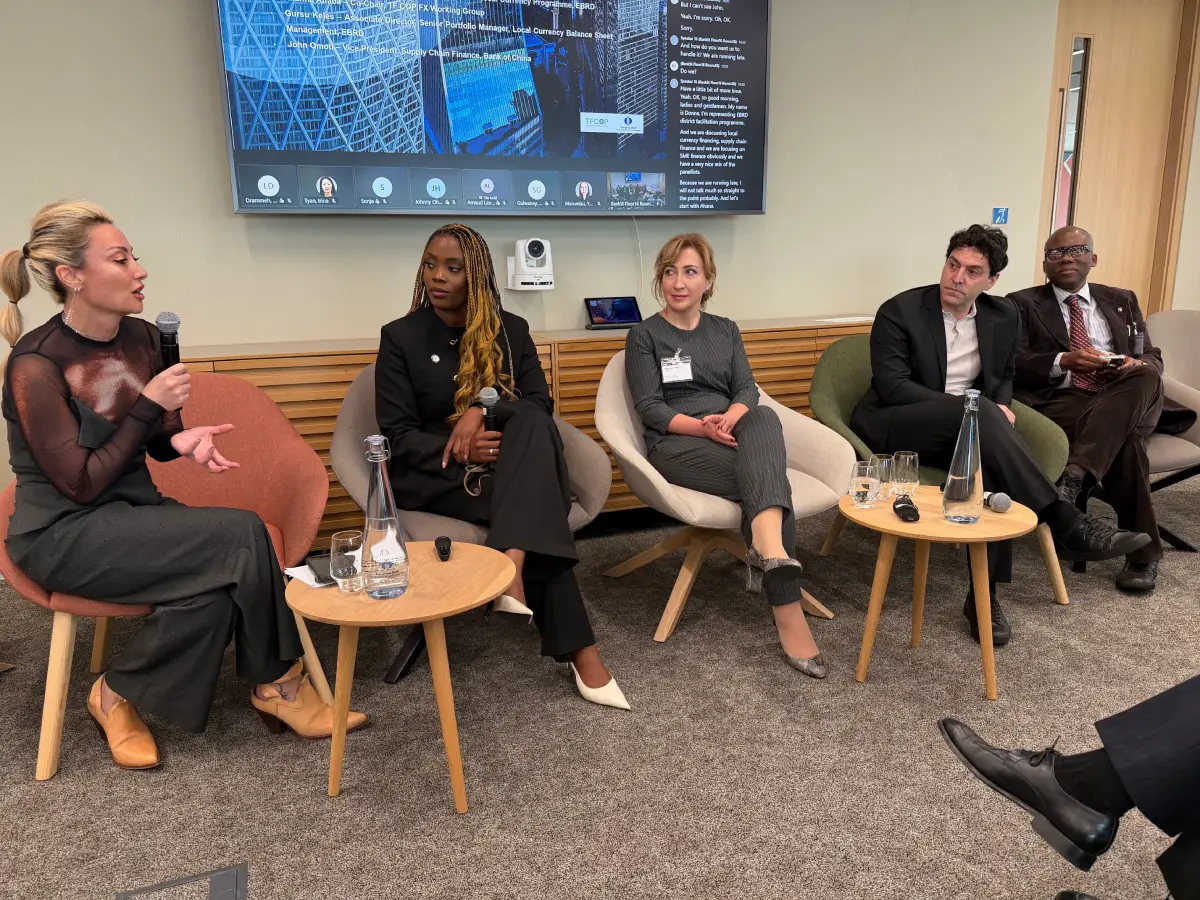
The trade finance gap has been framed for years as a shortage of dollars. A panel at today’s TF COP open meeting in London pushed back on that.
The session, on SCF, factoring and local currency financing, moderated by Nana Khurodze of the EBRD Trade Facilitation Programme, addressed the structural mismatch. SMEs in emerging markets generate local-currency cashflows, repay in local currency, and operate in local currency. The finance being designed for them is largely dollar-denominated, priced for international lenders, and structured around their balance sheets, rather than the small businesses that actually need it.
Three key themes:
- The EBRD is running a local currency programme that blends donor funding with its own sources to deliver competitive financing to financial institutions and SMEs directly, but only in markets where governments and central banks commit to active policy engagement. Capital without the policy layer doesn’t work.
- On central bank swap facilities: relying on MDB-to-central-bank pipelines to source local currency removes the incentive for private investors to price and absorb that risk themselves. The goal is to build onshore benchmarks and deepen local liquidity markets.
- RMB demand is now coming from UK and European suppliers, not just Chinese counterparties.
Trade finance has been dominated by USD solutions, while most of the banks actually financing SMEs are doing it in local currency.
TF COP Open Meeting | EBRD London | June 2026
Ahanna Anaba, Nana Khurodze, Thea Kokhreidze, Gursu Kejes, John Omoti, TF COP, EBRD, Finverity, Bank of China.