
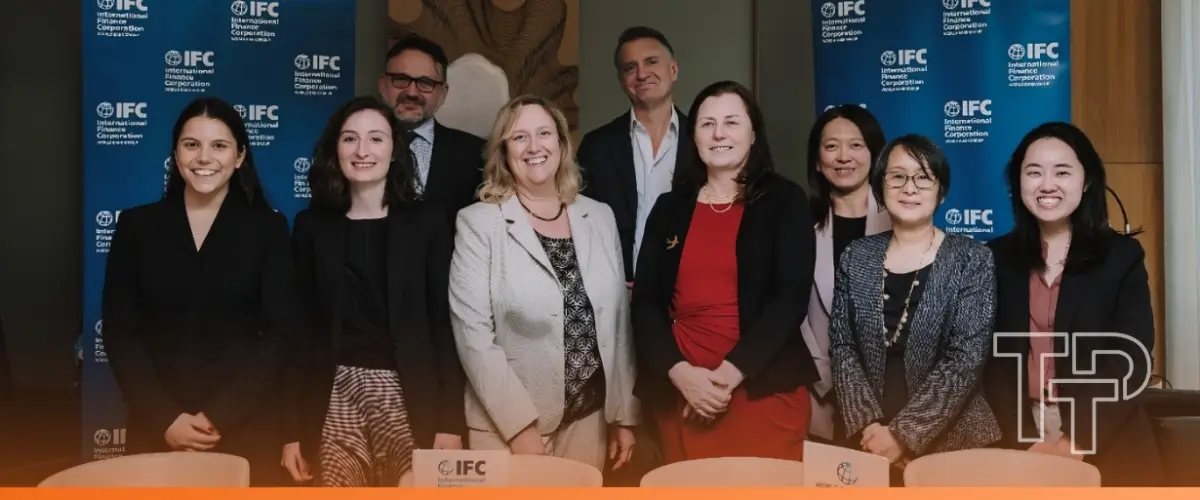
IFC and Banco Santander launch $500 million risk sharing facility to scale supply chain finance in emerging markets

Devanshee Dave
Reporter, Trade Treasury Payments
Published 25 Jun 2026
Live Updates
The World Bank Group’s private sector arm, the International Finance Corporation (IFC), in partnership with Banco Santander S.A., has launched a new risk-sharing facility to scale supply chain finance, foster business growth, and support job creation across emerging markets.
Nathalie Louat, Global Director of Trade and Supply Chain Finance at IFC, said, “Supply chain finance is a critical enabler of global trade and commerce, ensuring that liquidity reaches key businesses and intermediaries precisely when markets face heightened volatility.”
“Through strategic partnerships like this one with Banco Santander, IFC and its partners help sustain supply chains, protect jobs, and support the businesses that communities in emerging markets depend on, strengthening economic resilience and driving growth where it is needed most.”
Expanding access to finance for emerging market suppliers
The facility is designed to expand access to financing for suppliers in emerging markets, who often face limited borrowing options. It enables these suppliers to obtain financing based on the creditworthiness of their buyers rather than their own financial profiles.
By improving payment cycles and increasing liquidity, the facility helps businesses invest in growth, expand operations, and create employment opportunities.
The risk-sharing facility will cover up to $500 million in supply chain finance assets originated globally by Banco Santander S.A. Over the next three years, the partnership is expected to facilitate approximately $1.5 billion in supply chain finance transactions.
This expansion will particularly benefit emerging-market suppliers, including small and medium enterprises (SMEs), by unlocking critical financing that sustains and grows businesses employing large numbers of workers in developing economies.
The initiative supports livelihoods, economic stability, and growth in communities where quality jobs are most needed, addressing a vital development challenge.
Addressing challenges in the current economic environment
This facility arrives at a time when businesses in emerging markets face an increasingly difficult environment. Supply chain disruptions, elevated interest rates, and tightening bank liquidity have sharply reduced the availability of working capital and trade finance.
These pressures disproportionately affect smaller suppliers with limited financial buffers.
Supply chain finance has proven an effective mechanism for preserving liquidity, enhancing resilience, and ensuring the reliable movement of goods across global markets. This risk-sharing facility leverages that mechanism to mitigate current challenges.
Stefano Sabbadini, Global Head of Private Debt Mobilisation at Banco Santander, said, “At Santander, we are committed to using our global platform to support businesses wherever they operate, and that means ensuring that suppliers in emerging markets have access to the financing they need to grow and thrive.”
“Partnering with IFC allows us to go further than we could alone. IFC’s deep knowledge of emerging markets, its development mandate, and its ability to mobilise capital make it an invaluable partner in extending the reach of our supply chain finance offering to underserved suppliers, including SMEs.”
Developed under IFC’s Global Supply Chain Finance Program
This facility was developed under IFC’s Global Supply Chain Finance Program (GSCF), launched in 2022 as part of IFC’s response to growing disruptions in global supply chains.
Since its inception, the GSCF has expanded significantly in reach and impact, supporting innovative financing solutions that benefit both international and domestic suppliers and buyers.
Beyond financing, the GSCF provides advisory support to strengthen the broader ecosystem for supply chain finance. This includes efforts to improve legal and regulatory frameworks, build local market infrastructure, and advance digital capabilities, factors critical to sustainable growth and resilience in emerging markets.