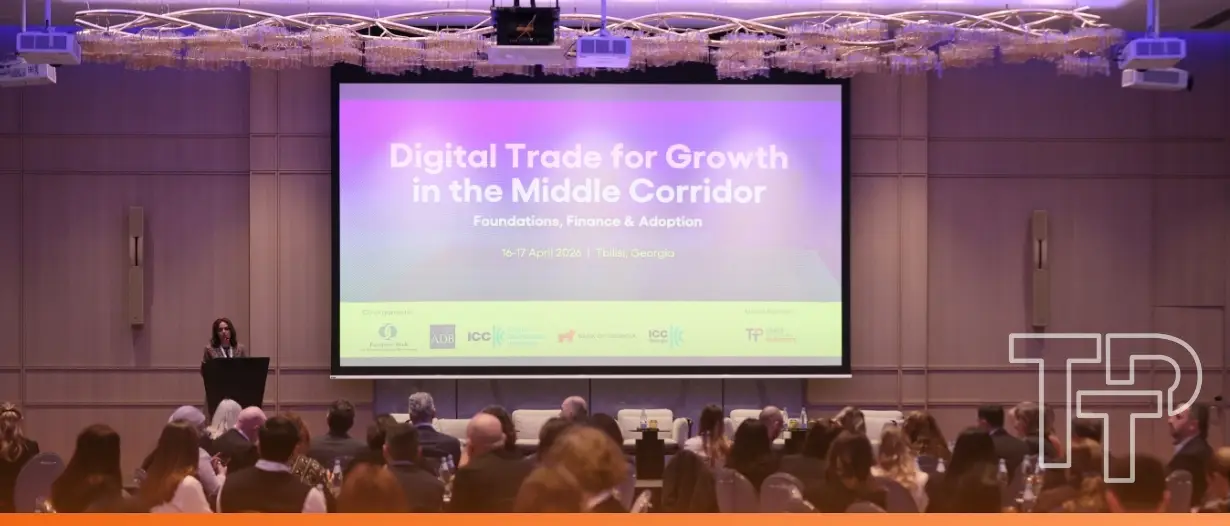
Georgia positioned at the heart of digital trade for growth in the Middle Corridor

Deepesh Patel
Editor in Chief, Trade Treasury Payments
Published 16 Apr 2026
Live Updates
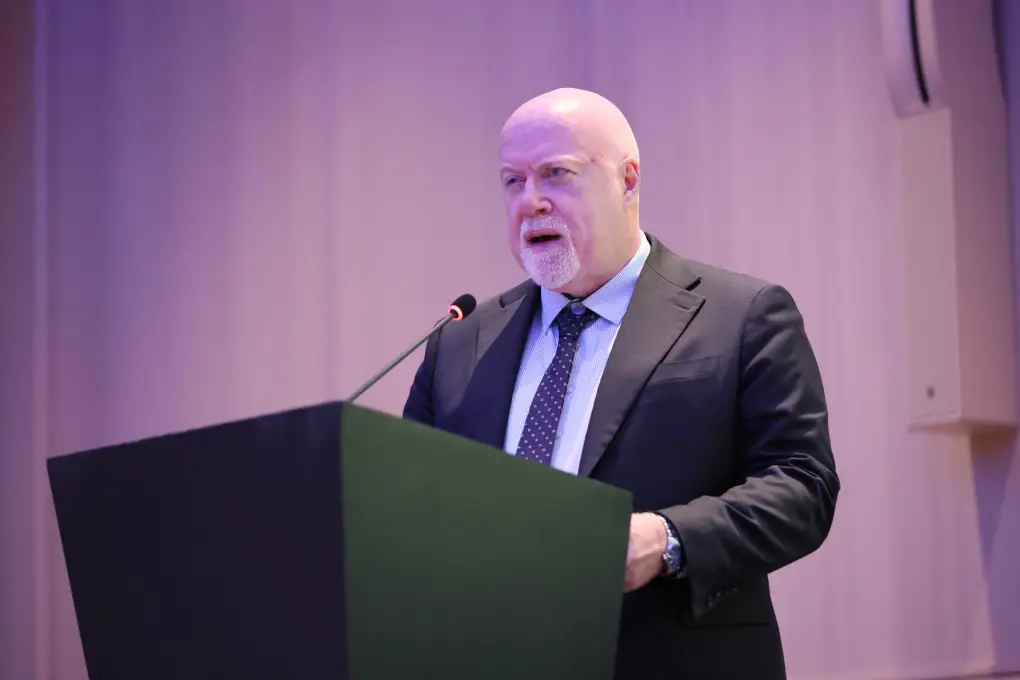
Milot Ahma, Principal Counsel, Legal Transition Programme, EBRD, discussed a common misconception in the Middle Corridor debate:
“Faster corridors do not automatically mean more financing.”
The Middle Corridor is ~2,500km shorter than the Northern Corridor, yet remains less competitive. The next gains will come from digital trust,
Key points:
- Logistics improvements alone do not unlock trade finance, legal certainty does
- Without recognised electronic documents, banks cannot confidently finance transactions, regardless of speed
- UNCITRAL frameworks and the new UN Convention on Negotiable Cargo Documents aim to fix exactly this, giving digital documents the same legal standing as paper
- Trade documents represent title, control, and risk
- If that legal function cannot move digitally across borders, financing remains constrained
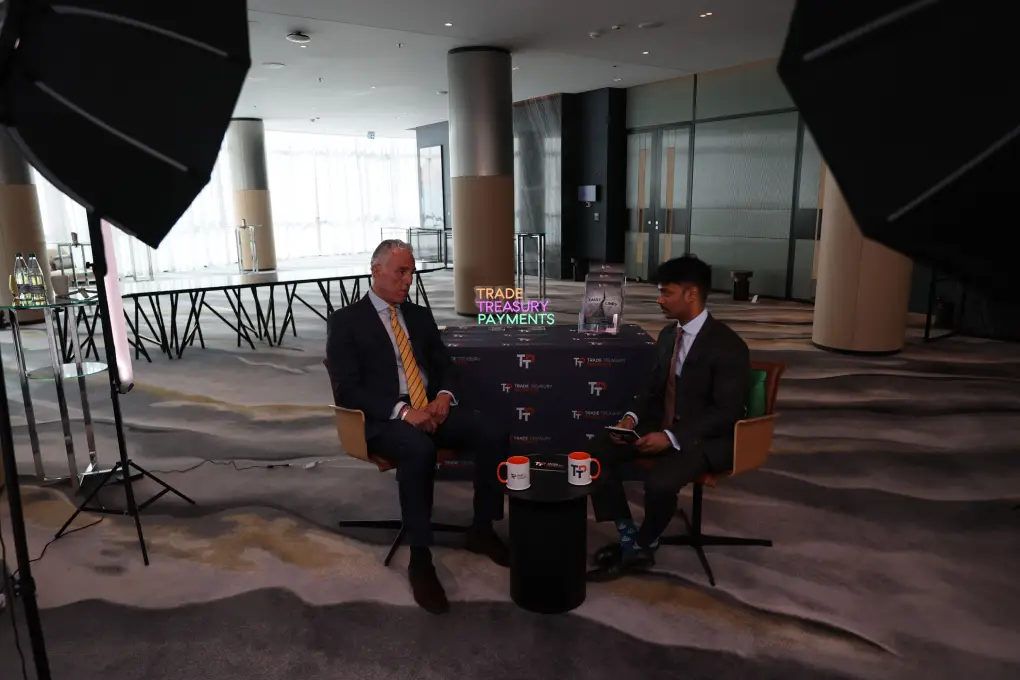
Trade Treasury Payments is covering the discussions on the ground as a media partner.
EBRD TFP, International Chamber of Commerce, ADB TSCFP, Bank of Georgia

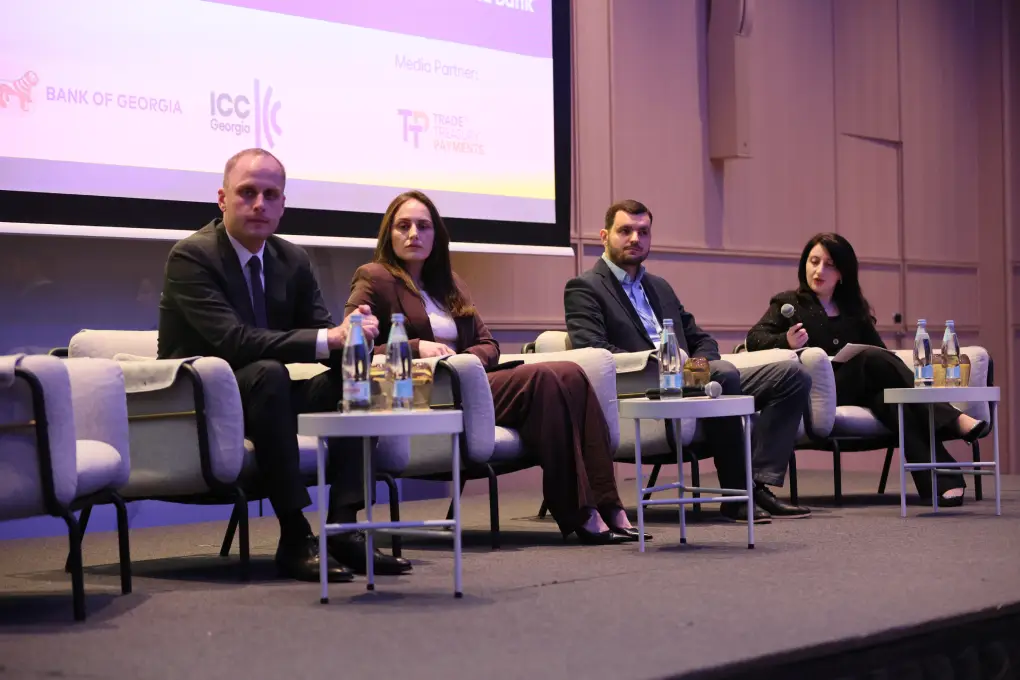
Now into the ‘Middle Corridor: Beyond the hype’ discussion.
On the panel:
- Anna Ivanishvili, Head of Railway and Terminals Department, Metro Logistics
- Levan Berdzenishvili, Commercial Manager, Tbilisi Dry Port
- Mikheil Babunashvili, Director of Georgian Branch, FS Mackenzie
- Salome Danelia, Professor of Economics at Ilia State University and International Trade Expert for the World Bank
- Moderated by Rostomi Lezhava, Head of ICC Georgia Logistics and Transportation Committee and CEO of Metro Logistics.
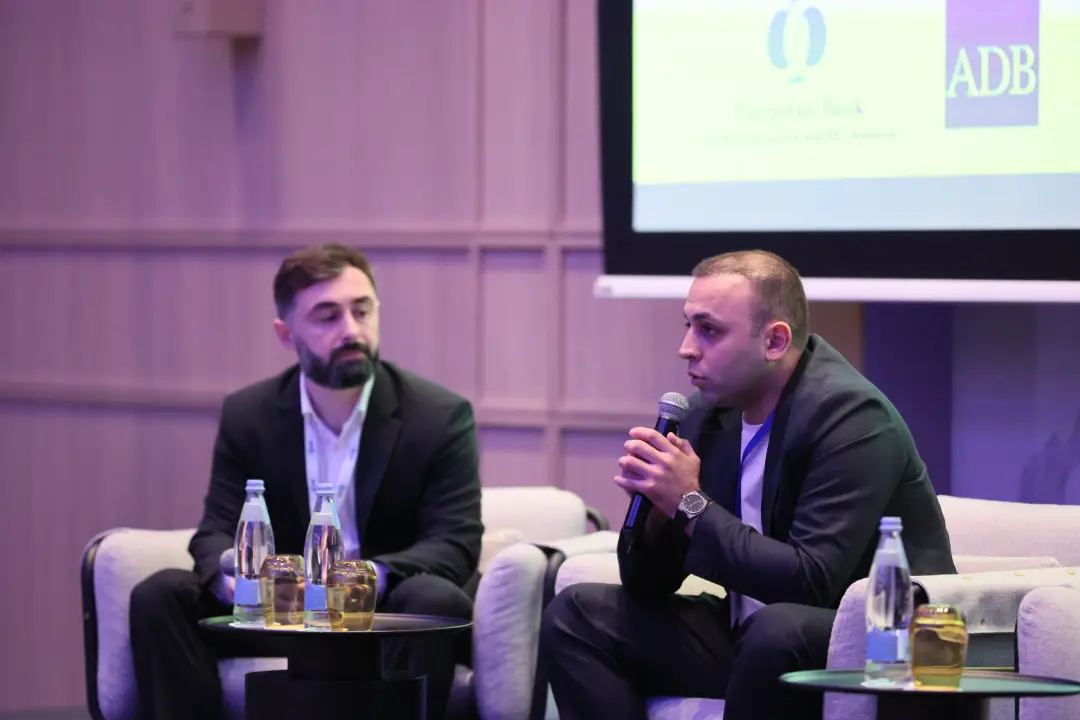
The panel uncovered the practical realities of building a functioning trade corridor, considering logistics infrastructure, rail and port connectivity, bottlenecks across borders, and what it actually takes to move goods efficiently from Central Asia through the Caucasus into Europe:
- The Middle Corridor remains constrained by customs fragmentation, with multiple border crossings, repeated checks and non aligned procedures driving delays and unpredictability
- Rail volumes are growing rapidly, but capacity through Georgia and key port interfaces is still limited, while documentation and coordination gaps mean information can still move more slowly than cargo
- The upside is significant, with transit times potentially falling by up to 50% and trade volumes capable of tripling by 2030 if coordination improves
- Delivery depends on public private partnerships, with institutions like ADB and EBRD acting as anchor investors to crowd in capital and align infrastructure across the corridor
- Legal alignment is becoming critical, with UNCITRAL frameworks enabling electronic trade documents to carry title and be used in cross border financing
- The prize is system wide, with an estimated 8% reduction in trade costs unlocking around $900bn in additional global exports, but only if infrastructure, legal frameworks and data systems are synchronised across all countries
Trade Treasury Payments is here as a media partner, covering the discussions shaping the future of the Middle Corridor.




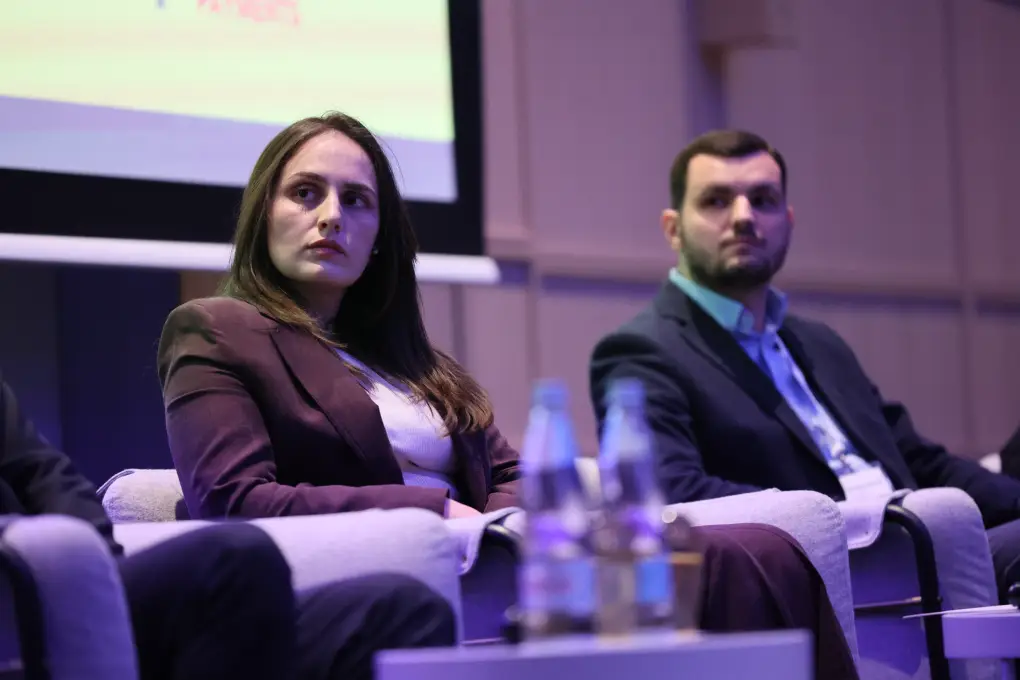
Trade finance has a trust problem.
At the Digital Trade for Growth in the Middle Corridor conference, Ian Milne, Monetago, raised the case for the need to build trust and verify risk for invoices, at a transaction level.
Trade finance is on track to become a $5 trillion market by 2028, yet the oft cited ADB $2.5 trillion gap remains stubbornly in place, with SMEs bearing the brunt of it. Half of rejected applications come from that segment, because verifying risk at the transaction level remains too costly and too uncertain. To summarise:
- Paper is already obsolete—customs, tax, and logistics are digital, but finance still can’t reliably verify that data
- The constraint is trust, with 50% of rejected trade finance requests coming from SMEs due to verification challenges
- Implementing a shared real-time validation layer across lenders—checking duplicate financing, invoice authenticity, and enforceability without exposing sensitive data could address the challenge, with successful case studies in India and Bahrain
- With this in place, the commercial upside is clear: higher SME approvals, lower fraud risk, faster decision-making, and scalable SCF/open account growth
Global factoring volumes stand at around €4 trillion, yet the Caucasus accounts for just ~€0.5 billion (~0.01%), with Georgia reaching ~€275 million and growing at roughly 51% year on year.
EBRD TFP, International Chamber of Commerce, ADB TSCFP, Bank of Georgia
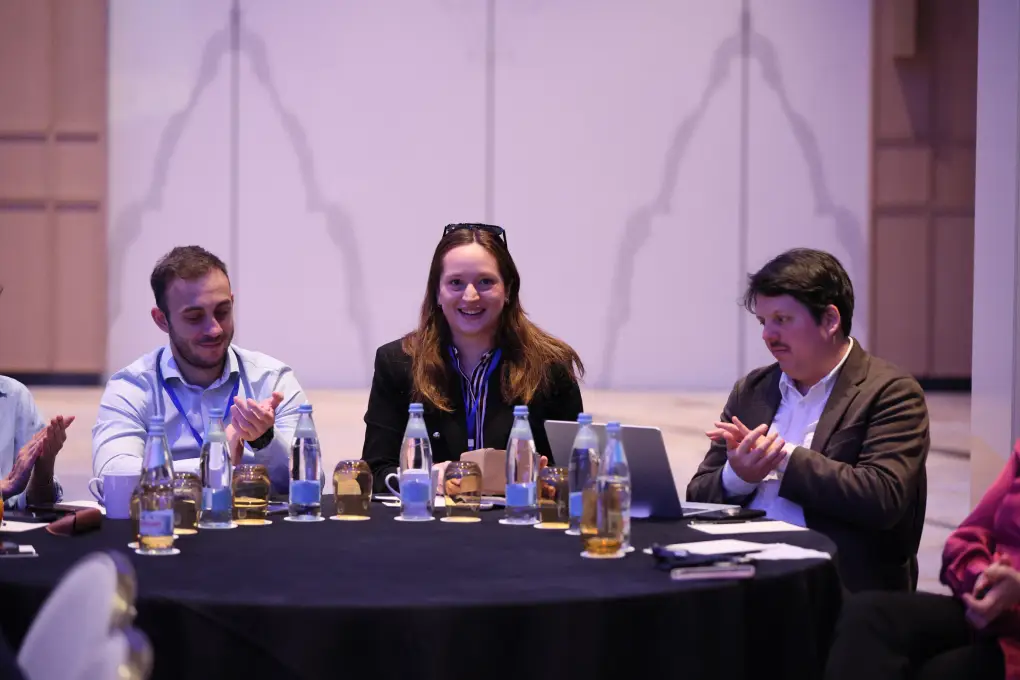
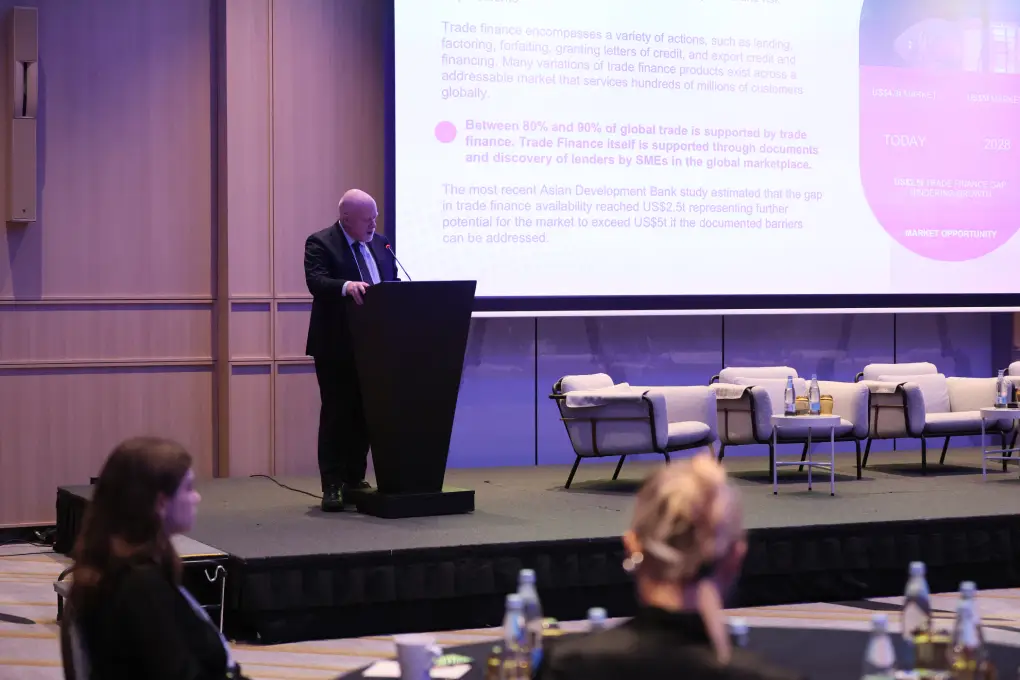
Highlights video: Digital Trade for growth in the Middle Corridor: Foundations, finance and adoption. Video link – https://youtu.be/9EtpzOWvgL8
TTP Editorial Board Member Pamela Mar and Managing Director of the ICC Digital Standards Initiative opened the day alongside TTP’s Editor Deepesh Patel, reflecting on the key themes of the conference so far.
From the first day of discussions, it was highlighted that the foundations for digital trade are largely in place, execution is now the constraint.
Speakers pointed to a convergence of legal reform, digital infrastructure, and institutional alignment. Interoperability—across identity, payments, and data—the critical enabler, alongside legal frameworks that ensure electronic records can replicate the function of paper.
Estimates suggest that removing the paper can reduce global trade costs by around 8% and unlock close to $900bn in additional exports, with corresponding gains in real wages rising 3%.
In Georgia, examples of implementation are emerging. At Bank of Georgia, guarantee issuance has reportedly shifted from a one-day process to near-instant execution, with more than half now issued digitally.
Participants were also asked to reflect on what they had learned, what could be implemented within their own institutions, and where the next tangible gains could be made.
Trade Treasury Payments is covering the discussions on the ground as a media partner. Stay updated with our live reporting.
EBRD TFP, International Chamber of Commerce, ADB TSCFP, Bank of Georgia





გამარჯობა (gamarjoba) from Tbilisi, where we begin day 2 of the ‘Digital Trade for Growth in the Middle Corridor’ conference, where TTP will be reporting on the key conference highlights. Two of the three trade corridors connecting Asia and Europe are Russia and Iran, which, due to the conflicts are not viable routes, making Georgia a geostrategically important hub.
TTP are proud media partners at the conference.
EBRD TFP, International Chamber of Commerce, ADB TSCFP, Bank of Georgia
Day 1 wrapped in Tbilisi 🇬🇪
Day one in Tbilisi closed with a clearer sense of what is actually holding digital trade back and what is starting to move in the Middle Corridor.
A typical transaction still runs through 5 to 10 core players, multiple borders, and as many as 36 documents. In some cases, that translates into 150 to 200 separate pieces of paper. The inefficiency is obvious, the more difficult question is how quickly it can be removed.
Today, around 62.5% of global exports now sit within economies aligned or committed to MLETR or equivalent, up from just over a third less than two years ago. Europe and Asia are pulling ahead, which matters for a corridor economy like Georgia given where its trade flows.
What made the discussion more concrete was the focus on time.
Examples cited during the day showed document amendments falling from a week to under 24 hours, documentary collections from 15 days to less than a day, and some execution processes moving from days into minutes. At a system level, projections point to a 28.6% uplift in exports for Georgia from full digitalisation, alongside lower trade costs.
None of this is particularly new in concept. What felt different was the emphasis on reliability and interoperability. Systems need to be trusted, data needs to be consistent, and legal frameworks need to hold across borders.
For a country positioned along the Middle Corridor, the gains are unlikely to be marginal.
Day two follows.
Trade Treasury Payments (TTP) is proud to be a media partner of this conference.
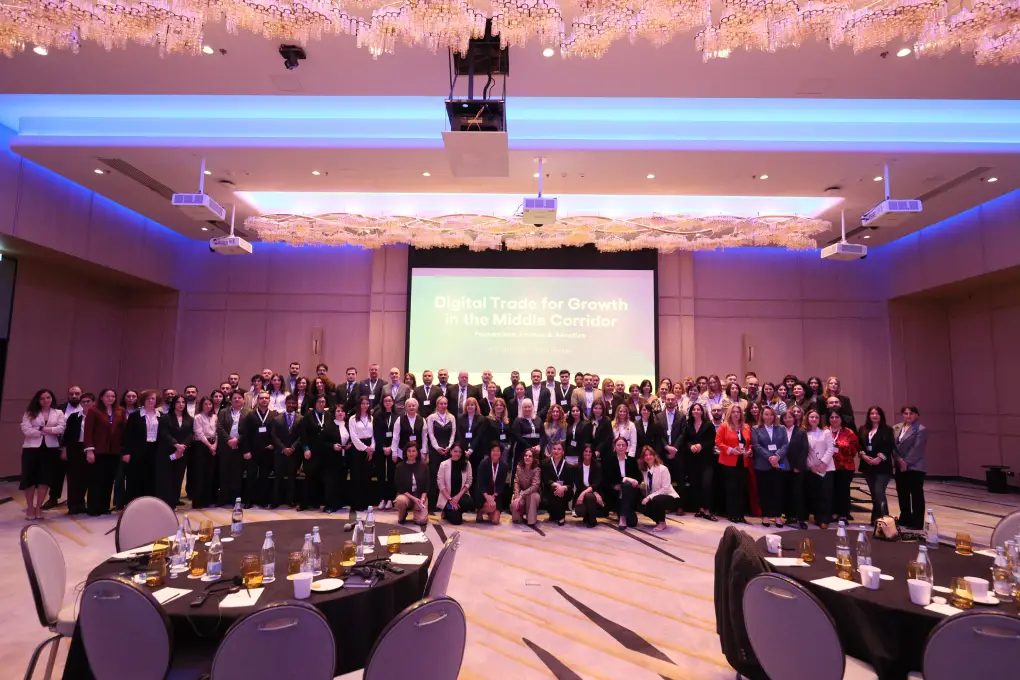
Thumbs up for reliability assessments!
Pamela Mar highlighted the push toward a common framework to assess whether digital trade systems can meet MLETR requirements in practice. The focus covered:
- independent verification of systems handling electronic transferable records
- ensuring integrity, control and singularity of digital documents
- alignment with ISO standards to build trust across platforms
- giving market participants a clear benchmark for compliance and interoperability
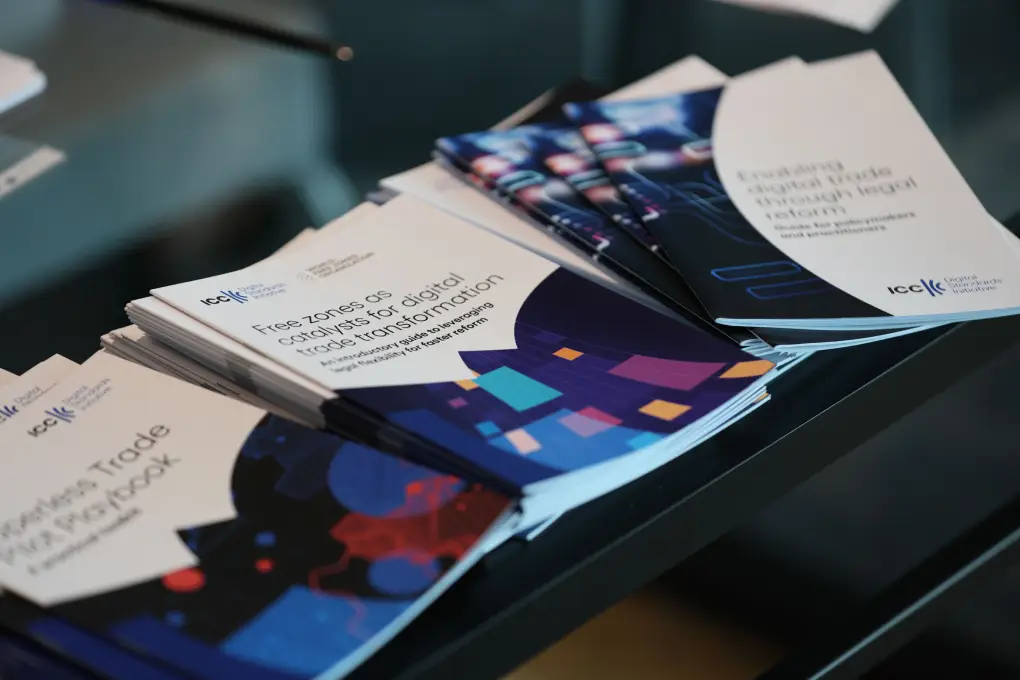
Some important links from ICC DSI are below, to explore the works of ICC DSI further.
MLETR tracker: https://www.digitalizetrade.org/mletrKey Trade Documents and Data Elements (KTDDE) report: https://7703b98d-a40e-40b5-9a19-2340c0e85ea4.filesusr.com/ugd/8e49a6_42a5406f9a5f481ba7ce1a97ee267525.pdfGuide to implementing MLETR framework: https://7703b98d-a40e-40b5-9a19-2340c0e85ea4.filesusr.com/ugd/8e49a6_580bc26ee8d04821bfdd80c348c86bfa.pdf

This morning in Tbilisi, the focus turned to the current legal reforms aiming to enable digital trade.
At the Digital Trade for Growth in the Middle Corridor conference, Luca Castellani (TTP Global Advisory Panel member) and Tianmi Stilphen walked through the latest developments in UNCITRAL model laws, conventions, and policy frameworks shaping the market.
This included the United Nations Convention on Negotiable Cargo Documents, establishing a uniform legal framework for negotiable cargo documents, alongside continued momentum behind MLETR.
The session on Legal Foundations reinforced that without legal certainty, digital trade cannot scale across borders, no matter how advanced the technology.
“Enhancing Digitalisation: Bank of Georgia as a Pioneer in Bank Guarantee Digitalisation” showcased on the ground progress, with Levan Tetradze and Tsotne Mikeladze sharing practical insights on digitising bank guarantees and the operational impact for clients.
Trade Treasury Payments (TTP) is proud to be a media partner of this conference.
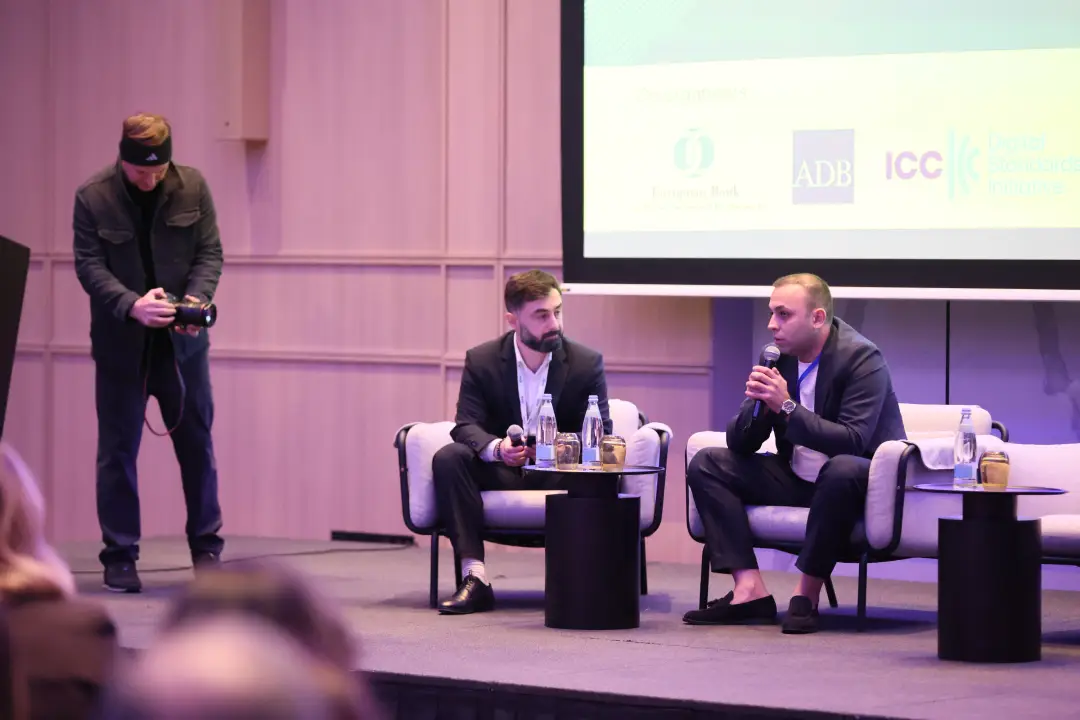





Pamela Mar, Editorial Board Member, Trade Treasury Payments, and Managing Director of the ICC DSI, opens up the day with a global overview
What are the macroeconomic gains from lowering trade costs through digital trade?
Analysis by the Economic and Social Commission for Asia and the Pacific (ESCAP) suggests that the implementation of digital trade facilitation and paperless trade measures could lead to:
- Around 8% reduction in global trade costs
- Increase of approximately $900 billion in global exports
- Real wage growth of about 3%
- A reduction in producer prices of nearly 4%
Read the report here: https://7703b98d-a40e-40b5-9a19-2340c0e85ea4.filesusr.com/ugd/8e49a6_580bc26ee8d04821bfdd80c348c86bfa.pdf


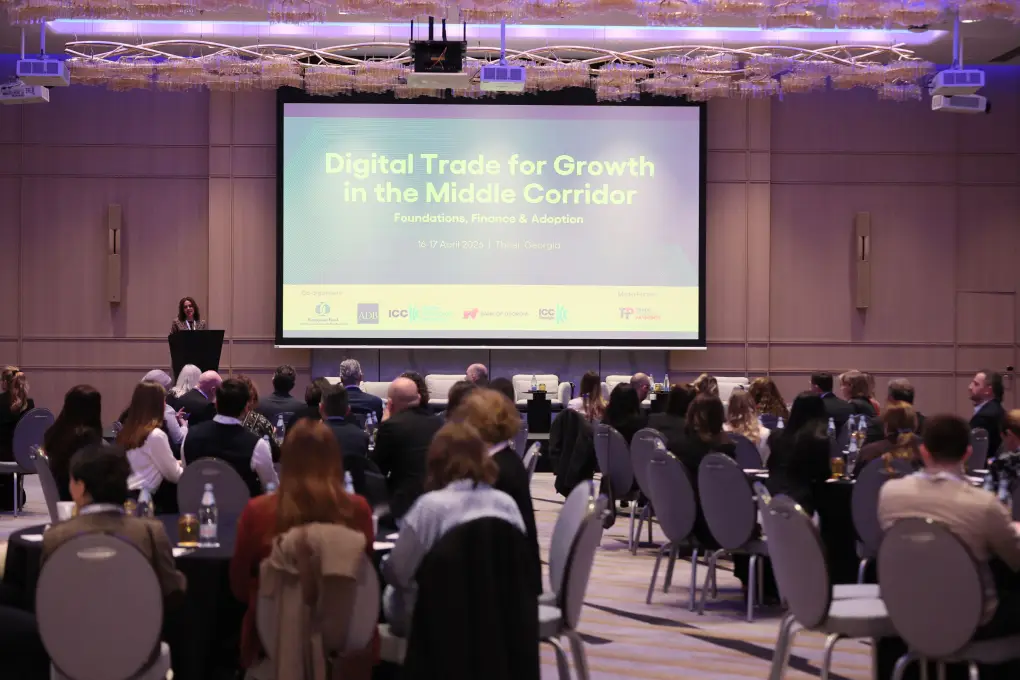
At the ‘Digital Trade for Growth in the Middle Corridor’ conference in Tbilisi, we heard about the push for digitising trade corridors quickly to drive growth.
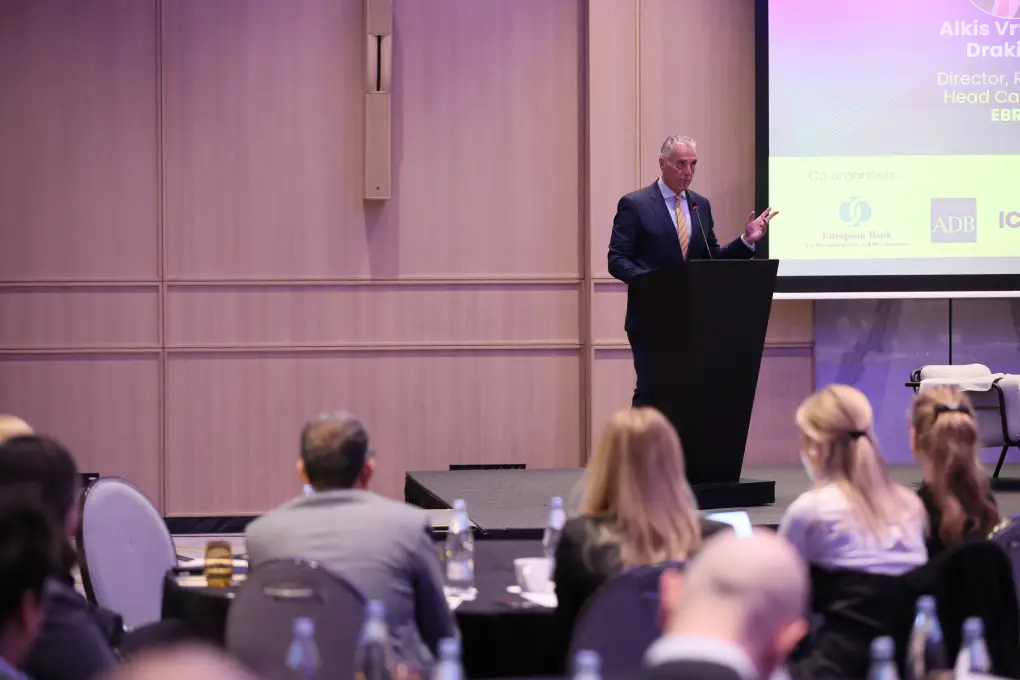
Opening remarks from Alkis Vryenios Drakinos, Director, Regional Head Caucasus, EBRD, Lesley Bearman Lahm, Country Director, ADB Georgia Resident Mission, and Fady Asly, Chairman, ICC Georgia positioned Georgia at the centre of a rapidly evolving trade landscape linking Europe and Asia through the Middle Corridor via Central Asia, the Caspian Sea and the Southern Caucasus.
Around 62.5% of global exports now come from economies aligned or committed to MLETR or equivalent, which is up from 34.3% in October 2023. With Europe and Asia accelerating adoption, Georgia’s trade partners are moving quickly.
There is an economic business case for Georgia:
- +28.6% export growth potential from full trade digitalisation
- $640m in incremental exports
- –5.1% in trade costs
- +3.2% in real wages
Trade Treasury Payments (TTP) is proud to be a partner supporting the conversation.





დილა მშვიდობისა from Tbilisi!
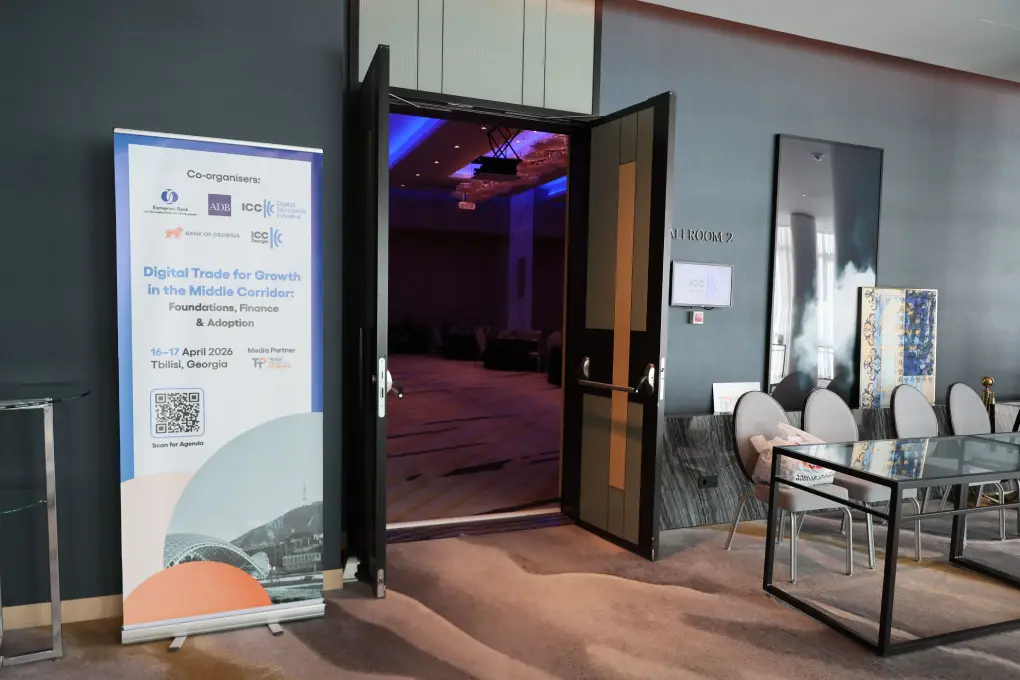
The TTP team are reporting this morning from Georgia, as exclusive media partners of the ‘Digital Trade for Growth in the Middle Corridor’ conference, supported by ADB, EBRD TFP, ICC DSI, ICC Georgia
On the ground, we’ll be exploring:
- The growth of digital trade in the Middle Corridor, and why multilateral development banks and international finance institutions are collaborating to accelerate this
- What the factoring law in Georgia means, which passed through parliament on the 1 April, to enacted in January 2027
- Why legal reform is so important, and where the key frictions are
- How we move corporates from paper to digital in a meaningful way