Drill, baby, drill’: energy realism sets tone at ICC UK’s Trade for Tomorrow conference

Deepesh Patel
Editor in Chief, Trade Treasury Payments
Published 10 Feb 2026
Developing story
Live Updates
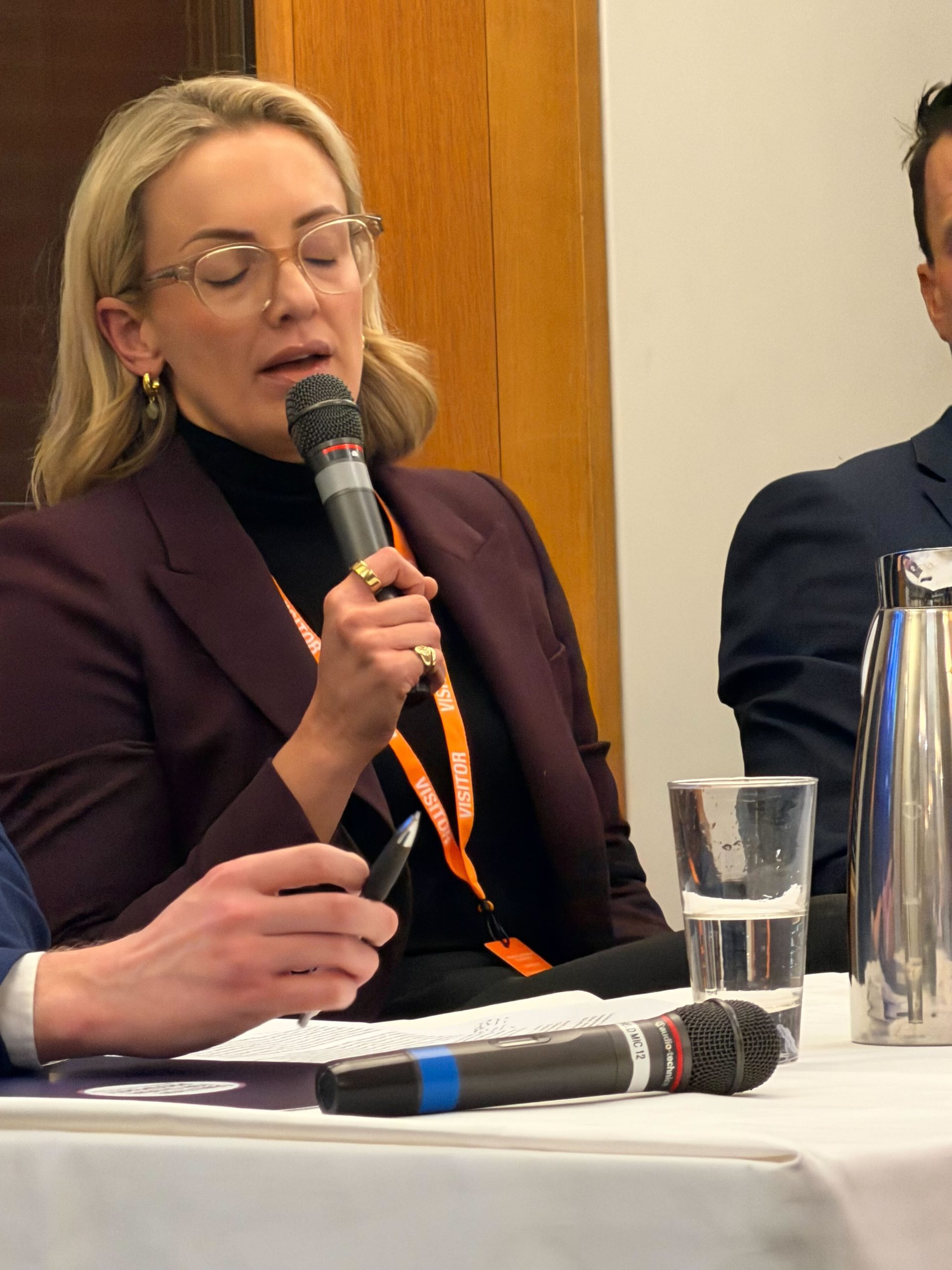
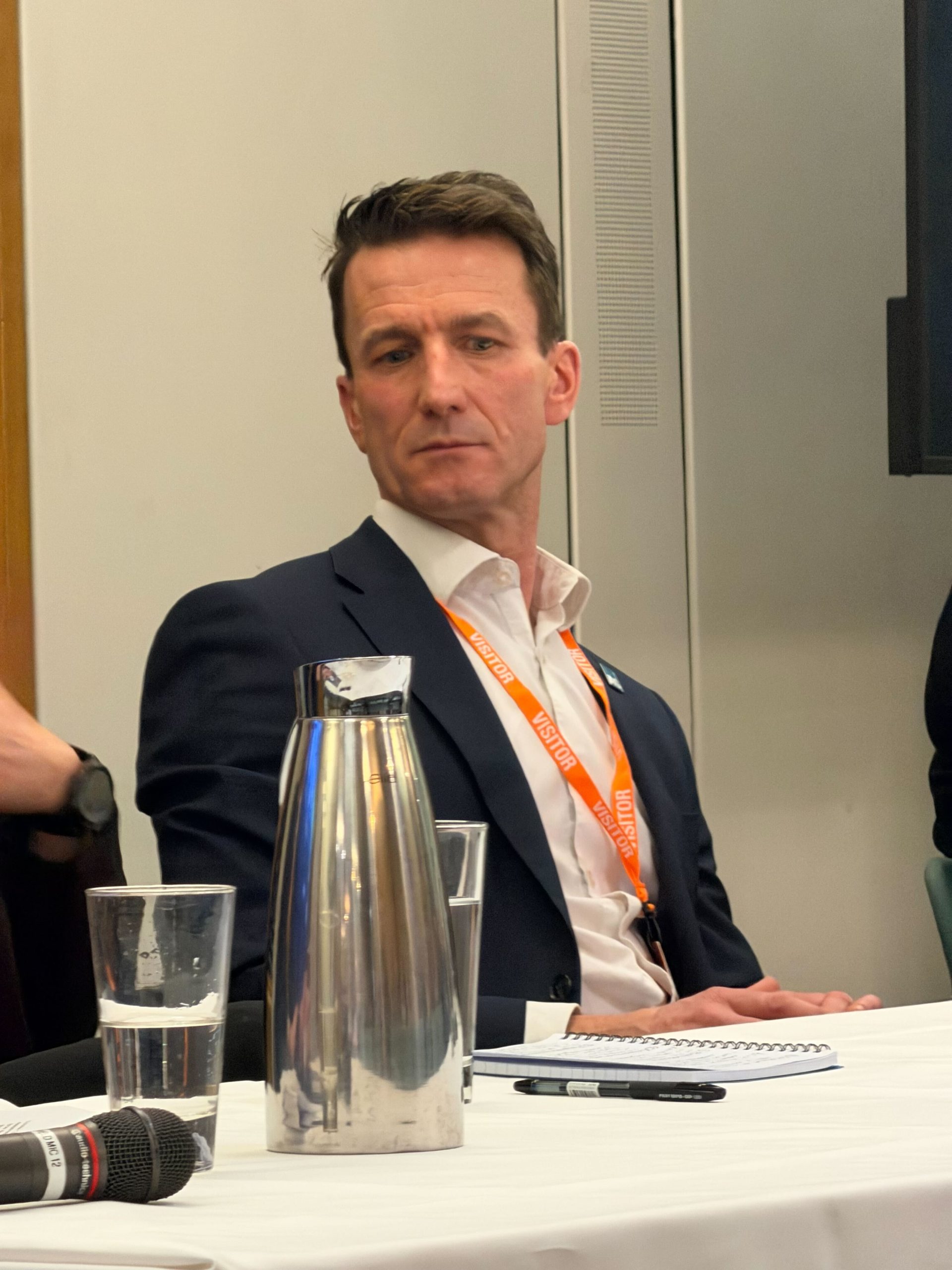
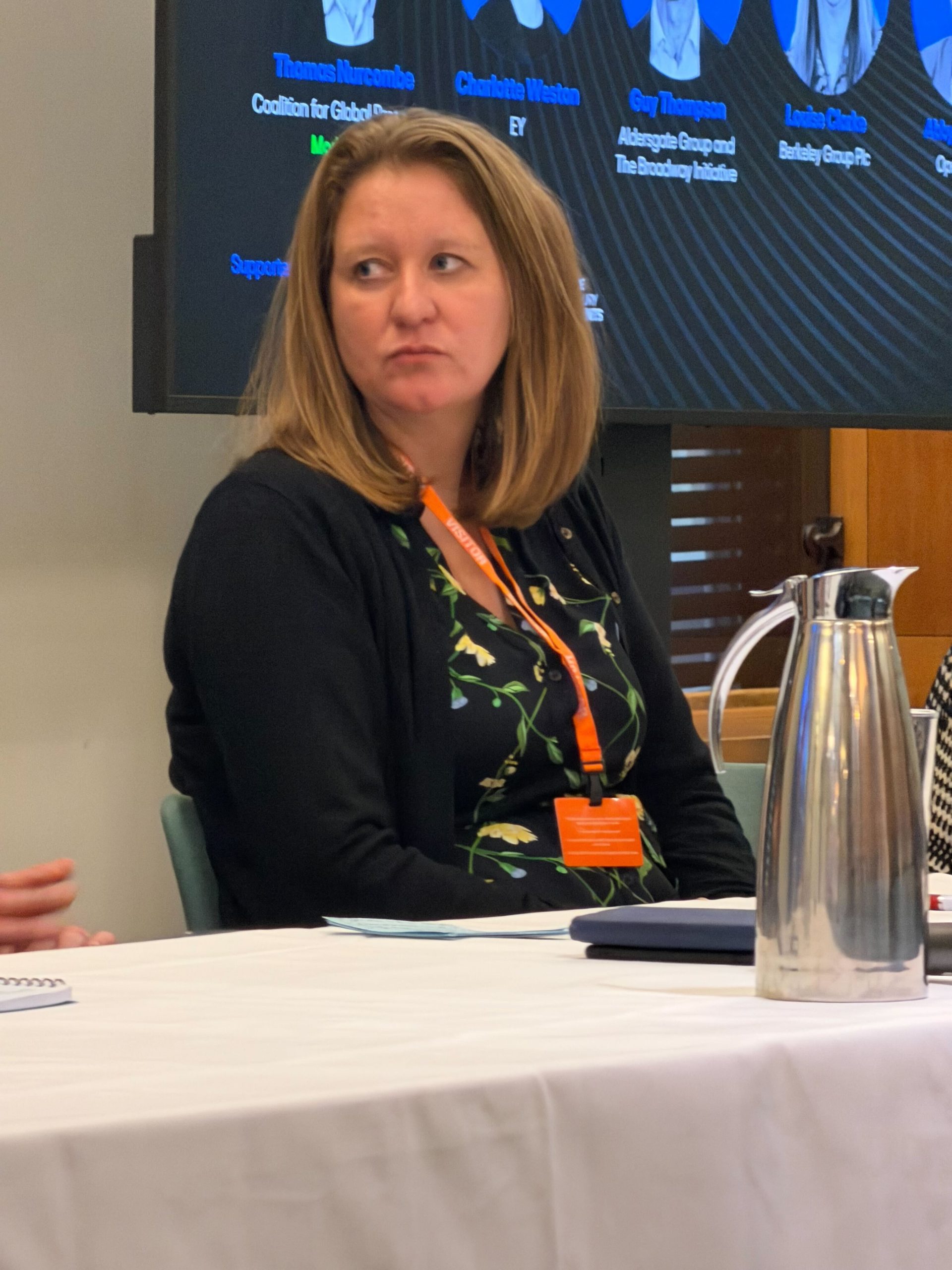
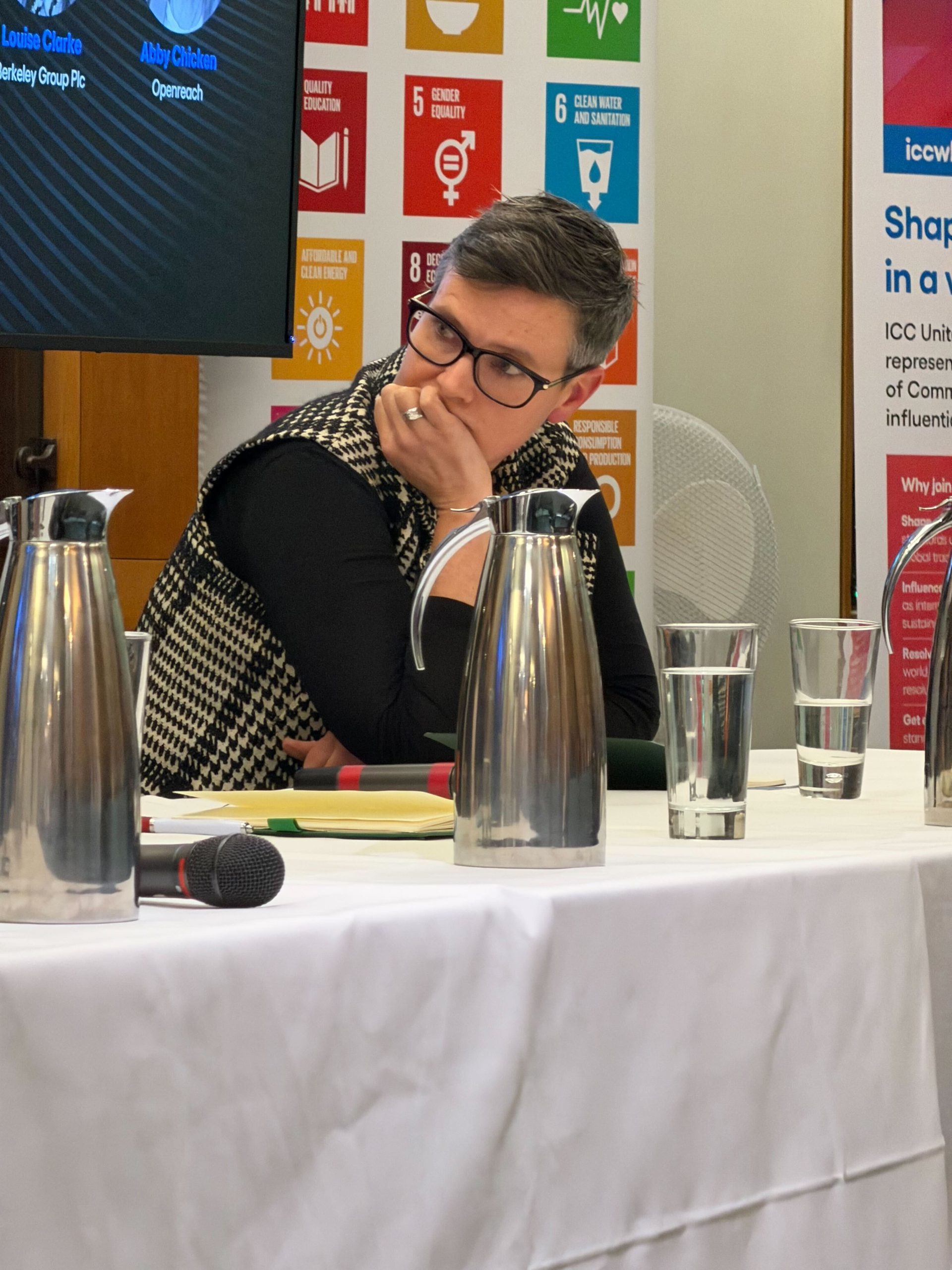
Nature, biodiversity and trade: aligning business with the green transition
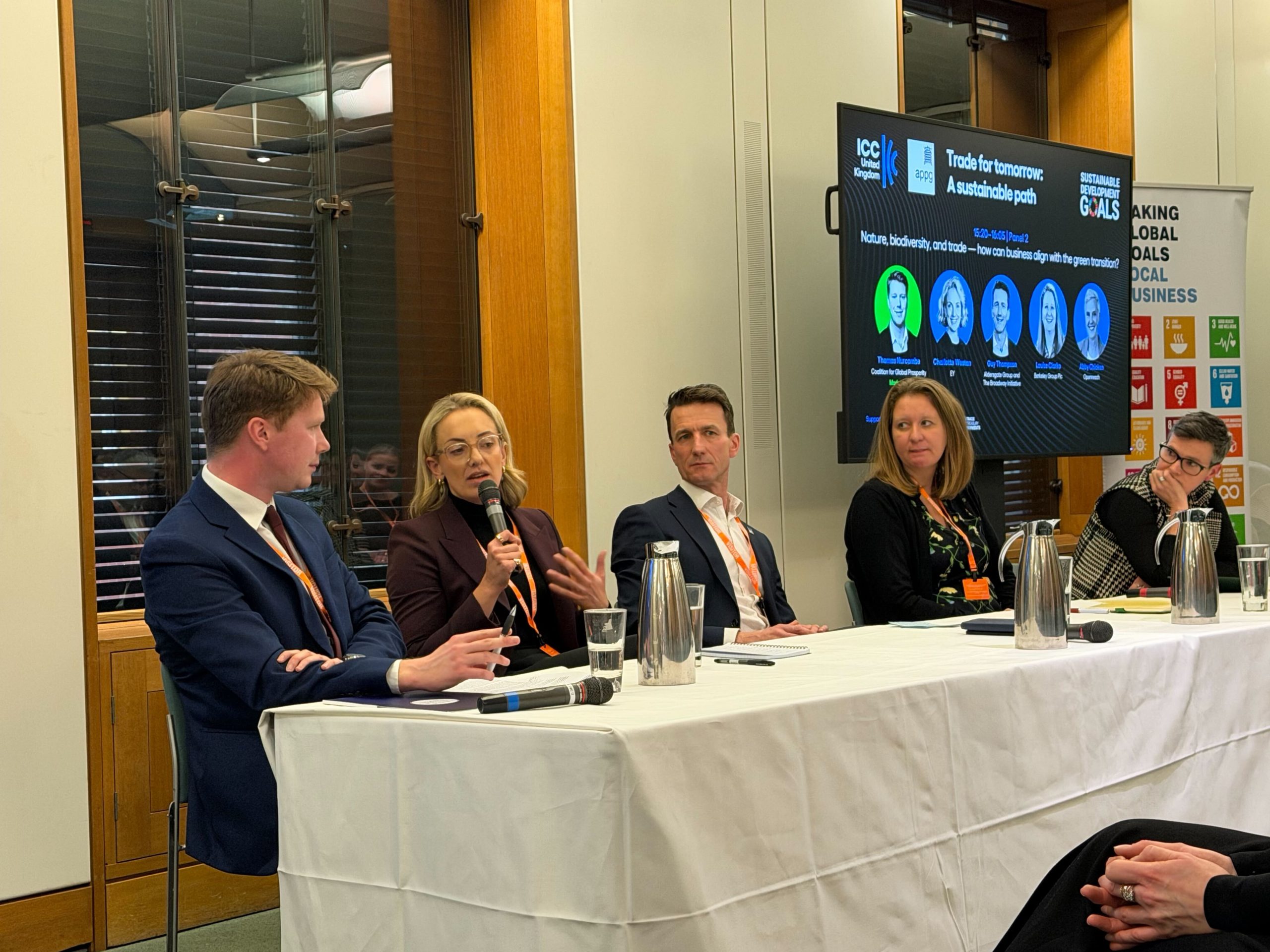
The second panel at ICC United Kingdom’s Trade for Tomorrow conference covered greenhouse emissions and ecosystems, examining how nature and biodiversity are moving to the centre of trade and business strategy.
With COP30 in Türkiye later on this year, set to place nature firmly alongside climate action, the discussion focused on how trade policy, corporate practices and regulation are beginning to reflect biodiversity risk, ethical sourcing and supply-chain responsibility.
Panellists
• Thomas Nurcombe — Coalition for Global Prosperity (Moderator)
• Charlotte Weston — EY
• Guy Thompson — Aldersgate Group / The Broadway Initiative
• Louise Clarke — Berkeley Group
• Abby Chicken — Openreach
Trade Treasury Payments is media partner at the ICC United Kingdom Trade for Tomorrow conference.

Can trade be green — and profitable?
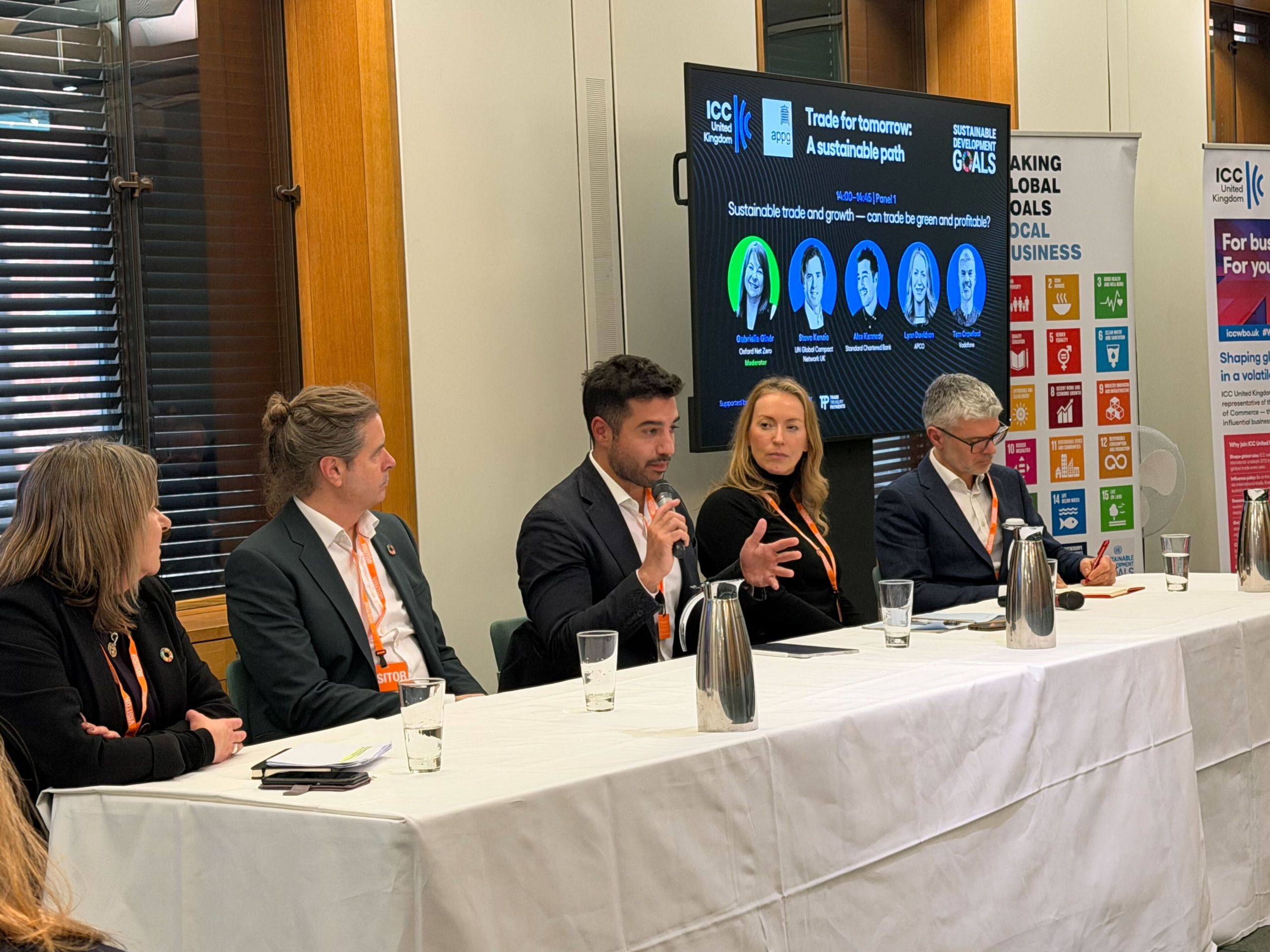
The opening panel at ICC UK’s Trade for Tomorrow conference reflected how sustainability has shifted.
Trade is increasingly shaped by security, resilience and access to critical resources, with climate considerations folded into those priorities rather than treated separately.
The discussion concluded that sustainability has not disappeared from business decision-making, but is now pursued from a different angle. Cost efficiency, regulatory exposure, supply-chain resilience and market access continue to drive behaviour, particularly for companies operating across multiple jurisdictions and long investment cycles.
Finance and procurement standards were central to the debate. Sustainability expectations are increasingly embedded in contracts, tender criteria and risk assessments, making them harder to ignore even as politicals becomes more cautious.
At the same time, language has adapted: terms such as resilience, efficiency and risk management often travel more easily than ESG labels in a more polarised environment.
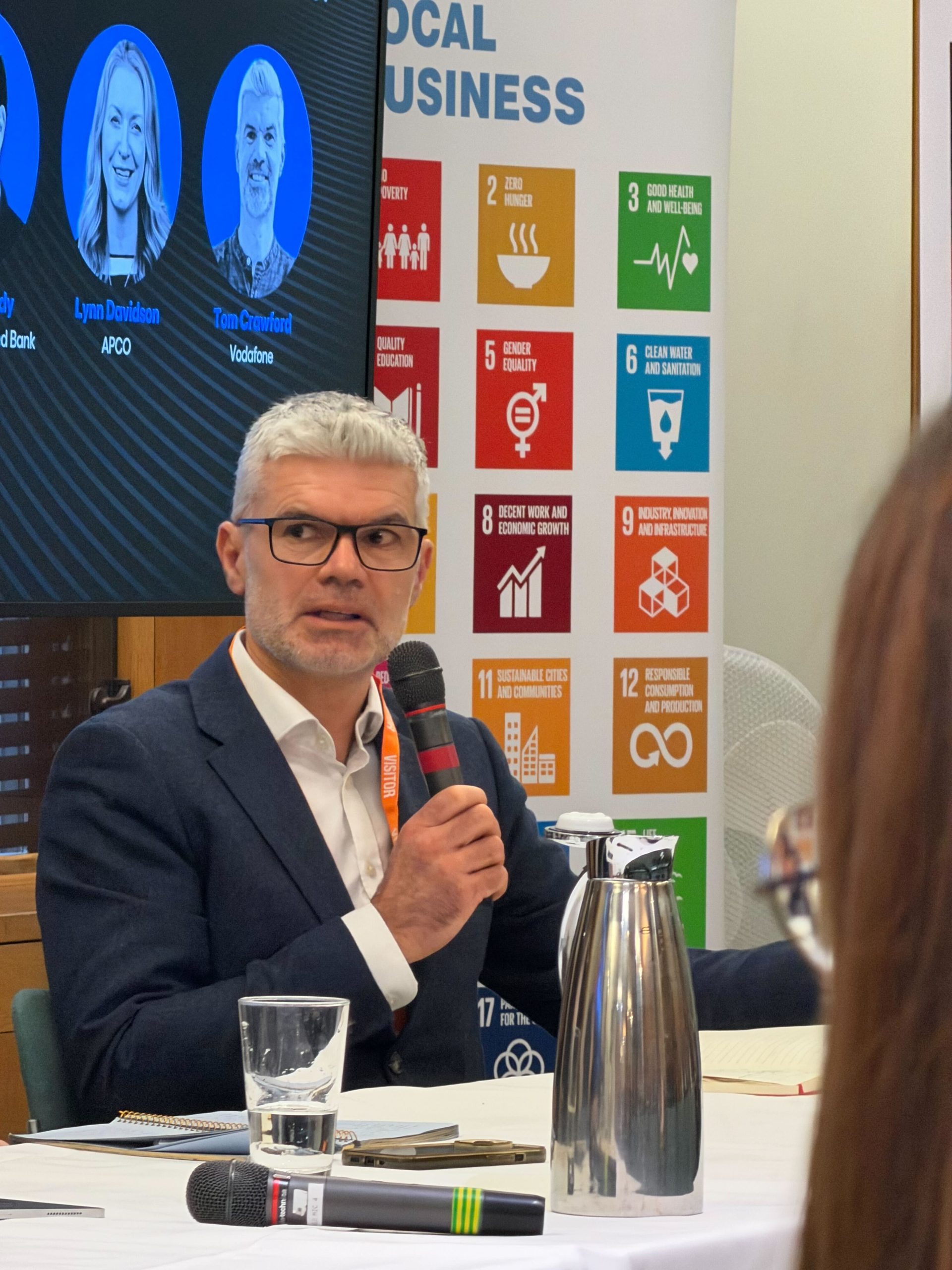
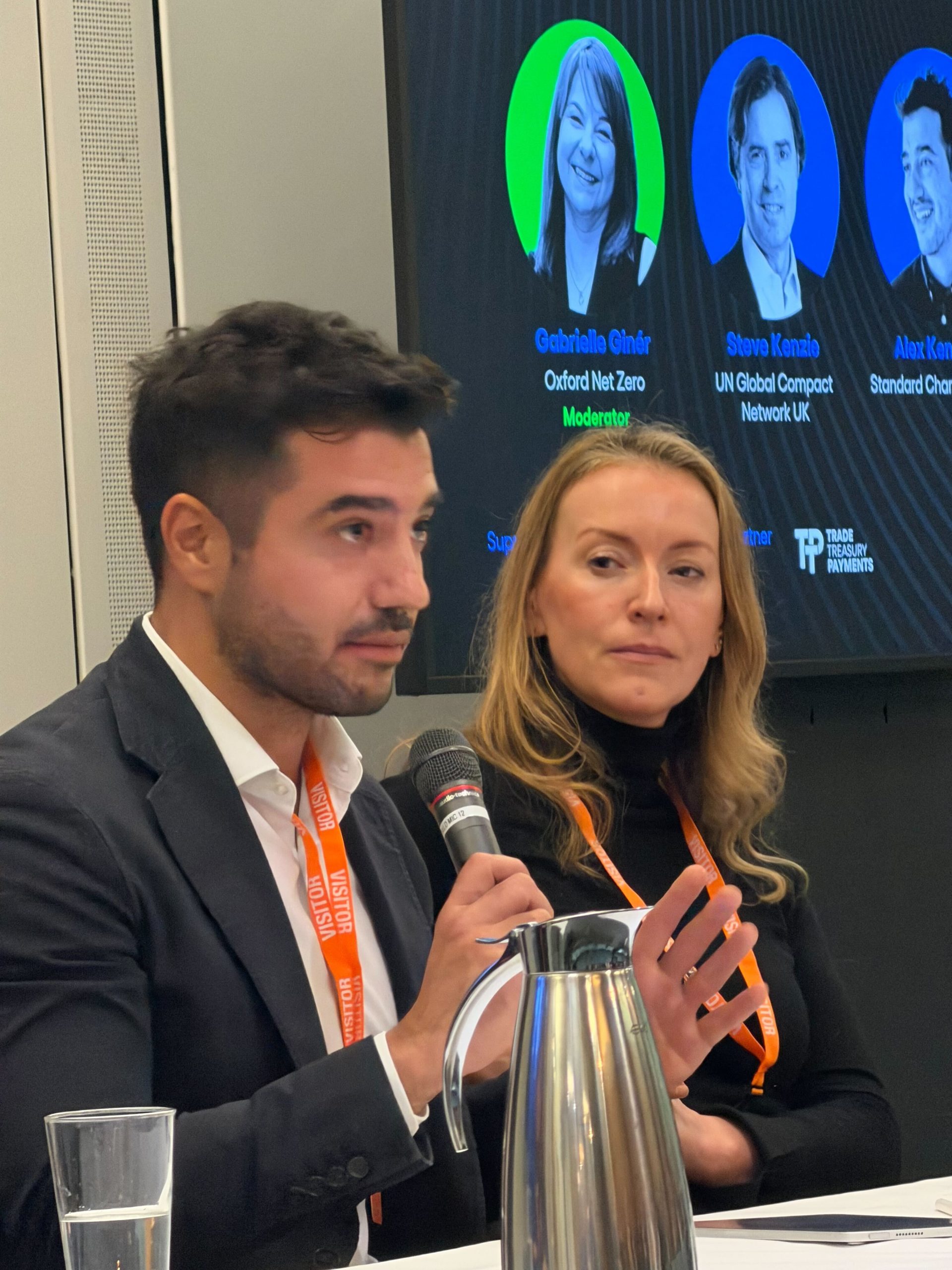
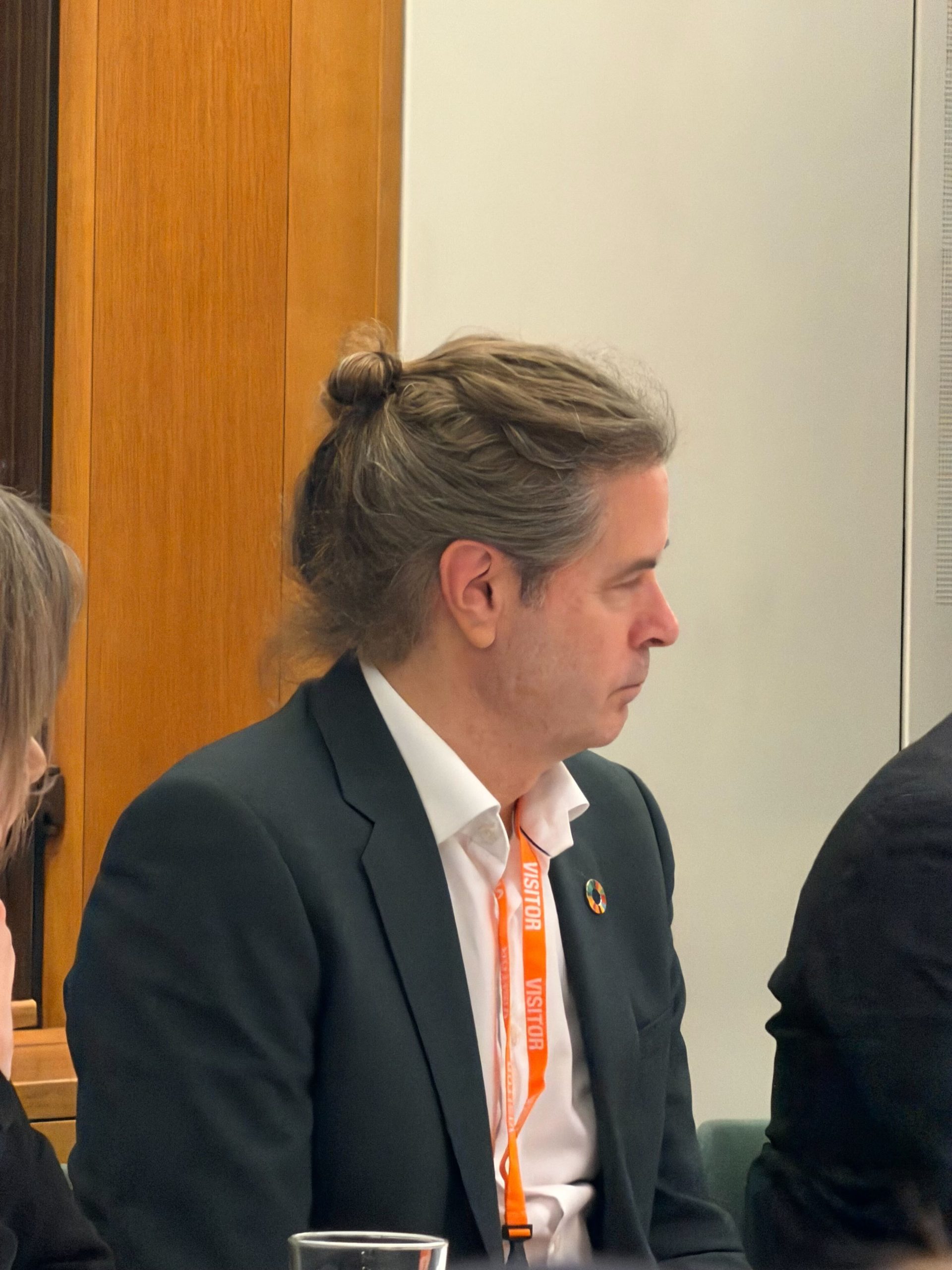
Panellists
Gabrielle Ginér — Oxford Net Zero (Moderator)Steve Kenzie — UN Global Compact Network UKAlex Kennedy — Standard CharteredLynn Davidson — APCOTom Crawford — Vodafone
Trade Treasury Payments is media partner at the ICC United Kingdom Trade for Tomorrow conference.
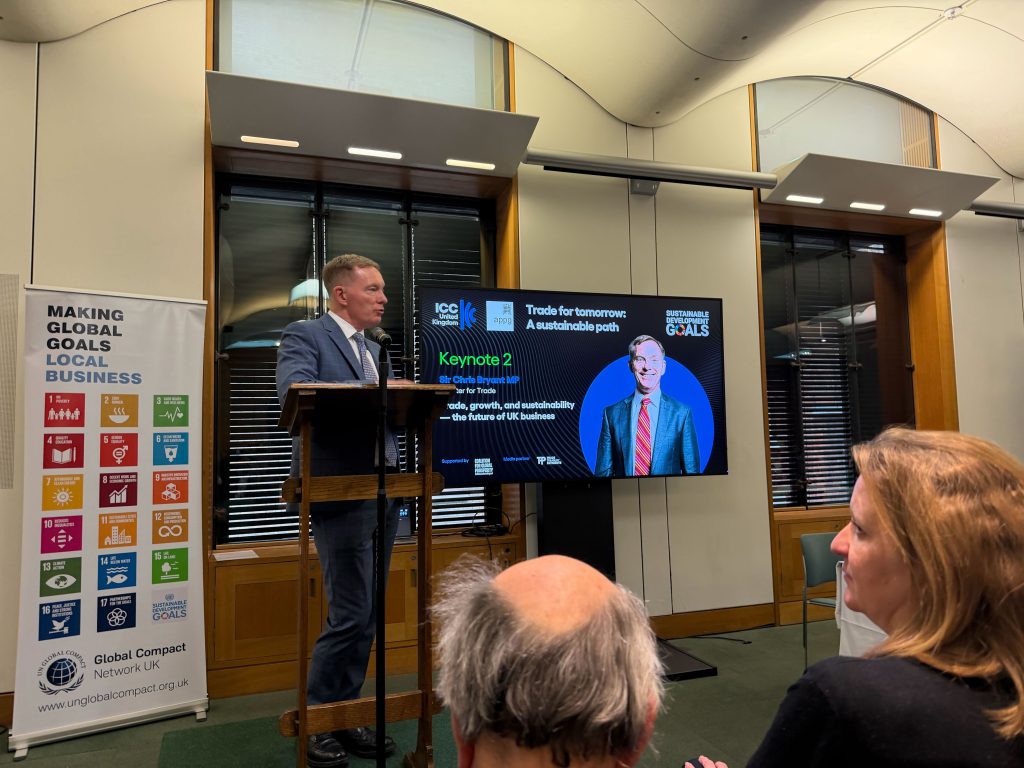
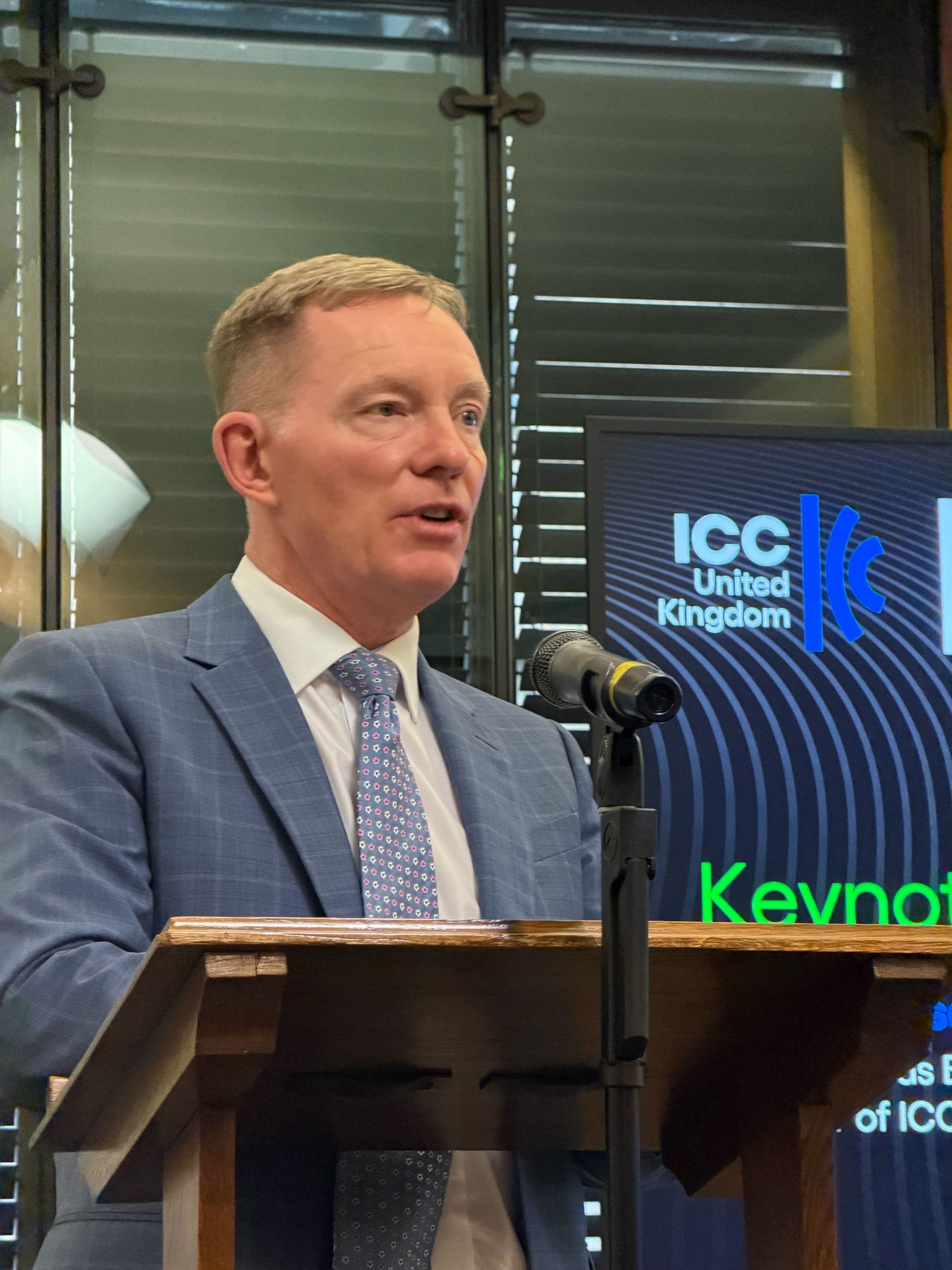
We’ve just heard from Chris Bryant MP on climate, trade and the case for connection
Climate change is already reshaping lives and livelihoods, Chris Bryant, the UK’s Minister of State for Trade Policy, told delegates — and trade policy, he argued, cannot pretend otherwise.
Addressing ICC UK’s Trade for Tomorrow conference, Bryant framed sustainability as a practical concern. Rising sea levels, water stress and environmental degradation are forcing some of the poorest communities to move, eroding food security and economic independence in the process. Those pressures, he said, are repeating across regions, from low-lying island communities to densely populated coastal cities.
Bryant defended the World Trade Organization as imperfect but indispensable. Most global trade continues to take place between WTO members, much of it under WTO rules. Letting the system fragment, Bryant warned, would hit developing economies first and hardest.
Trade policy, industrial strategy, climate ambition and development objectives should reinforce one another, not compete. That, Bryant argued, is the practical meaning of free and fair trade.
Trade Treasury Payments is media partner at the ICC United Kingdom Trade for Tomorrow conference.
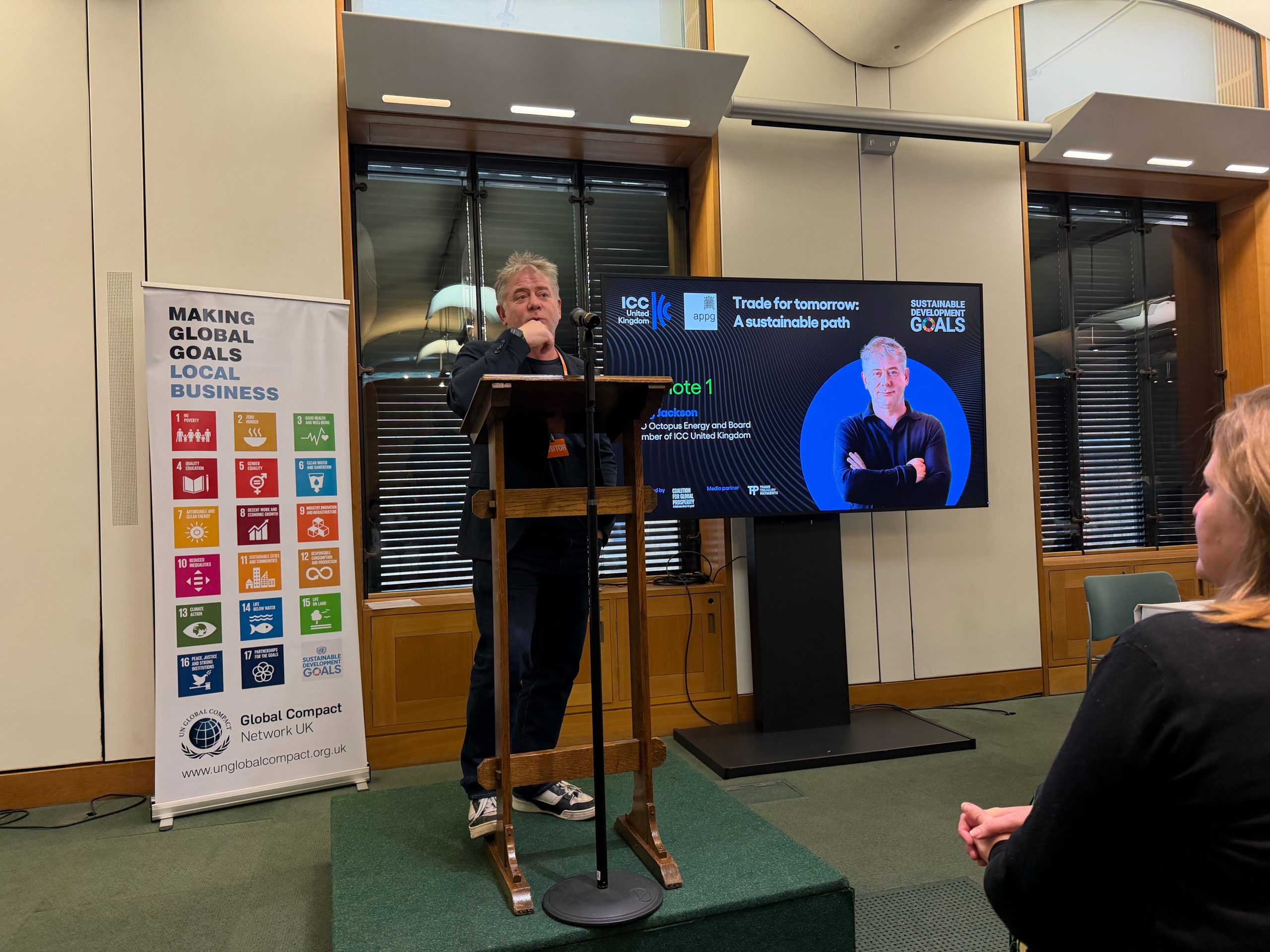
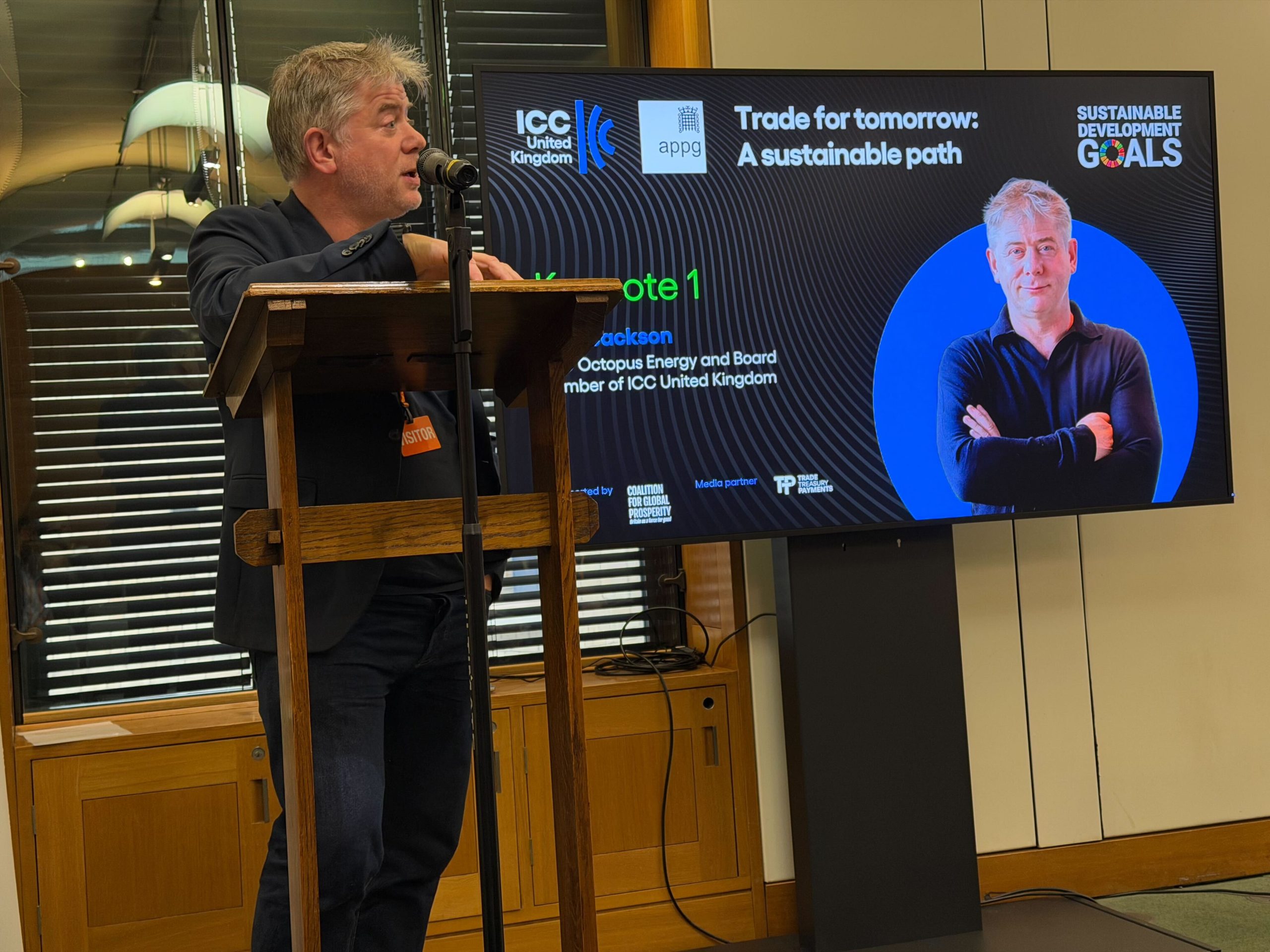
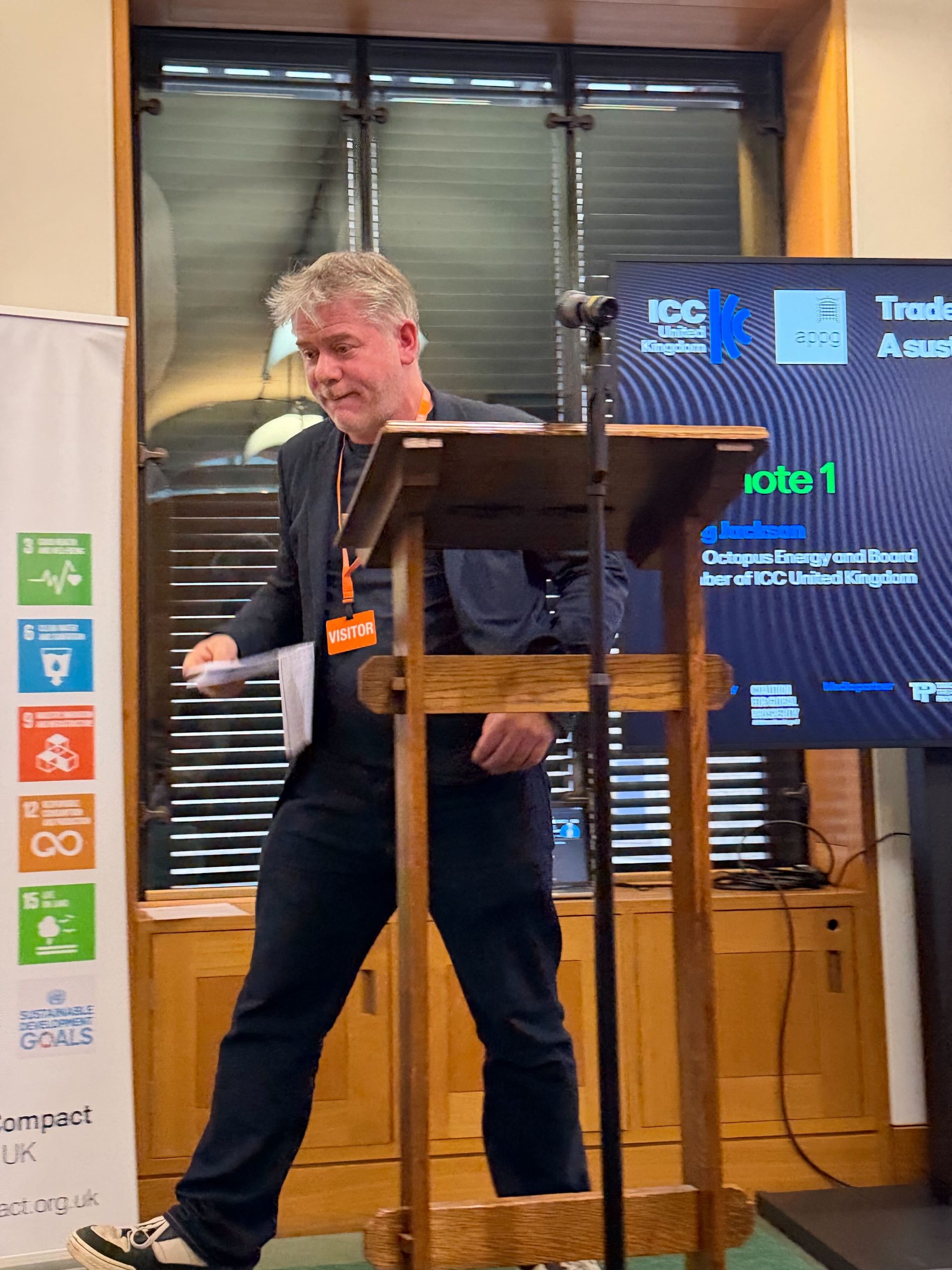
“We live in a world of drill, baby, drill.”
That was the framing by Greg Jackson, founder and chief executive of Octopus Energy, as he addressed the tension between climate ambition and economic reality.
Speaking at ICC UK’s Trade for Tomorrow conference, Jackson said that SDG 13 (Climate Action) is increasingly being shaped not by long-term targets, but by near-term energy and trade decisions.
Talking points:
• Clean energy is already cost-competitive in many emerging markets. Grid electricity across parts of Africa can cost 25–50 US cents per kilowatt hour, while distributed solar can deliver power at a fraction of that cost, with further declines over time.
• Energy security favours electrification. Fossil-fuel systems rely on continuous fuel imports. Solar, wind, and battery-based systems offer long-term security once installed.
• Technology trajectories are diverging. Fossil-fuel technologies are mature, with limited scope for efficiency gains. Clean-energy technologies continue to improve rapidly, particularly in storage and electrification.
• Trade plays a central role. Open trade in clean-energy equipment enables countries to reduce infrastructure costs, accelerate development outcomes, and cut emissions simultaneously.
Jackson warned that assessing clean energy solely on current price parity risks underestimating its long-term economic and strategic advantages. Delayed deployment, he argued, would compound both development and climate costs.
Trade Treasury Payments is media partner at the ICC United Kingdom Trade for Tomorrow conference.
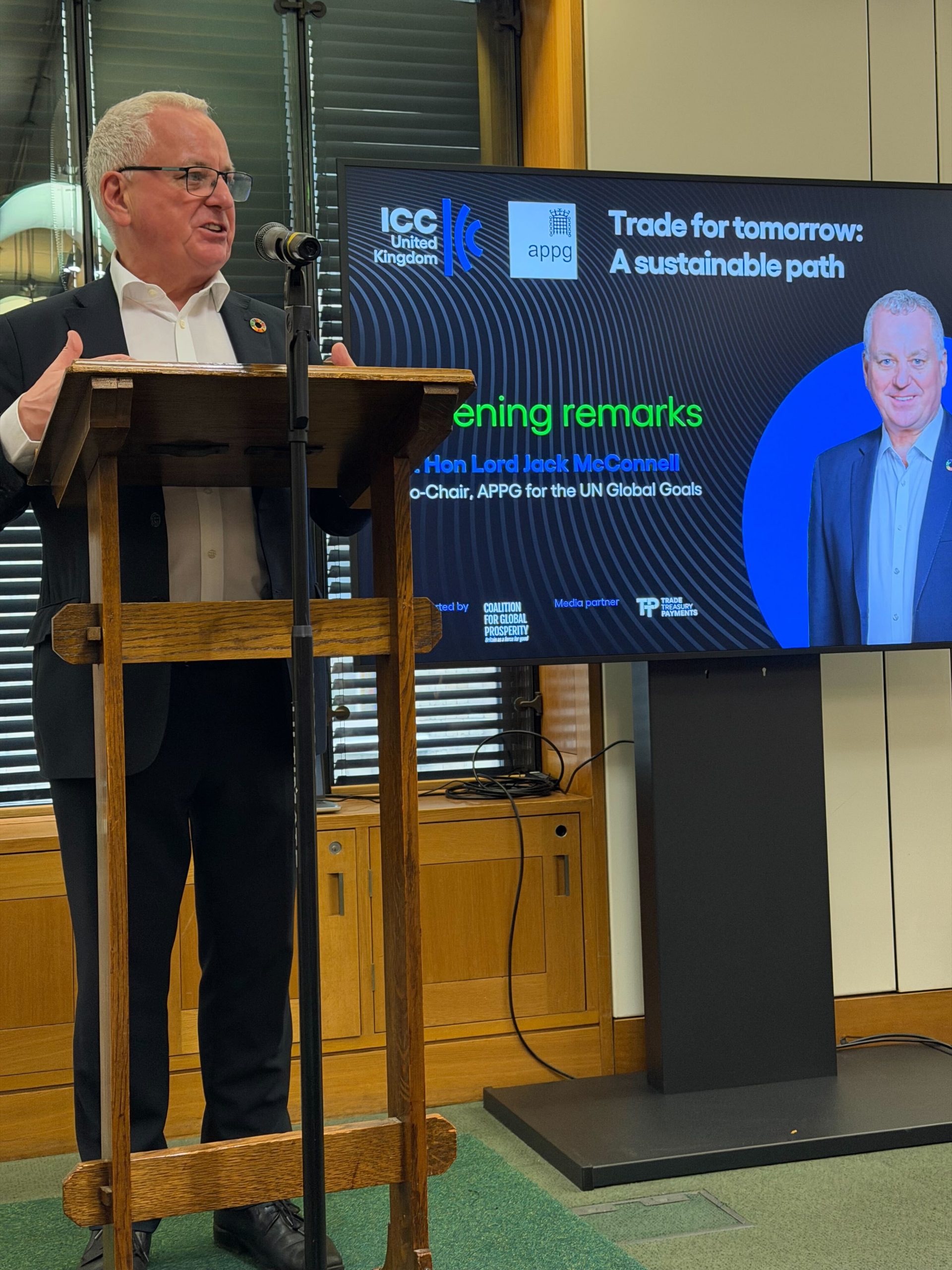
Opening the conference, Rt Hon Lord Jack McConnell, Co-Chair, APPG for the UN Global Goal, welcomed participants, highlighting some of the real-world tensions facing policymakers and business as they try to align trade, energy security, and finance with the UN Sustainable Development Goals (SDGs).
Progress on the SDGs, from Goal 7 (Affordable and Clean Energy) to Goal 9 (Industry, Innovation and Infrastructure) and Goal 13 (Climate Action), will be shaped as much by today’s political and market realities as by long-term ambition.
Trade Treasury Payments (TTP) are delighted to be media partners of this ICC United Kingdom event, supported by the All Party Parliamentary Group (APPG) and the Coalition for Global Prosperity.