TTP’s Global Advisory Panel member, Chris Southworth argues that the old economic order has quietly given way to a G2 world of US and Chinese self-interest, and that the UK’s task now is not to pick a side but to help design an alternative model that works for everyone else.
We are in a very different world to where we have been for the last 80 years – the global economic order has changed. We must get with the programme.
We need to compute this, understand what it means and adapt quickly – it is the new reality and now a national economic security threat.
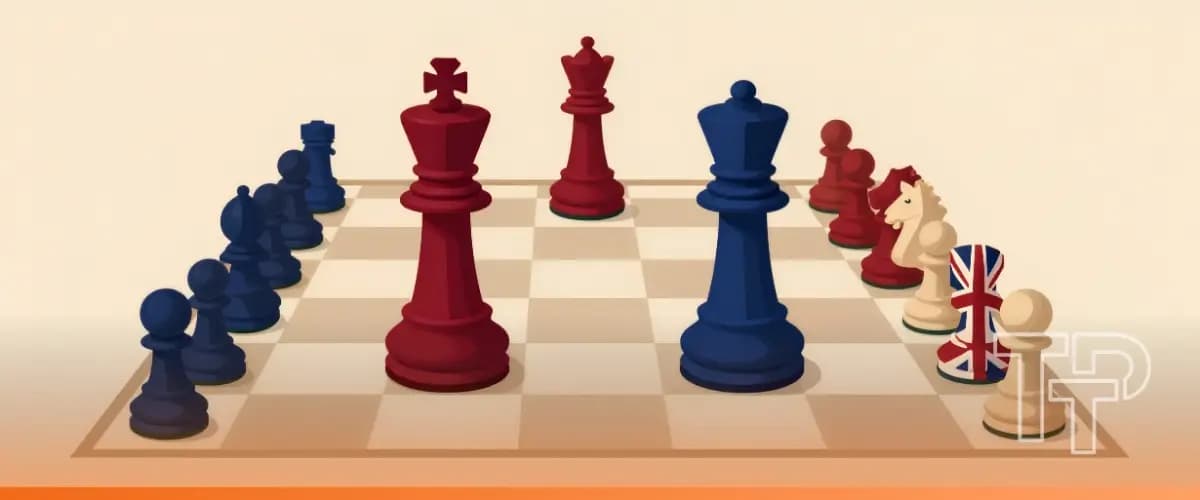
Now, we are in a ‘G2’ world (China, US) where trade is being weaponised for self-interest, traditional allies get no preference and the younger generation have none of the limitations, allegiances or assumptions of the past.
The reality is that it is far more nuanced and not just about the G2 – a better way of framing it might be nationalism versus pragmatism and those who needs to trade and navigate the new world.
The UK is a perfect case example – 60% dependent on trade for economic security, arguably the most invested in the past economic order and international system and now the most exposed to external shocks compared to G7 peers.
The UK is far from alone – most of the rest of the world are all in the same boat.
For all the obsession of G2, the bigger global play is to develop an alternative model (a third way) that bridges G2, is neither US or China dependent and works for everyone.
A more inclusive model that operates on international standards and the rule of law, provides a level playing field, stands up for the majority and provides a competitive alternative.
The UK is uniquely placed to help facilitate this model with other mid-powers and willing countries – we all win if we can achieve it.
The UK has leverage as the 2nd largest global finance capital, the home of global maritime insurance, the number one centre for international disputes, 80% of global trade and 60% of global trade finance governed by English law and as a ‘go to’ trusted partner of the global North and South.
We, like others, are pragmatists. It is more important we roll with what is happening around us – shape the future, not be shaped by it and not get stuck in the weeds on perfectionism.
Trade digitalisation is critical to this goal – we all need agile global supply chains and an international trade system that is fit for the needs of modern commerce.
Resilience, agility and competitiveness are now the name of the game.
To be fair, China and the US are offering simple models – we are trying to compete with an over complicated, highly regulated model that is tying us all up in knots and losing sight of the wood for the trees.
What does this mean? It means
- Capital market reform so we can mobilise and invest capital at scale, especially into infrastructure and MSMEs.
- Accelerating financial regulatory reform and slashing red tape to cut all the bureaucracy – the regulators need to be reminded they work for us, not the other way around. Making the regulators independent made a lot of sense 20 years ago but now we are in a bizarre situation where we have to ask permission. That makes no sense at all in this new world.
- China and the US are in total control of data – the former state-led, the latter corporate-led neither of which are particularly helpful to us.
- We have an enormous amount of equivalent publicly financed data that can compete but is tied up in regulatory hurdles which means we cannot mobilise it to national sovereign benefit despite it being publicly owned.
- Imagine if we, in the UK, could pool information across HMRC, ONS, Ordnance Survey, satellite data and Which? [consumer data] all of which we have and we, as citizens, pay for – this would transform our ability to be more agile, resilient and competitive as a country.
- The UK-EU relationship is also key to all of this. Forget the obsession with Brexit, the world has changed and the threats we face are far bigger. We are far stronger when we work together. We have far more in common than we have differences. Now it is about Europe and how we stand together. Whether you are in the EU or not, who cares. It is far more important that we are working together as a continent, based on shared values.
We need to get real. It is less now about fora or structures that no longer work for us. We are being buffeted by others. It is now about what we want, how to leverage our strengths, what influence we have, who is with us [rest of the world] and how we set out a future way forward.
China and the US know all of this and are exercising their power. I am not criticising them – all I am saying is that it is high time we, as the rest of world, respond with an alternative, more attractive, competitive and inclusive model that works for the rest of the world.
The UK and ‘mid-powers’ have a big role to play if we get our house in order and lead by example. We are far from alone in facing the global challenges in front of us and there is a huge global market for an alternative way forward.