
A High Court judgment handed down on 24 April 2026 lays bare a set of complex invoice finance frauds litigated in the English courts. According to court documents obtained by TTP, the case involved a Chinese food-ingredient company, a BVI offshore vehicle, fabricated HSBC UK invoices, a frozen fish trading operation run through the same facility, and a US$3.75 million payment that the court found was recycled from the proceeds of the fraud itself, and a claimant whose own conduct drew judicial sanction along the way
Key financing instruments in this case
Several financing instruments and structures feature in the judgment. The following definitions, drawn from the Global Supply Chain Finance Forum’s Standard Definitions for Techniques of Supply Chain Finance (2016, updated 2021), provide context for readers unfamiliar with the product set.
Receivables discounting. A form of receivables purchase in which sellers of goods and services sell individual or multiple receivables (represented by outstanding invoices) to a finance provider at a discount. The finance provider typically advances a percentage of the invoice value upfront (in this case, 80%) and releases the balance, minus its charges, once the buyer pays. Receivables discounting is usually confidential, meaning the buyer is not notified of the arrangement. This is the technique HSBC Invoice Finance (HIF) provided to Syner Limited (Syner) under the £6.5 million facility.
Factoring. Also a form of receivables purchase, but distinguished from receivables discounting in that the finance provider typically takes over management of the debtor portfolio and collection of the underlying receivables. In practice, the two techniques are legally similar but differ in operational detail. The GSCFF notes that the distinction between receivables discounting and factoring is one of the more frequently confused areas in supply chain finance terminology.
Loan or advance against receivables. Financing made available on the expectation of repayment from funds generated from current or future trade receivables, usually made against the security of such receivables. Unlike receivables discounting, the receivables are not purchased by the finance provider but serve as collateral for a loan. This is the structure under which CCB and BOC provided working capital financing to Wenda in China, backed by Sinosure export credit insurance.
Export credit insurance. Insurance provided by a state-backed or private insurer covering the risk of non-payment by foreign buyers. In this case, Sinosure (China Export & Credit Insurance Corporation) insured Wenda’s receivables, enabling CCB and BOC to lend against them at lower risk. The inflated invoices scheme exploited this insurance by overstating the value of the underlying receivables.
All monies guarantee. A guarantee covering all present and future indebtedness of the borrower to the lender, not limited to a specific facility or amount. Wenda provided an all monies guarantee to HIF in respect of Syner’s obligations, meaning Wenda was liable for any sum Syner owed HIF. Despite this exposure, Wenda had no contractual right to receive account statements from HIF, a gap central to the fraud.
London as a cheaper source of capital
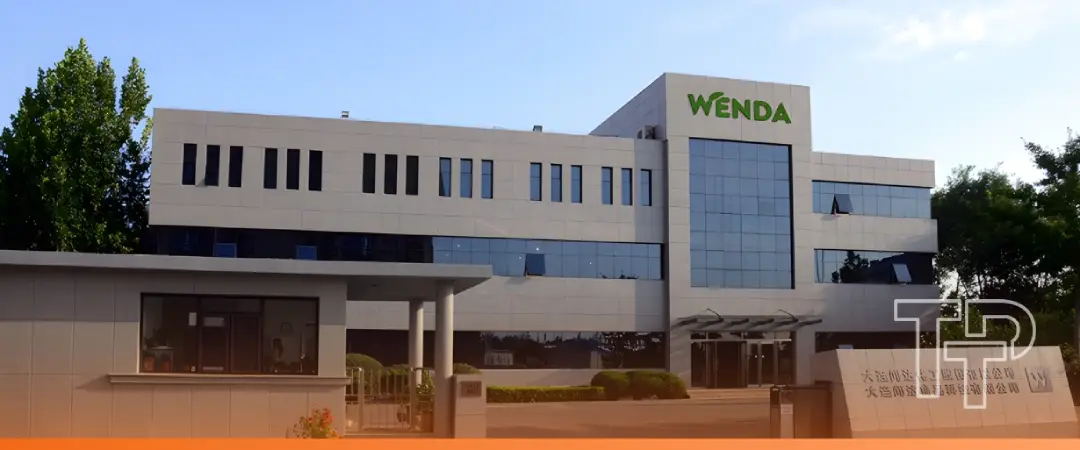
By 2012, Wenda Chemical Co Ltd, a Chinese food-ingredient manufacturer and trader headquartered in Dalian with revenues of US$100 million to US$150 million and operations across Latin America, Europe, and Russia, had a problem familiar to many exporters. The cost of working capital was high. Domestic Chinese bank financing, backed by state export credit insurer Sinosure, was running at around 8% interest. Wang Jinhong, Wenda’s CFO and a British-Chinese national with a master’s in international finance from a London university, proposed a solution. Wenda would establish an English subsidiary that could access cheaper invoice financing in the UK market and route Wenda’s overseas receivables through it.
The plan worked as follows.
- Wenda’s Latin American customers (subsidiaries and third-party buyers in Chile, Brazil, Mexico, and the United States) would pay the new English entity, Syner Limited, rather than Wenda directly.
- Syner would then discount those invoices with HSBC Invoice Financing (UK) Ltd (HIF), drawing down 80% of the invoice value upfront.
- Once customers settled, HIF would release the balance minus its charges.
- Syner would pass the proceeds back to Wenda, net of legitimate costs, including HIF interest, Wang Jinhong’s London salary of approximately £60,000 per annum, rent for a UK home office, and other necessary running costs.
Xiong Wei, Wenda’s founder and chairman, agreed to the arrangement with Wang Jinhong in an oral agreement in 2012. There was no written contract, no deed of trust, no documented terms of reference. Wenda injected US$2.2 million into Syner as initial share capital, which it says was required to give the English vehicle credibility with HIF. Wang Jinhong relocated to London. Syner was incorporated in England and Wales in September 2012. The HIF facility, initially capped at £2 million and later increased to £6.5 million, was signed in January 2014. Wenda guaranteed Syner’s indebtedness to HIF on an all-monies basis.
The full extent of the fraud took nine years to expose and required an eight-day trial before Ms Lesley Anderson KC, sitting as a Deputy Judge of the High Court in London, in January 2026.
Four layers of fraud, running simultaneously
The judgment in Wenda Co Ltd v Wang Jinhong & Ors [2026] EWHC 909 (Comm) details how financial fraud can be layered. Four distinct schemes operated in parallel, each exploiting a different oversight gap.
1. The NASD shortfall and systematic underpayment
At the core of the fraud was what the court’s forensic accountant, Thomas Aslin of Moore Kingston Smith, called the “NASD Shortfall,” defined as the difference between what Syner and its BVI-incorporated sister entity, Effs Global Investment Co Ltd, owed Wenda under the invoice financing arrangement, and what they actually paid.
Over the life of the arrangement, covering 994 separate transactions with a combined invoice value of over US$48.5m, the court found the net shortfall to be approximately US$2.96 million, net of the US$3.75 million advance payment credited to Wenda and following exhaustive forensic analysis of every available bank statement across Syner’s HSBC accounts, Effs’ DBS Hong Kong account (where statements were only available from January 2017 onwards), Wenda America, and Cape Chile.
The mechanism was not straightforward. Wang Jinhong and her Wenda finance department ally Wang Qingli maintained elaborate internal “business tables” (Excel spreadsheets tracking every transaction, updated regularly, and sent back and forth between London and Dalian).
These tables systematically understated invoice values and the amounts received from HIF and customers. On 64 invoices alone, the understatement totalled US$747,279.
Charges for HIF interest and commission, recorded in the business tables and supported by fabricated monthly invoices purportedly from HSBC, were inflated by over US$1.1 million compared with what HIF had actually charged. The fake HIF statements were so professionally constructed that it took Wenda commissioning third-party disclosure proceedings against HIF in 2022 to prove they were not genuine.
2. The Effs pipeline as an offshore conduit
By mid-2014, Wang Jinhong had introduced a second vehicle. Effs Global Investment Co Ltd was incorporated in the British Virgin Islands with herself as the sole shareholder and director.
In a long email to Xiong Wei in July 2014, she described Effs as an “offshore company” that would help resolve “problems with Wenda’s financial processes.” Xiong Wei, focused on cash flow and trusting his CFO, agreed without asking for written terms.
In practice, Effs became the collection point for funds extracted from Wenda. Of the US$64.4 million that passed through Syner’s main HSBC US dollar account between 2013 and 2017, US$35.6 million was transferred from Syner to Effs, compared with only US$18.4 million transferred to Wenda itself.
Effs, in turn, held a DBS Hong Kong US dollar account through which the arbitrage and unauthorised profits were routed. When Wang Jinhong transferred her shares in Effs to Roland Petit, a French associate, in August 2018, shortly before Wenda removed her as director, the judge found this was designed to insulate Effs from Wenda’s claims, not to build a genuine new business.
3. Unauthorised independent trade through Syner
The judgment found that just under half of all invoices processed through the HIF facility (48.7% of the total) did not relate to Wenda’s goods. Syner was running an independent frozen and processed fish trading operation through the same HSBC invoice finance facility, using Wenda’s guarantee as the backstop and generating profit that was never disclosed to Wenda.
The judge found this was entirely unauthorised. Wenda’s business was food ingredients, not fish trading. Xiong Wei had never agreed to Syner trading with entities outside the Wenda group.
The Defendants argued that independent trade was commercially necessary, and that without Syner operating as a genuine, profit-generating English entity, HIF would never have extended the invoice finance facility in the first place.
The court rejected this. There was no documentary or witness evidence that HIF had communicated any such requirement, and HIF’s actual security, an assignment of all debts and an all-monies guarantee from Wenda, did not require Syner to trade independently. Syner’s constitutional purpose, as Wang Jinhong herself had told the Chinese courts, was “mainly to serve as an offshore company of Wenda overseas to assist Wenda.”
4. Wenda’s own breach of disclosure duties
In a separate ruling on 21 October 2025, Deputy High Court Judge Lance Ashworth KC found that Wenda had breached its duty of full and frank disclosure when it obtained the original freezing and proprietary injunction from Mr Justice Jacobs in November 2021. Wenda had failed to disclose two material matters: that two parallel sets of invoices existed (one in Syner’s name for HIF, one in Wenda’s name for CCB and BOC), and that Wenda had been running the double financing scheme with Mr Xiong’s knowledge.
Ashworth KC found the failure was not deliberate, but was the product of “a lack of proper rigour in the investigation” — three years had elapsed between the conclusion of Wenda’s internal investigation in 2018 and the without-notice application in 2021, with ample time to identify and disclose those matters. The court ordered Wenda to pay the Defendants’ costs of both the Discharge and Continuation Applications on the indemnity basis.
The pleaded case had to be substantively rewritten. Wenda’s original Particulars of Claim, filed in November 2021, asserted that Wenda itself was the seller under the contracts with overseas buyers and that Syner and Effs were merely receiving agents. By November 2023, after Mr Xiong’s sixth witness statement, this was reversed. Syner was now accepted as the contractual seller. Ashworth KC held this was a “material change in circumstances” — the foundational factual premise of the original injunction had been wrong.
Double financing against CCB and HSBC
The judgment also addressed Wenda’s own fraud against CCB and BOC. Wenda was simultaneously running two additional financing schemes that were, the judge found, plainly dishonest, and known to be so by Xiong Wei himself.
The “double invoicing scheme” involved Wenda presenting to its Chinese banks, China Construction Bank (CCB) and Bank of China (BOC), fake sales contracts imitating the real Syner transactions, allowing Wenda to draw down financing against the same underlying receivables that had already been discounted with HIF in London.
The “inflated invoices scheme” went further. CCB and BOC, as well as Sinosure, were presented with invoices with massively inflated values. Xiong Wei described these as “sometimes doubled, sometimes seven, eight or nine times higher.” The practice had been running since 2009 and financed approximately US$4 million in aggregate.
The existence of these schemes is relevant beyond the current litigation. First, it explains why Wenda had a structural incentive to keep Syner’s existence secret from CCB and BOC. Exposing the overseas vehicle would have revealed the double-financing to CCB and BOC. When CCB discovered the inflated invoices scheme in the first quarter of 2017, it threatened to enforce its security and demand immediate repayment of US$3 million to US$4 million.
It was this crisis that gave Wang Jinhong the leverage to reinstall herself at Wenda headquarters and extract a further US$3.75 million transfer from Effs to Wenda, which the court found was, in reality, money Wenda was already owed under the invoice financing fraud, not a new investment.
Second, it illustrates the governance vacuum at the heart of the arrangement. Both parties were engaging in fraudulent activities toward their respective banks. Neither could afford scrutiny of the other. That mutual complicity sustained the arrangement for years, significantly delaying Wenda’s ability to bring a clean, documented claim.
Fiduciary duty rather than express trust
The court determined that Syner and Effs were not express trustees of the invoice proceeds, but that they nonetheless owed fiduciary duties to Wenda.
Wenda’s primary case was that the 2012 oral agreement imposed an express trust over the proceeds of the invoice financing arrangement. The court rejected this. There were no trust words. No requirement to hold proceeds in a separate account. No contemporaneous documentation of any kind. Xiong Wei, who had acknowledged understanding the concept of an English law trust, had never used that language with Wang Jinhong. The degree of flexibility and discretion afforded to Wang Jinhong over payment timing, expenses, and operational structure was inconsistent with trustee obligations.
However, the court found that Syner and Effs did owe fiduciary duties. Drawing on the Supreme Court’s reasoning in Hopcraft v Close Brothers Ltd [2025] UKSC 33, the judge held that Syner and Effs had undertaken to act exclusively in Wenda’s interests in operating the invoice financing arrangement. They were not intended to profit, not intended to trade independently, and not engaged in normal arm’s-length commercial activity.
The practical consequence was that the burden of proof shifted. As accounting parties subject to fiduciary duty, Syner and Effs bore the burden of proving that any deduction or retention was authorised, not Wenda’s burden to prove the fraud. The court also noted that the destruction and non-disclosure of Effs’ DBS bank statements was therefore treated as evidence in Wenda’s favour.
The court order against HSBC for account disclosure
In June 2022, Wenda had to go to the Commercial Court, in separate proceedings, Wenda Co Ltd v Wang Jinhong [2022] EWHC 1716 (Comm), to compel HSBC Invoice Finance to disclose its own account statements to Wenda. HHJ Pelling QC granted the application in a judgment of four pages.
HSBC Invoice Finance did not consent to the disclosure, though it did not actively oppose the order either. It was following its standard obligation of confidentiality to Syner, its customer. However, the practical effect was that Wenda, the entity which had provided the all-monies guarantee underpinning the entire £6.5 million facility, had no contractual right to receive account statements from the bank whose guarantee it supported.
Without a court order, it could not independently verify a single charge that Syner had claimed to have paid HIF. As the 2026 judgment established, this was precisely the gap the fabricated HSBC invoices were designed to fill.
Judge Pelling described Syner as established “for the sole purpose of handling invoice financing” on Wenda’s behalf, and observed that without the genuine HIF records, Wenda could not “arrive at the total value of the sums lost once account has been taken of the expenses that could legitimately be deducted.” In other words, the guarantor of a £6.5 million invoice finance facility had no way to quantify its own loss without litigating against the discounting bank itself.
The disclosure record was thin. Syner disclosed only 106 documents across the entire proceedings. Effs’ DBS Hong Kong bank statements, covering the period when the vast majority of the fraud was alleged to have occurred, were never produced.
Wang Jinhong attributed this to DBS’s document deletion policy, but the court rejected her explanations as contradicted by her own correspondence with the bank.
The forensic reconstruction was possible only because HIF retained its own records from the 2022 order; Wenda’s Latin American subsidiaries had banking records for Cape Chile and Wenda America; and the Effs DBS account had been enrolled in an eAdvice notification service, meaning automatic email confirmations of every payment were sent to Wang Jinhong’s Yahoo account.
Those 107 Yahoo emails were disclosed by the Defendants on 22 December 2025, one month before the trial opened, moving US$508,413 of expenses from disputed to agreed. The timing, the judge found, suggested selective disclosure to drive down quantum rather than good-faith compliance.
The structural vulnerability in the arrangement was obvious. The entire arrangement was based on a single oral agreement, with no written contract, no independent reconciliation mechanism, and no requirement for Syner to segregate Wenda’s funds. The business tables were internal working documents shared only between Wang Jinhong and one Wenda accountant.
Wenda’s founder received periodic lump-sum payments with no transaction-level matching and never requested a reconciliation during the years the arrangement operated.
Transaction-level mechanics of the fraud
The judgment sets out the mechanics of the extraction in detail.
Invoice value understatement. On invoices processed through the HIF facility, the amounts entered into the internal business tables, which formed the basis for calculating what Wenda was owed, were systematically lower than the actual invoice values. For one invoice alone (reference 32017302465), a Syner invoice for US$254,206 was entered into the business tables as US$38,373. Across 64 invoices examined in detail, the cumulative understatement was US$747,279.
Fabricated interest charges. Each month, fake invoices purportedly from HSBC Invoice Financing were used to justify deductions from the amounts owed to Wenda. These 87 invoices overstated HIF’s actual charges by US$1,106,157. They were created in June 2014 when Wang Jinhong emailed Wang Qingli with three genuine HIF invoices and the instruction, “I think we just need to change the company name.” An IT supervisor at Wenda’s HR department was used to reformat the template. HIF confirmed in writing in November 2018 that the fake statements were not in a format it recognised, but that confirmation only came because Wenda had the 2022 disclosure order to compare them against.
Interest rate arbitrage on Wenda’s own distribution business. For invoices relating to Wenda’s Latin American subsidiary sales, the business tables applied a 10% annual interest rate and 1% commission against the full invoice value. On invoices where the 80% advance was not paid upfront (the case for 100 of 154 invoices examined), the effective cost of borrowing implied by this calculation ranged between 12% and 16.3%. The cost savings that justified the entire London arrangement were being captured by Syner and Effs, not passed to Wenda.
Fake rental invoices. Between June 2013 and March 2017, Wang Jinhong submitted monthly invoices to Wenda totalling approximately £115,000, purportedly from “Princess Park Estates” for rent on her London home at 37 Lewes Road, London N12. These were fabricated. Wang Jinhong had purchased the freehold of 37 Lewes Road in May 2013, months before the invoices began.
The $3.75 milllion payment and the CCB crisis
In April 2017, when CCB was threatening to enforce its security following the discovery of Wenda’s inflated invoice scheme, Wang Jinhong arranged for Effs to advance US$3.75 million to Wenda, presented to Xiong Wei as an investment by unnamed friends in exchange for a 37.5% shareholding in Wenda. The payment resolved the CCB crisis and was later used by Wang Jinhong as the basis to assert majority control of Wenda and appoint herself as its legal representative.
The court found the US$3.75 million was not new money. Between December 2016 and April 2017, the period during which Syner stopped paying Wenda entirely, Syner transferred US$3.93 million to Effs. That figure is within US$70,000 of the US$4 million Wang Jinhong had mentioned as available from her “friends.”
The forensic accountants agreed that the shortfall at the relevant date was US$8.48 million. The US$3.75 million was, on the court’s analysis, money Wenda was already owed from the invoice financing fraud, recycled through Effs to generate a fictitious equity injection that would give Wang Jinhong control of the company she had been systematically defrauding.
Structural gaps in invoice finance
The case uncovers structural gaps in invoice finance that allowed the fraud to persist for nine years.
The 2022 disclosure judgment crystallises the first gap. HIF had a £6.5 million facility to a UK company whose only real function was to discount receivables on behalf of its Chinese parent, guaranteed in full by that parent.
The guarantor had no contractual right to receive account statements from the discounting bank. That is not an unusual arrangement. Guarantors and borrowers are different legal persons, and the confidentiality owed to Syner was legitimate. But in a structure where the borrower and the guarantor’s interests diverge (where, as here, the borrower’s CFO is also the guarantor’s CFO), the absence of any reporting line from discounting bank to guarantor creates a significant vulnerability.
A simple contract requiring HIF to send statements to both Syner and Wenda simultaneously would have prevented the fabricated invoice scheme from lasting beyond the first reconciliation.
The second gap is the absence of any reconciliation mechanism between the discounting activity and the originating corporate. Wenda never received the HIF statements directly. It received only the fabricated summaries that Wang Jinhong chose to provide. The business tables, the only record of what Wenda was supposedly owed, were internal documents that Wenda’s own management never interrogated. Xiong Wei’s evidence was that when Syner sent money, there was no matching of payments to transactions, ever.
The third gap is the duplicate financing risk. The double invoicing scheme defrauded CCB and BOC, securing around US$4 million through inflated invoices backed by Sinosure insurance. CCB only discovered the fraud in early 2017 after receiving an anonymous tip, not through their internal controls. The lack of a centralised registry or cross-bank matching system allowed duplicate financing to go undetected for years. This situation enabled Wang Jinhong to leverage the CCB crisis to regain her position at Wenda.
The verdict and what comes next
The court determined that Wang Jinhong was liable for dishonest assistance in Syner and Effs’ fiduciary breaches and for knowingly receiving the proceeds.
The final amount awarded was about US$2.96 million, after accounting for the US$3.75 million already credited and US$5.06 million in legitimate expenses. It is significantly lower than Wenda’s original claim.
Wenda’s own conduct carried real consequence in the litigation. The October 2025 disclosure ruling resulted in an indemnity costs order against Wenda, a meaningful sanction. At trial in January 2026, Anderson KC found that Mr Xiong was “perfectly prepared to be selective in giving truthful evidence” when it suited Wenda’s commercial interest, and approached his evidence with caution save where corroborated by contemporaneous documents. Mr Xiong filed twelve witness statements and one affidavit over the course of the proceedings, several of them corrective. The number of corrections, Ashworth KC observed, “does beg the question of how detailed the investigation into the claim was before these proceedings were launched.”
Separate enforcement proceedings to enforce a Dalian Intermediate Court judgment against Wang Jinhong for US$2.13 million related to the Syner share transfer were held in November 2025, with the judgment still pending.
Additionally, there are ongoing proceedings in the United States concerning a US$3.75 million payment. Wang Jinhong has appealed the Chinese judgment.
The case is a detailed record of how an invoice finance structure, set up legitimately, staffed by a qualified finance professional, and backed by a UK clearing bank, was captured from the inside, and what it takes to prove that after the fact when the records have been destroyed. The answer, in this case, was four years of disclosure battles, a court order against the discounting bank itself, and a Hong Kong application for DBS records that returned only six years of statements. After all of that, the forensic reconstruction was still only possible because HSBC’s eAdvice emails had been landing, unread by anyone but the fraudster, in a Yahoo inbox since 2013.
Wenda Co Ltd v Wang Jinhong & Ors [2026] EWHC 909 (Comm) and Wenda Co Ltd v Wang Jinhong [2022] EWHC 1716 (Comm) are both available in full on BAILII. TTP will continue to track the enforcement proceedings and the US litigation as they develop.