
By: Tim Staheli
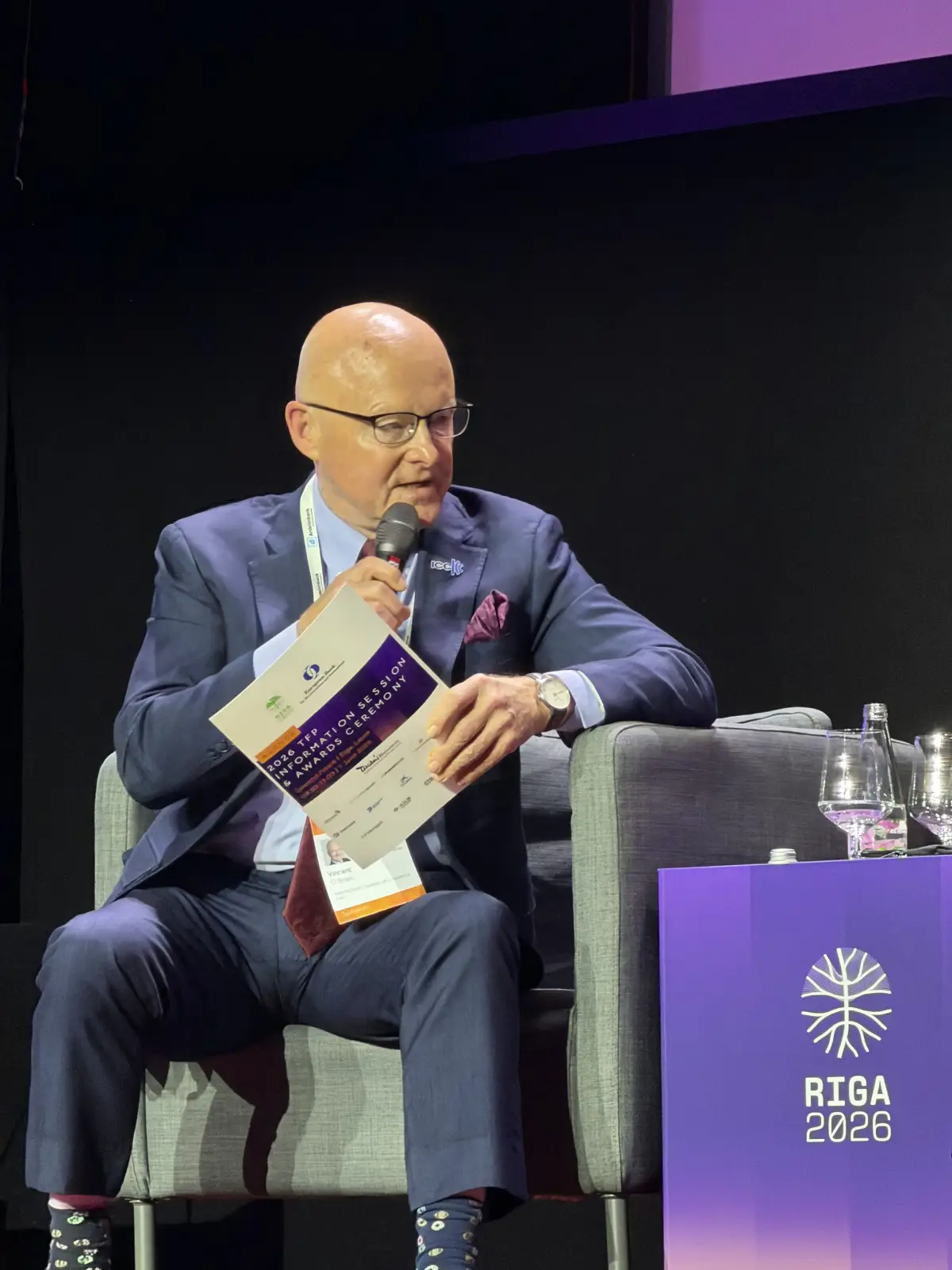
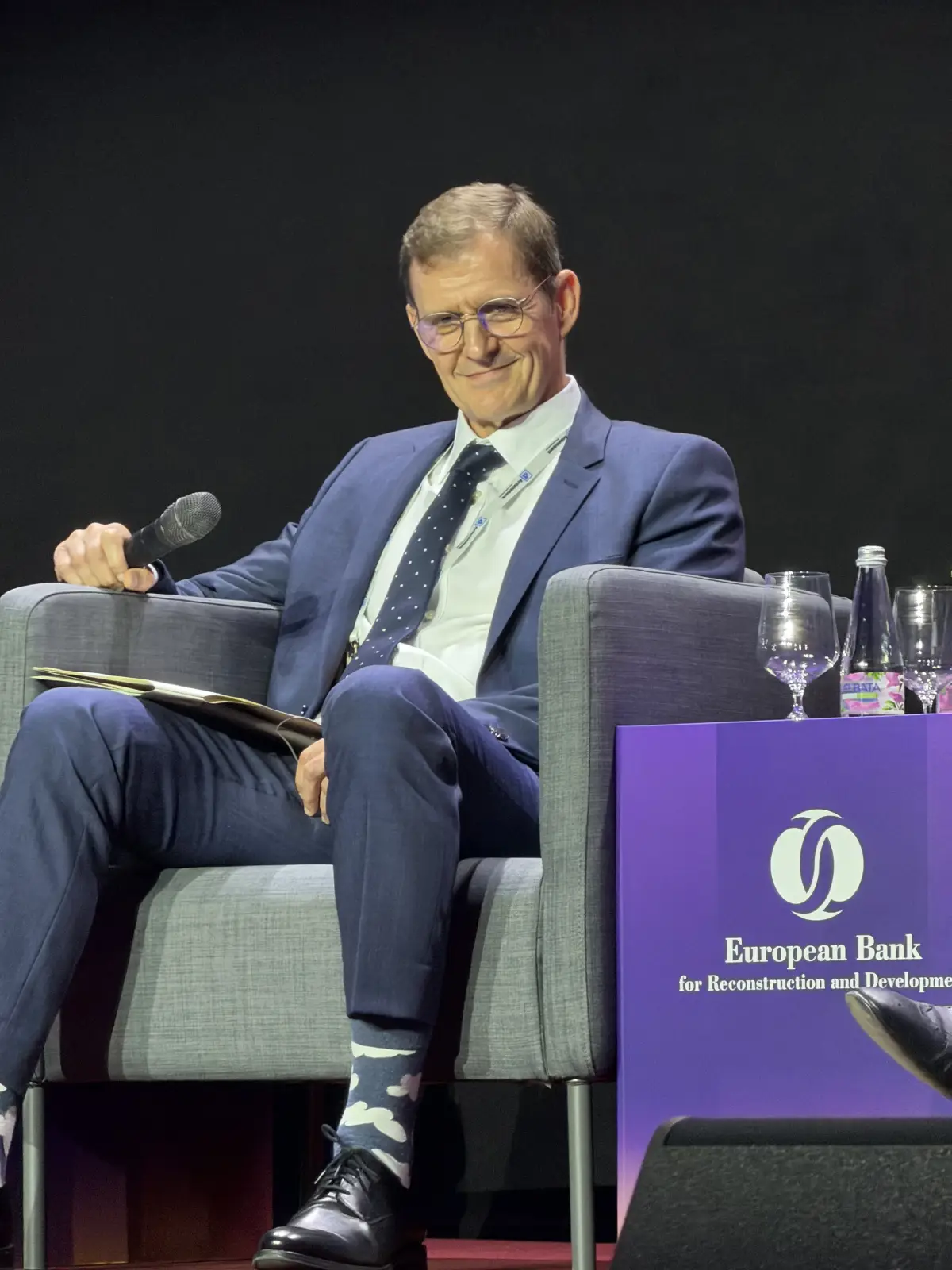
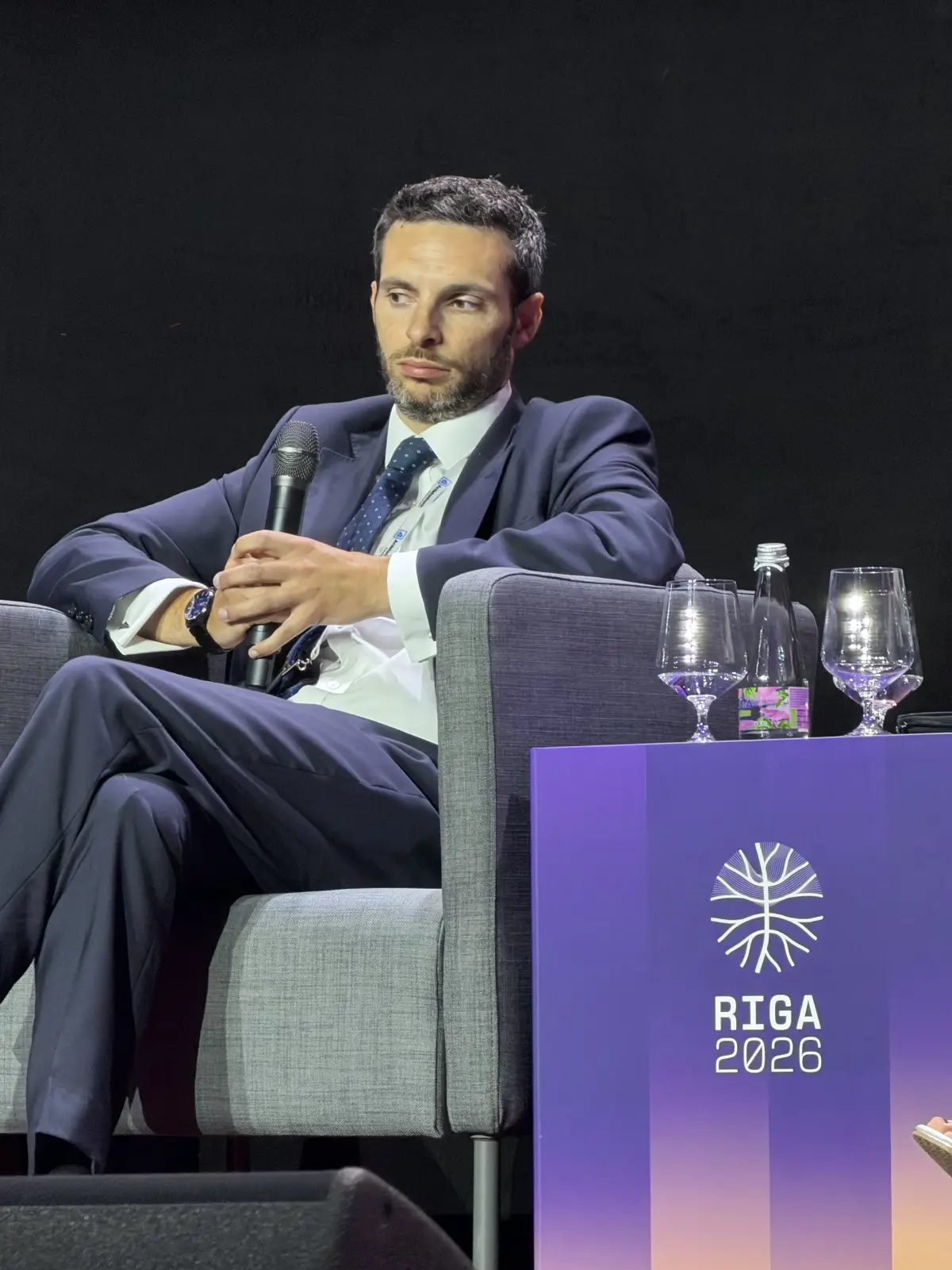
At the EBRD 2026 Annual Meeting and Business Forum in Riga, the Trade Facilitation Programme held its Information Day and Awards Ceremony. The sustainability panel, ‘Rebalancing priorities: sustainability in an era of global uncertainty,’ brought together Dirk Besdziek, Global Principal Trade Advisor at Commerzbank, Frederick Rugginz, Global Head of Financial Institutions Trade Sales at J.P. Morgan, María Gozalbes Llorca, Vice President IFI EMEA at CaixaBank, and Yuka Masumizu, Associate Banker on the EBRD’s Trade Facilitation Programme.
It was there that Vincent O’Brien, Director at ICC UAE and the panel’s moderator, opened with a psychological test for the audience. A cat appears on a flight of steps: is it going up, or coming down? See it ascending, and you’re an optimist. Descending, and you’re a pessimist. See it doing both at once, and you’re a banker. It set the tone for what followed: an industry whose relationship with sustainability is, at present, genuinely ambivalent. Sustainability, O’Brien observed at the outset, is no longer the headline it was five years ago. Geopolitics, AI, energy security, food security: the agenda has filled up fast. The question his panel was assembled to address is whether the sustainability agenda has been genuinely displaced, or merely joined by louder neighbours. The answer, it turns out, is complicated.
Ten years, five billion euros
The EBRD’s own Green TFP offers a useful baseline. Launched in 2016 as what Yuka Masumizu, Associate Banker on the EBRD’s Trade Facilitation Programme, described as “a quite small or modest initiative,” it has since financed more than 2,000 transactions across 27 countries, with a total volume now exceeding €5 billion. The programme operates through two main tools: a Green Technology Selector (an online platform of pre-assessed technologies, from solar panels to agri-tractors, against strict criteria covering energy performance and water consumption) and a network of sustainability certifications covering agricultural commodities. Everything else gets assessed on a case-by-case basis by technical experts.
What the programme actually offers banks and corporates to use it is more limited. Preferential pricing for green transactions has been in development for two years, Masumizu acknowledged – still relatively new. Enhanced visibility helps. But Dirk Besdziek, Global Principal Trade Advisor at Commerzbank and one of four banks to co-sign the ICC’s principles on sustainable trade finance in December 2025, made the tension plain: “The stage on which sustainable finance appears is a crowded stage.” Geopolitics. Demographic transformation. Structural shifts in the German economy. The China Shock 2.0. All of it competing for the same attention. Sustainable trade finance hasn’t lost the argument. It has simply stopped being the only one being made. For more on the ICC Banking Commission’s broader regulatory work, TTP’s earlier podcast is worth a listen.

Ninety-seven per cent unaccounted for
Underneath the strategic debate sits a more fundamental one. Trade finance has no equivalent of the green bond principles or the green loan principles – no internationally agreed taxonomy for what constitutes a green transaction. According to research by BCG and the ICC, only 3% of global trade can currently be definitively labelled as green. The problem is a lack of agreed definitions: common criteria and consistent assessment methodologies that banks and regulators can apply across jurisdictions. With robust, harmonised standards in place, that figure could rise to 75%. The gulf between those two numbers is essentially the greenwashing problem made visible.
The ICC’s December 2025 principles, developed with BCG through consultation with more than 100 banks, corporates, multilaterals, and civil society organisations, represent the most serious attempt yet to close that gap. Commerzbank is an endorser. So is J.P. Morgan. Besdziek was careful to frame what the principles can and cannot do: “You can’t have a discussion around sustainability or sustainable trade finance without concerns, risks, greenwashing, and it’s the banks that can ensure the integrity of the transactions.” The framework, in his telling, is less about forcing a pricing decision than about giving banks the credibility to make one. A stamp of classification that carries reputational equity. The pricing debate, he suggested, would follow.
Frederick Rugginz, Global Head of Financial Institutions Trade Sales at J.P. Morgan, added a useful caveat about where pricing incentives have and haven’t worked. Sustainability-linked supply chain finance, in which suppliers receive preferential rates for meeting ESG metrics, has been among the first products to adopt a sustainable version. J.P. Morgan’s Bridgestone programme, launched early, has performed well. But the wider rollout has been slower than anticipated, for a structural reason: banks don’t receive capital relief on green transactions. Without that, the economics are difficult. Adjusting the weighted-average price to benefit certain suppliers helps only at the margins. It isn’t enough to move the market at scale.
An unfair ask?
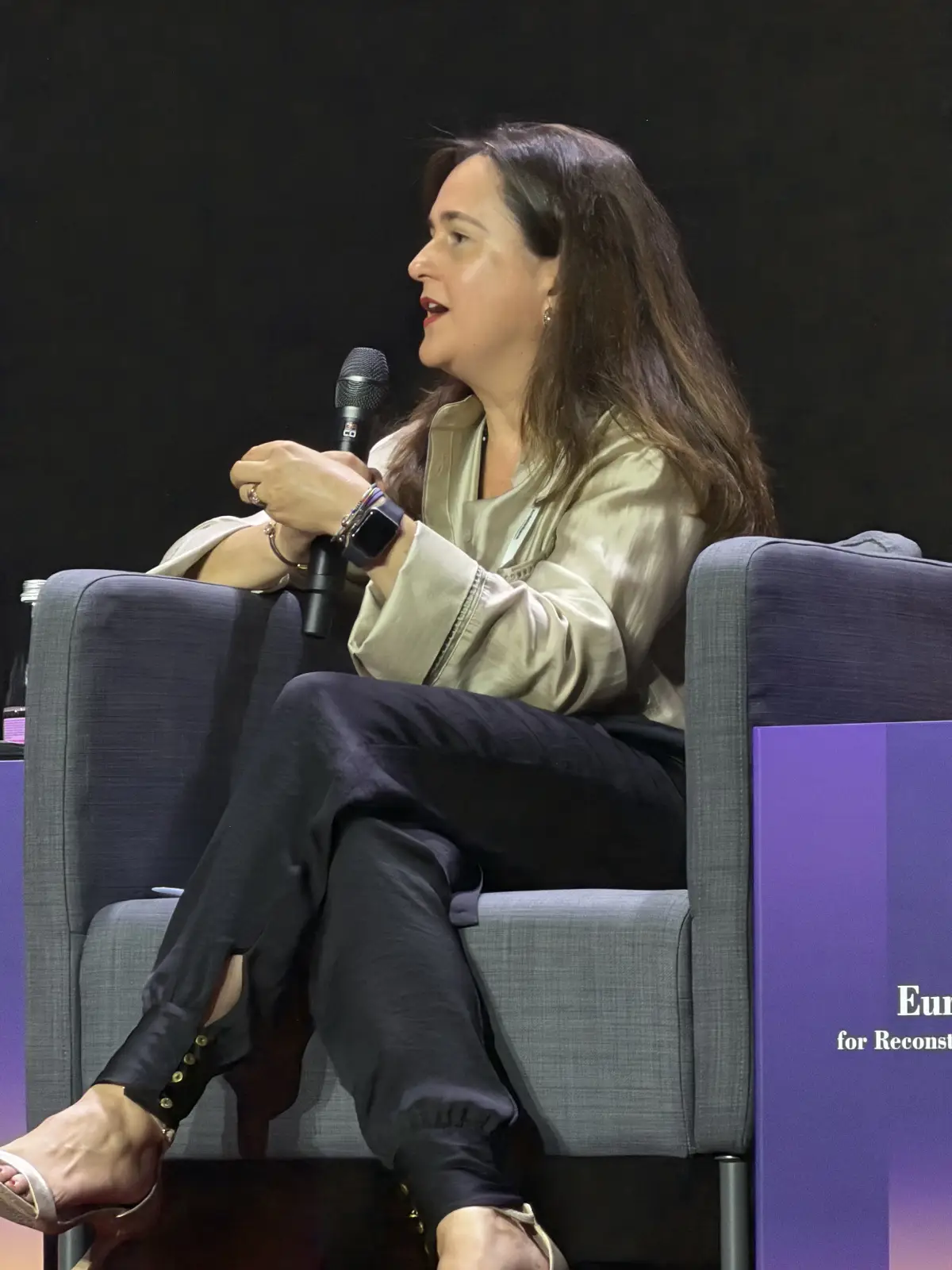
O’Brien put it to María Gozalbes Llorca, Vice President for IFI EMEA at CaixaBank, whether it was reasonable to expect banks in emerging and developing markets to pivot to sustainability when their clients’ primary needs (employment, healthcare access, energy access, housing) remained unmet. CaixaBank has set ambitious targets for itself: €100 million in sustainable finance by 2027, with 25% of new production already coming from sustainable instruments, up from 5% in 2020.
Gozalbes Llorca acknowledged the tension. Emerging markets, she argued, face a dual pressure that developed-market banks simply do not: the immediate, legitimate weight of basic social needs on one side, and the accelerating external pressure to decarbonise on the other. The solution, in her view, lies with multilaterals. Multilateral trade facilitation programmes – the EBRD’s TFP among them – provide the framework within which local banks can align standards, access tools, and build credibility with international partners. The coverage they offer is not just financial. It is an ecosystem of countries, compliance, and classification.
It takes two to tango, O’Brien suggested. But you also need the music. And the music, he said, is where the EBRD comes in.
Keeping the foot on the pedal
Rugginz, pressing further, offered what may be the most honest reframe of ESG’s current status in major banks. The dedicated ESG banker on the board – that very senior, very visible role – is disappearing. The positions are being downgraded. This is not, he argued, evidence that ESG no longer matters; it is evidence of a change in how it is understood. The moral obligation framing that dominated the early 2020s is giving way to a commercial rationale. Energy security is increasingly the argument that lands. Are offshore wind farms more strategically secure than imported fossil fuels in the current environment? Many people, he said, would say yes. J.P. Morgan’s security resilience initiative, championed by Jamie Dimon, incorporates renewables precisely on those grounds. The transition continues – it just wears different clothes.
The panel closed with O’Brien reflecting that his late mother, who drove her own car until 95, used to offer a simple piece of wisdom when problems mounted: you’ve got to keep driving. Even when you have to slow down. The foot stays on the pedal. The road, at present, is bumpier than it was. But no one on the panel was suggesting the journey had stopped.
This panel was held at the EBRD TFP Info Session and Awards Ceremony, part of the EBRD 2026 Annual Meeting and Business Forum in Riga, Latvia.