

Finastra brought AI payment repair and a new supply chain finance platform to Sibos in Miami. One aims to make the complex daily work of banking faster, simpler, and easier to manage, while the other will enable banks to access higher-growth, higher-return revenue opportunities.
I forget the name of the artist who asked: after the revolution, who picks up the rubbish on Monday morning? The point is a good one, though. We pay attention to the people who make new things. Less so to the people who come in afterwards, keep them working, and fix what breaks.
When Vinay Mendonca, Head of Product, Trade & Supply Chain Finance and Corporate Channels at Finastra, was asked what banks are prioritising, he listed digitisation first, then something “nobody likes to talk about because it’s not cool”: the Swift changes.
Swift moves the dates
Swift’s annual standards release was due in November. On 27 August, it postponed changes to its payment messaging standards, including the requirement for structured addresses. The Bank of England deferred its November CHAPS release ‘in its entirety’ the same day.
Swift then moved the securities and trade changes to 12 June 2027, while its next annual release remains scheduled for 20 November 2027. The postponed payment messaging changes still have no new date.
For a software vendor, keeping up with those changes is part of what clients are paying for. “That’s something we underwrite for our clients,” Mendonca said.
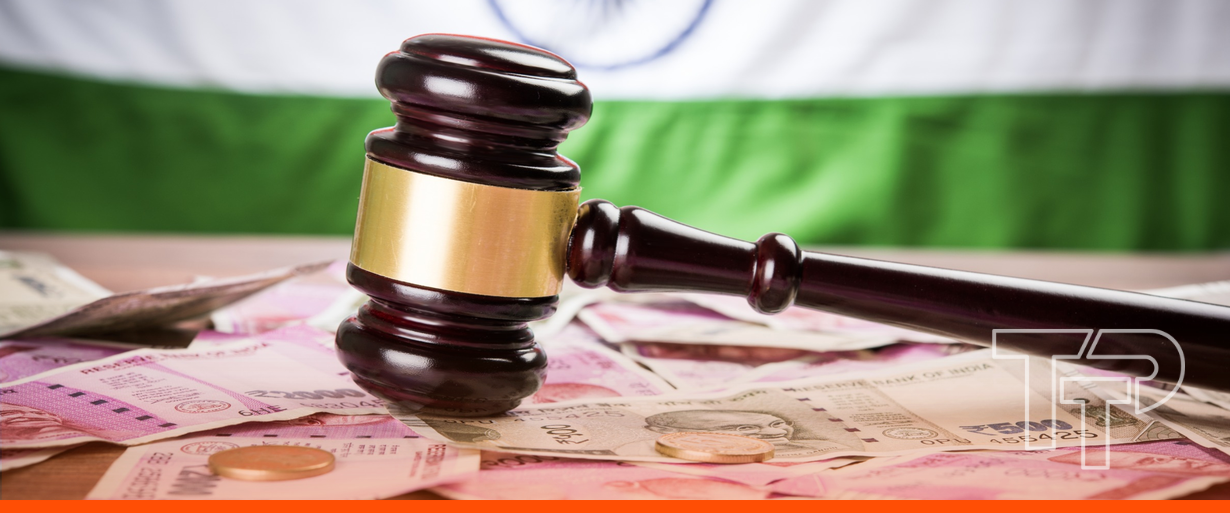
Then there are the local rules. In India, for example, he said, banks must be able to track export and import remittances and goods flows, and report them to the local regulator.
AI joins the repair team
If a payment fails validation, someone has to work out why, fix it, and send it on its way. That someone is usually a wire-room operator or repair specialist who knows what is wrong with a Swift, Fedwire, or SEPA payment and what will put it right.
One of Finastra’s Sibos announcements, Repair Recommendations, adds a feature to its AI OperatorAssist tool that examines a failed payment and proposes a fix checked against the relevant payment scheme’s rules. A person reviews and approves every recommendation before anything changes.
Robin LoGiudice, strategic advisor at Datos Insights, said in Finastra’s announcement that “payment teams still spend extensive time sourcing data and diagnosing exceptions, making operations costly and slow.”
Finastra argues that the tool will reduce banks’ dependence on specialist expertise and help new staff get up to speed sooner. Some of the knowledge needed to diagnose and repair a failed payment is now going into the software.
The cost of running two systems
Banks are investing into supply chain finance, but running supply chain finance separately from traditional trade “means having to build two sets of integration pipes every time,” Mendonca said. “And managing that really adds to the ongoing cost.”
Finastra’s Sibos announcement was its new Supply Chain Finance platform, which initially supports payables and receivables finance. It runs on Trade Innovation, Finastra’s platform for letters of credit, guarantees, and collections, or on Loan IQ, its loan servicing system for commercial lending, connected through the company’s Nexus API suite.
Mendonca said the new platform goes live in November with a pilot client.
Bank security reviews present another hurdle. As the focus on resilience intensifies, new standalone solutions without the necessary infrastructure and production-support maturity could struggle to pass a bank’s third-party security review.
Finastra already has those foundations, including customer service, technical support, and level three engineering for what Mendonca called mission-critical systems.
Risk distribution has become a standard requirement. “Maybe ten years ago, you thought about risk distribution for large portfolios, for big-ticket facilities. Today, risk distribution is a basic expectation,” Mendonca said.
Banks can sell down risk to keep financing limits available for corporate clients. Finastra has built these processes into the platform, including releasing limits, reconciliation, and passing fees to investors. Later releases will add purchase order, inventory, and distributor finance.
Paper isn’t going anywhere yet
Around 11% of bills of lading were issued electronically in 2025, up from 1.2% in 2021, according to the DCSA. The chief executives of its member carriers have committed to 100% by 2030. Until then, Mendonca said, “there is going to be paper for a long time,” and Finastra is using AI to read and process those paper documents.
Low volumes do not necessarily mean low risk. “Running things on Excel, running things manually, even if it’s for modest transaction counts but possibly high values, represents a very high operating risk, and banks are considering digitisation of these flows,” he said.
Thirteen jurisdictions have legislation based on or influenced by UNCITRAL’s Model Law on Electronic Transferable Records, according to UNCITRAL, and in June five eBL platforms adopted a DCSA standard that lets them exchange documents with one another. Finastra has integrated its channel and back-end to such platforms to allow banks to digitise their flows end to end. Mendonca said the harder problem is legal.
“One reason why trade is difficult is you actually have to transfer title of documents, not just data,” he said. Two parties in the same transaction may work under different laws, and the rules governing title, insurance, and document integrity must align before the goods can change hands.
I looked it up. The artist was Mierle Laderman Ukeles, and she went on to spend most of a year shaking hands with New York’s sanitation workers, thanking each of them for keeping the city alive. Finastra’s software takes on some of the work of keeping payments and trade moving, but a person makes the final decision. “There has to be a human in the loop,” Mendonca said.