
In 1980, world-renowned gymnast and Dan Millman released the first edition of his book ‘Way of the Peaceful Warrior’. In the book, one of the fictional characters, Socrates, said, “The secret of change is to focus all of your energy, not on fighting the old, but on building the new.” This line holds true today in the real world as well, in the world of business.
Consider a mid-sized manufacturer exporting to Europe. Every invoice creates currency exposure. Every contract in dollars or euros introduces risk that can erode margins. The tools to manage this, such as forwards, options, and hedging strategies, have existed for decades. But they remain accessible only to businesses large enough to merit a bank’s attention or generate sufficient revenue to justify a broker’s time.
For many below that threshold, currency risk remains an acknowledged problem without a solution. The economics of traditional distribution make sophisticated hedging effectively unavailable. Banks cannot dedicate relationship managers to every client. Brokers prioritise their largest accounts. Smaller businesses manage volatility with spreadsheets and hope.
This is distribution failure – one that technology is beginning to address.
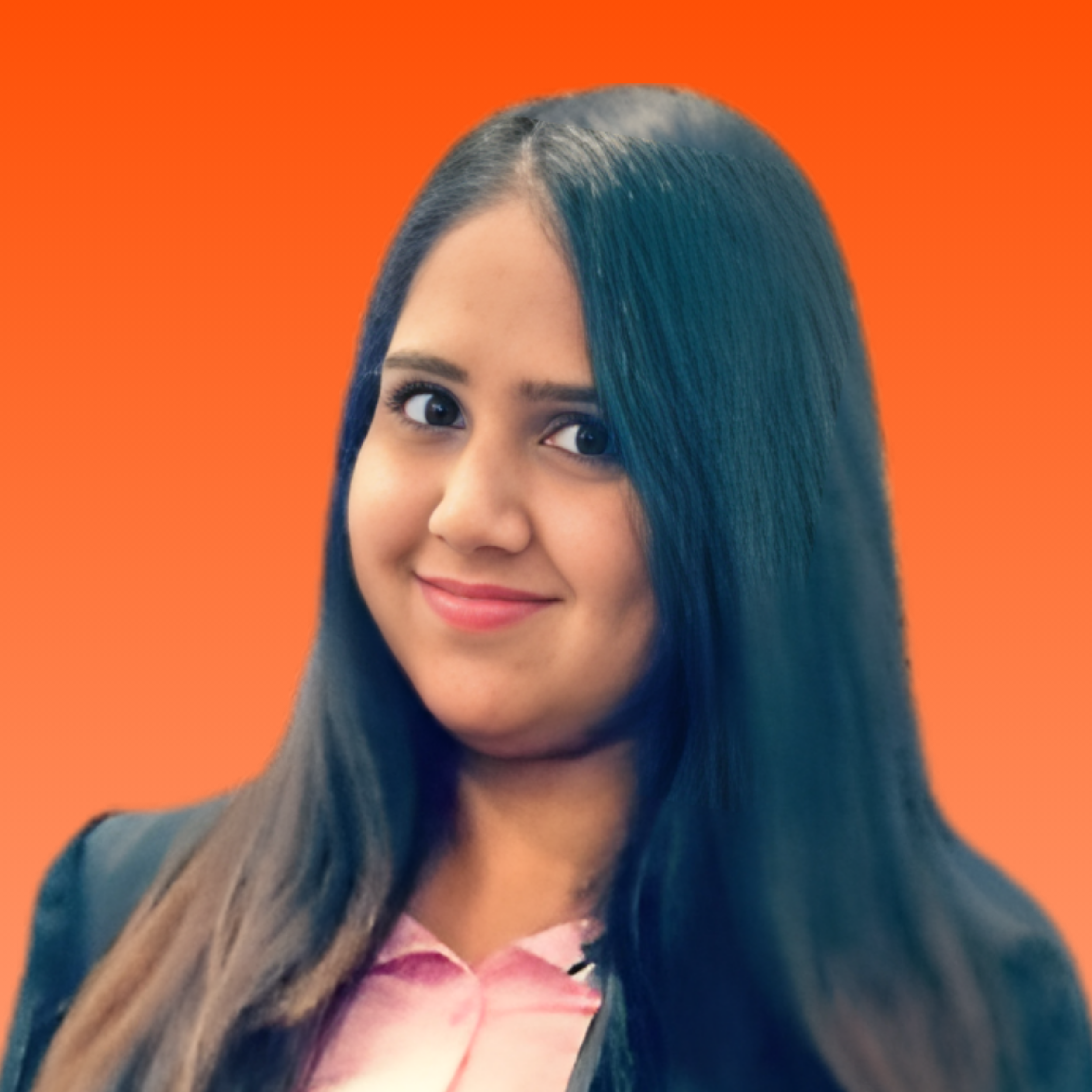
This edition of Voices from the Frontline features Pritesh Ruparel, Group Chief Executive Officer of Alt21, a multi-currency platform serving Small and Medium Enterprises (SMEs) and mid-market businesses, in conversation with Deepesh Patel, Editor-in-Chief, TTP. In this series, we profile some of the leaders and founders who are rebuilding liquidity and risk management.
In this interview, Pritesh and Deepesh discuss why banks underserve mid-market hedging, how technology changes distribution economics, how embedded hedging works, the tension between self-service and structured products, why long-term relationships conflict with short-term incentives, and much more.
Deepesh: Alt21’s premise is that the tools to manage currency risk always existed, but were less accessible or transparent to smaller businesses. Why have banks and brokers left mid-market and SME hedging underserved for so long?
Pritesh: I don’t think banks have deliberately left smaller businesses underserved. I think it’s largely a distribution problem. A large bank might have thousands of corporate clients, but only a relatively small team covering them. Inevitably, most of that team’s time goes towards the customers generating the most revenue. Those clients get the immediate access, regular contact, product updates and level of service you’d expect. It’s simply very difficult to provide that same experience to every business economically.
Brokers have a similar challenge. Their model is still heavily dependent on people, so the economics naturally encourage them to spend more time on their most valuable customers.
That’s particularly important when you move from simply exchanging currency to managing currency risk. Making an FX payment is relatively straightforward. Understanding an exposure, deciding how you want to manage it and then doing that consistently over time is much harder. Nobody has really solved how to deliver that capability at scale without either relying heavily on people or reducing the experience to something too simplistic.
That’s where I think technology changes the economics. Banks are exceptionally good at the underlying financial infrastructure and building these products. The opportunity for fintech isn’t necessarily to replace that. It’s to build a better distribution layer on top of it, using technology to make the tools, information and execution capabilities available to far more businesses without requiring the same level of human involvement.
The products to manage currency risk aren’t new. What’s changing is our ability to make them more accessible and give finance teams greater visibility and control over how they use them.
Deepesh: You’ve said that the Alt21 platform uses the same methods from high-frequency trading (HFT) firms. What does HFT-grade technology change about how an SME gets priced and hedged — and how much of the “opaque and expensive” problem is technology vs incentives?
Pritesh: When I talk about learning from high-frequency trading firms, I’m not talking about using their trading strategies. I’m talking about how they use technology to automate their operations. HFT firms compete in markets where margins can be incredibly small, so they can’t afford inefficient processes around every transaction. They’ve automated their operational infrastructure to a level you rarely see in other financial businesses. That’s the principle we’ve tried to bring into Alt21.
If you can remove a lot of the manual processes that traditionally sit around an FX transaction, you can operate more efficiently and make capabilities available to customers without needing a person to touch every stage of the process. That’s important if you want to serve a much broader group of businesses economically.
But I think the “opaque and expensive” problem is both technology and incentives.
Technology can make transparency systematic. A platform can show pricing information consistently and in real time rather than requiring a customer to ask someone what they’re paying. It can also reduce the operational cost of delivering the service in the first place.
Incentives are harder. If the person selling a financial product is rewarded primarily for getting the customer to transact, there’s an inherent tension there. You can hire good people and build a strong culture, but you also need to think carefully about whether your commercial incentives support the behaviour you want.
We’ve tried to address both sides at Alt21. We use technology to give customers more direct visibility and control, while thinking carefully about how we reward our teams so that long-term customer relationships matter, rather than simply maximising the value of the next transaction.
Ultimately, the most valuable businesses tend to be the ones customers want to keep coming back to. That sounds obvious, but too often I see CEOs of my competitors (yes, most of us are friendly enough to talk frequently) being pressured to focus on the short-term nature of this quarter’s numbers rather than building a healthy customer base that genuinely wants to come back.
Then later on you get questions from, say, a board member asking why customers aren’t coming back, and why we’re in this endless hamster wheel of burning through the orchard of good clients because we can’t seem to do right by the customer to retain them. I cut my teeth in a business that was single-family office-owned, and when you take a more realistic and longer-term outlook on business, you build a great outcome – one that’s not short-term. Time loaded on every decision, you tend to make better decisions for your shareholders, team and your clients.
Deepesh: Alt21 both serves businesses directly and embeds FX, hedging and payments into banks and marketplaces. Can you talk about how it helps SMEs?
Pritesh: Embedded hedging is about dealing with an exposure closer to the point it’s created. If a business knows when it raises an invoice, signs a contract or commits to a future payment that it’s creating currency exposure, why should managing that exposure have to become a completely separate process later?
The finance team still decides how it wants to manage its currency exposure, including which exposures are covered, how much and the parameters that should apply. But once those decisions have been made, technology can apply them systematically within the workflows where the exposure arises.
That’s where I think embedding can make a real difference. We aren’t taking the decision away from finance. We’re removing some of the manual work between identifying an exposure and acting on a policy the business has already established.
We are the true pioneers and leaders in this space, and we know it’s not easy to execute successfully. I heard recently that a large FX broker had put together a team last year for 12 months to try to work out how to copy us and failed. This is the part that gets me excited; it requires deep domain expertise to innovate like this. You can’t just be some guy who builds nice social media content and basic front-end experiences; you need to change the infrastructure behind how the factory builds the product for you, and then work out how to deliver it at scale.
Deepesh: How do you make sure “self-serve” hedging genuinely serves an SME’s interest, rather than just making it easier to sell them structured products?
Pritesh: For me, self-serve isn’t about making it easier to sell someone a more complex product. It’s almost the opposite. The point is to give finance teams the information and visibility they need to make more informed decisions and execute without having to rely on a salesperson every time.
There’s always a balance in how much information you provide. An experienced FX trader might want to see every detail before they execute, while a finance director managing a relatively straightforward exposure probably doesn’t. The challenge is making the information useful without making the experience unnecessarily technical.
I think we’ve got it right when a customer can look at the information in front of them and say, “I can do this myself.”
We’re already seeing that happen. We’ve had customers who were convinced they’d always need to speak to someone before executing, then started using the platform independently without being prompted to do so.
That doesn’t mean human expertise disappears. If someone has a question, wants reassurance or is dealing with something more complex to them, there should be an experienced person available to help. But they shouldn’t need that person simply to complete a routine transaction. Good self-service gives the customer greater independence. It doesn’t create another opportunity to sell them something.
Deepesh: Looking at the current market, with divergent central-bank policy, tariffs and currency volatility as the backdrop for 2026, how does that impact SME treasurers? Have you seen changes in behaviour around how they manage FX and liquidity?
Pritesh: This year has been a good example of why currency risk management shouldn’t be driven by whatever happens to be making headlines that week. We’ve had tariffs, geopolitical shocks and changes in expectations around monetary policy. Then you can move into periods where markets settle down again. Businesses can become very reactive to those cycles. Currency moves sharply; everyone pays attention. Things settle down, and FX moves further down the priority list.
I think managing currency exposure should be a discipline you build into the business, rather than something you suddenly start thinking about because the market has moved.
I compare it to building insurance. I don’t get particularly excited about renewing our insurance every year, but I’m not going to stop doing it because nothing happened to the building last year.
Hedging should be similarly boring. There should be a process around it, appropriate governance and clear parameters for what the business is trying to achieve. Then you’re not reinventing your approach every time there’s an election, a tariff announcement or an unexpected geopolitical event.
One change I have noticed is greater scrutiny around counterparties and credit arrangements. Recent events in the non-bank FX market have made treasury teams much more conscious of who they’re trading with and what happens if something goes wrong. And I think zero-zero credit lines are one of the stupidest things someone created in FX hedging.
The idea that a business can enter into a hedge without posting collateral can sound very attractive. But the credit exposure hasn’t disappeared. Someone is still taking that risk, and businesses need to understand how that arrangement works, who their counterparty is and what could happen under different market conditions. It makes literally no difference how big your balance sheet is; there’s not been a company that’s been able to provide financing to highly volatile assets without collateral that has survived the test of time. It’s already seen some casualties, and with more to come on a big vol event, trust me, it will be the big guys that get carried out first.
That’s probably the broader change I’m seeing. Businesses aren’t only looking at the rate or the hedge anymore. They’re asking more questions about the infrastructure around it, the credit and the counterparty they’re relying on.
Volatility will come and go. The better response isn’t trying to predict every shock. It’s having a repeatable process for managing exposure and understanding the arrangements you’re using to do it.
Deepesh: You’re now expanding beyond FX into new financial products. What does the roadmap beyond hedging look like at Alt21? (5-year horizon)
Pritesh: Over the next five years, I see us broadening beyond FX, but I don’t want us to become a platform that adds financial products simply because we can.
The common thread for me is risk. What are the financial risks a real business needs to manage? Today, our core expertise is currency risk, and over time there are other areas we could explore. But I don’t want us to expand into a product simply because it looks like the obvious next step.
Commodity hedging is a good example. Because I spent part of my career in commodities, people naturally assume that’s where we’ll go next. Actually, that experience makes me more cautious about it.
Commodity hedging can become incredibly complex. You have physical supply chains, perishable goods, basis risk and operational events that can completely change the exposure you’re trying to manage. You can’t responsibly build a product around that without understanding what happens in the real world when something goes wrong.
That’s why I’m sceptical when fintechs announce they’re going to hedge every possible risk or put an AI agent in front of it to get a round of applause from investors, and assume the problem is solved. The next five years shouldn’t be about creating products because they sound good on a deck.
I’d rather find genuinely difficult problems that businesses need solved and work out whether we can solve them properly. That might mean moving into another area of financial risk, or it might mean going deeper into FX and finding ways to manage currency exposures that are currently difficult or impractical to hedge.
The world’s changing, and new financial risks and challenges will emerge with it. I want Alt21 to build solutions where there’s a genuine need and where we have the expertise to do it responsibly.