As customs authorities intensify scrutiny of tariff classification accuracy, real-world enforcement actions continue to demonstrate how regional tariff differences can expose importers to reassessments and compliance risk.
Misclassification due to regional variations is a common issue impacting multinational organisations, which can have a significant impact on borders, resulting in post-clearance demand notes and penalties.
As an example, a leading luxury menswear brand that manufactures in Europe and distributes goods in countries including the United States, the United Kingdom, the European Union, and Japan approached Alinea Customs, citing concerns that their goods were increasingly subject to US Customs and Border Protection seizures and penalties.
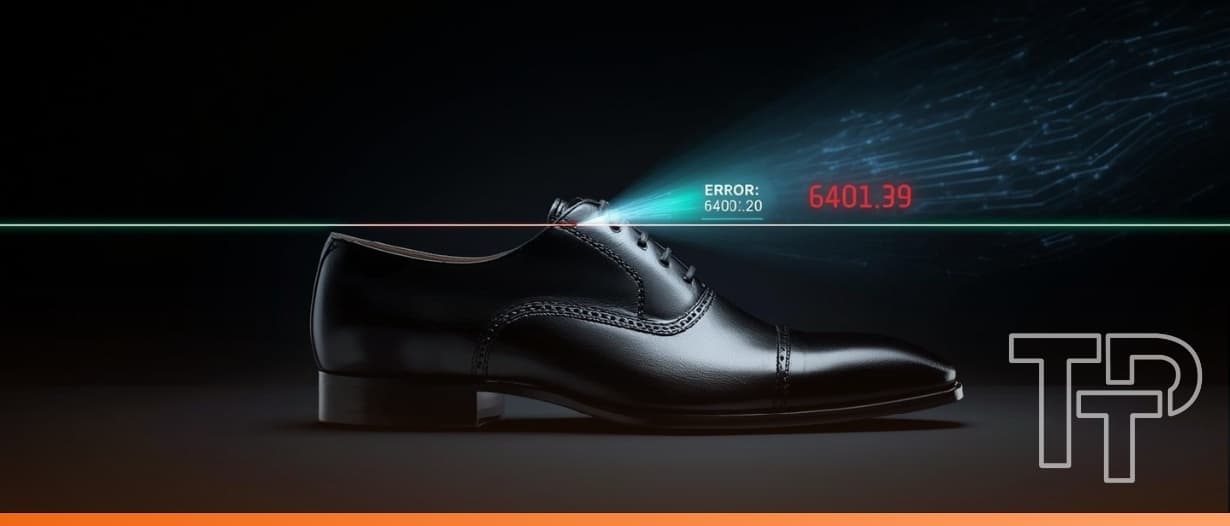
They shared details of a scenario in which a leather brogue had accidentally been classified as a flip-flop. The company was initially presented with a request for Information.
Request for information issued by the US Customs and Border Protection (CBP) under 19 CFR 151.11
The request included questions related to customs valuation and the use of transaction method 1 as outlined below.
A request for the following information was presented: a.) Copy of contract (or purchase order and seller’s confirmation thereof) covering this transaction, and any revisions thereto. b.) Descriptive or illustrative literature or information explaining what the merchandise is, where and how it is used, and exactly how it operates. c.) Breakdown of components, materials, or ingredients by weight and the actual cost of the components at the time of assembly into the finished article. d.) Submit samples: Article number and description Samples consumed in analysis, and other samples whose return is not specifically requested, will not normally be returned.
|
Notice of Action issued by the US Customs and Border Protection (CBP) in accordance with 19 CFR 152.2
Subsequent to providing the documents, a Notice of Action was issued. This established that a footwear item that had been classified as 6402.20.0000 with a 2 percent duty rate should have been more appropriately classified under HTSUS 6403.99.6075, which has a duty rate of 8.5 percent. A request for the company to review the classification of all their inventory was recommended. The Notice concluded that the entry was rate advanced and set for liquidation and identified that an invoice would be sent for the difference in duties.
Under the Customs Modernization and Informed Compliance Act, the importer of record has the responsibility to properly classify merchandise imported into the United States. Whilst in this case, the trader did not receive a penalty, the US CBP warned that future violations could result in seizure and forfeiture of imported merchandise and or the assessment of monetary penalties.
Alinea Customs were instructed to conduct a professional review of 3,500 products within the luxury retailer’s inventory. The consultancy revealed that 98 percent of the inventory had been classified incorrectly for the US market, primarily due to the company relying on the classification provided by European suppliers rather than consulting the United States HTS.
For deeper insight into tariff classification risk, enforcement trends, and practical compliance strategies across jurisdictions, explore the full Exporters Guide here