





About This Video
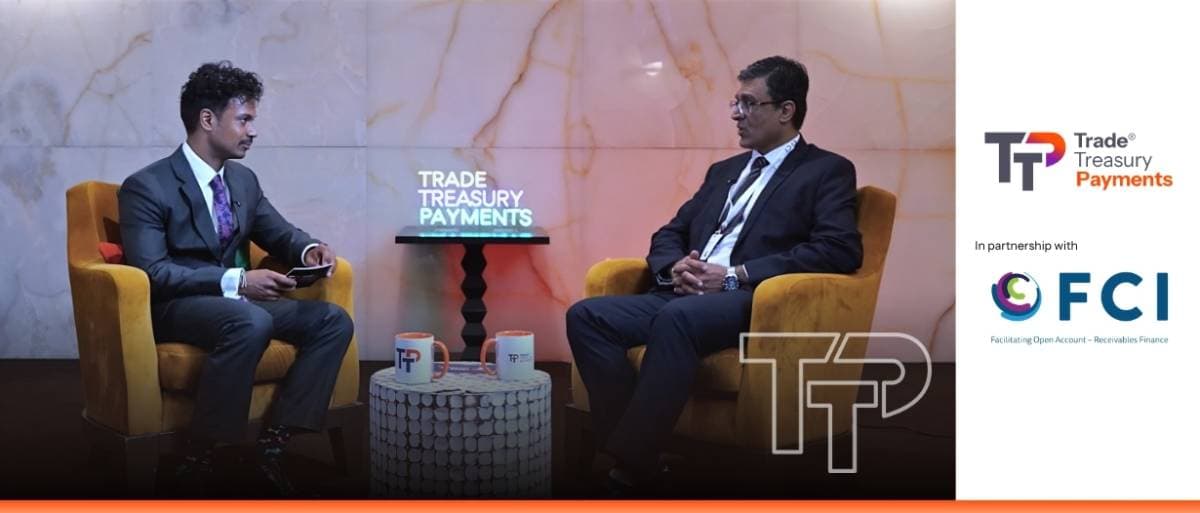
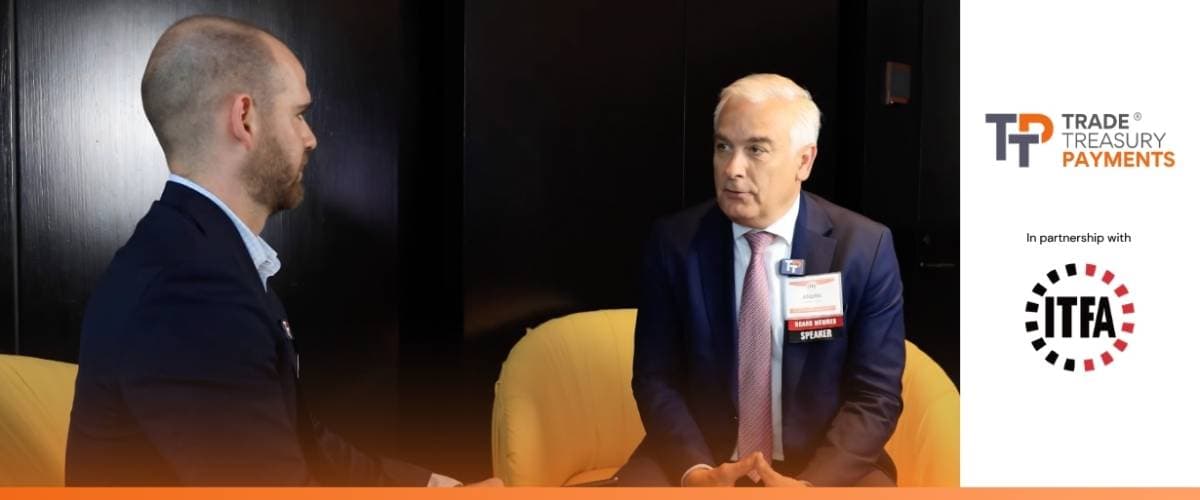
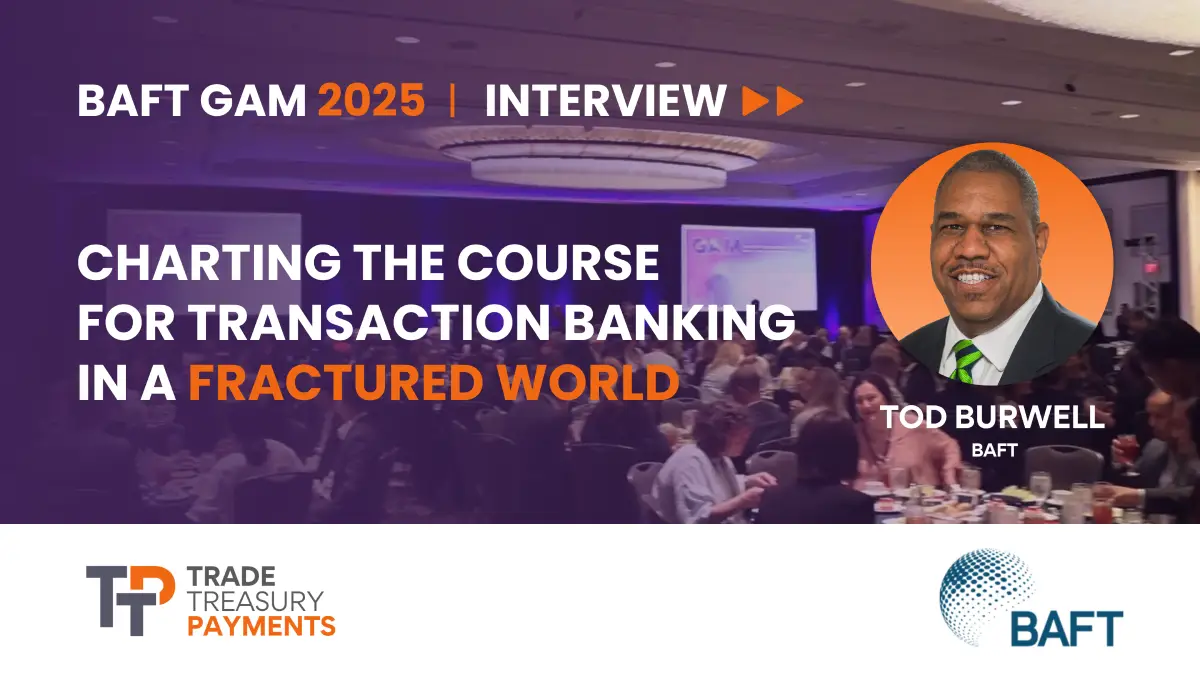
At the BAFT (Bankers Association for Finance and Trade) Global Annual Meeting in Washington, DC, Trade Treasury Payments (TTP) caught up with Tod Burwell, President and CEO of BAFT, to discuss the association’s direction and priorities amidst growing geopolitical and regulatory complexity.
Burwell said, “The theme of the conference this year – innovate, collaborate, elevate – really captures what our industry is facing. There’s more to innovation than just technology. Institutions are having to rethink how they support clients in a time of policy change, economic volatility, and new business risks.”
While BAFT has long served as a hub for global transaction banking professionals, the organisation is now preparing to formally separate from the American Bankers Association (ABA), in order to better cater to BAFT’s increasingly international membership. Burwell said, “Seventy percent of our members are headquartered outside of the United States. Independence allows us to be a geopolitically neutral voice and to engage directly in local markets around the world, without compromising the ABA’s domestic mandate.”
In terms of advocacy and thought leadership, several key topics are guiding BAFT’s agenda in the coming year. Among them: uneven payment regulations, capital requirements for trade finance, and evolving policy discussions around artificial intelligence. Burwell pointed out that regulatory fragmentation (both between jurisdictions and between banks and non-banks) is creating friction at a time when cross-border systems are becoming more interconnected.
On the ground, members are grappling with a wave of geopolitical disruption ranging from tariffs and trade restrictions to shifting supply chains. That uncertainty, however, is also creating opportunity.
Burwell said, “When clients feel uncertain, it’s often when banks can create the most value. It allows them to get closer to their clients and help them navigate risk, whether that’s through guarantees, credit support, or tailored advice.”
BAFT’s message to members and the wider community is to support collaboration, particularly when market conditions are turbulent. Whether through peer exchange, workstreams, or global advocacy, the organisation is doubling down on its mission to bring the industry together.
Key Topics
- Innovation in trade finance and how institutions adapt to economic disruption
- Collaboration across the global banking community to address client needs
- BAFT’s transition to an independent organisation and its global role
- Regulatory consistency in payments, capital rules and financial technology
- The impact of geopolitical tensions and tariffs on trade finance demand
Key Insights
Expert Analysis
Tod Burwell, President and Chief Executive Officer of BAFT, emphasises that the current trade environment requires institutions to think differently about how they support clients. The theme of this year’s conference, Innovate, Collaborate, Elevate, reflects the need for both creativity and partnership as markets continue to evolve. While innovation remains a central focus, Burwell stresses that it is not only about technology. Organisations must also find new ways to help their clients adjust to rapid changes in economic conditions, policy decisions and trade dynamics. The ability to respond quickly has become an essential part of modern trade finance. Collaboration sits at the heart of BAFT’s work. The organisation brings together banks and financial institutions from across the world, allowing them to share expertise, build partnerships and develop practical solutions for their clients. These relationships are particularly valuable in an environment where no single institution can address every challenge alone. BAFT is also in the process of formally separating from the American Bankers Association. According to Burwell, this step will allow the organisation to continue its work as an independent global voice for trade finance, reflecting the increasingly international nature of its membership. Looking ahead, several priorities remain central to BAFT’s agenda. These include addressing inconsistencies in payment regulations across jurisdictions, ensuring that capital requirements for trade finance are appropriately calibrated under Basel III, and supporting the responsible adoption of emerging technologies such as artificial intelligence. At the same time, geopolitical tensions and tariff disputes are shaping the environment in which banks and their clients operate. While uncertainty presents challenges, Burwell notes that it also creates opportunities for banks to engage more closely with clients, helping them manage risks and maintain access to international markets.— Tod Burwell
Key Findings
- Organisations are placing greater emphasis on agility as economic and policy conditions evolve.
- Differences in regulation between jurisdictions continue to slow progress in global payment connectivity.
- Financial institutions are exploring new technologies to improve efficiency and service delivery.
- Tariffs and geopolitical tensions are increasing demand for trade finance solutions in some markets.
- Industry forums and associations play a key role in encouraging dialogue and cooperation.
Implications
- BAFT’s independence is likely to strengthen its ability to represent a diverse global membership.
- Greater consistency in payment regulation could reduce friction in cross border financial systems.
- Banks are expected to take on a stronger advisory role as clients navigate geopolitical uncertainty.
- Emerging technologies, including artificial intelligence, will continue to influence transaction banking.
- Collaboration across institutions will remain essential in addressing industry wide challenges.
Key Takeaways
- Innovation in trade finance increasingly focuses on helping clients adapt to change.
- Collaboration across the banking sector is vital to solving complex trade challenges.
- BAFT’s global membership reflects the international nature of modern trade finance.
- Aligning regulations across markets will support more efficient global payments.
- Banks play an important role in helping clients manage uncertainty in global trade.