
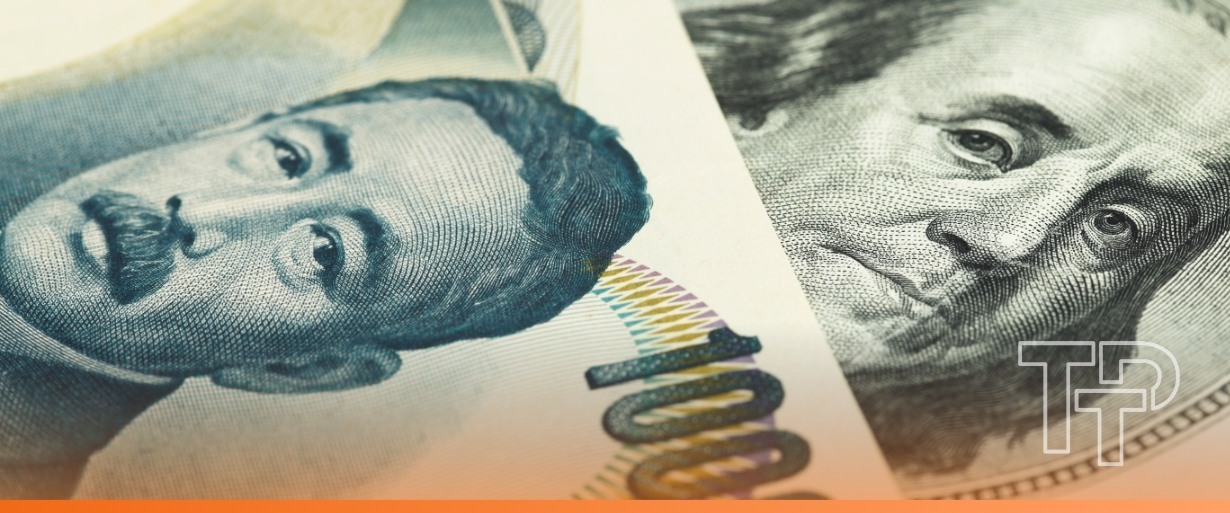
US and Japan’s rare coordinated intervention to support the Yen amid pressure on the Dollar

Devanshee Dave
Reporter, Trade Treasury Payments
Published 3 Aug 2026
Live Updates
The United States and Japan have jointly intervened in currency markets to halt the Japanese yen’s slide to 40-year lows against the US dollar.
This coordinated action, confirmed by both governments at the beginning of August, is the first joint US-Japan intervention since 1998 and the first coordinated intervention involving the two nations since the G7’s efforts following the 2011 earthquake in Japan.
Japan has spent $36.58 billion to purchase Yen on Friday, while the US has €26 billion to inject via its System Open Market Account (SOMA) and the Exchange Stabilisation Fund (ESF).
Background: Yen’s prolonged weakness and market volatility
The Japanese yen had been weakening persistently against the US dollar, reaching levels above 164 yen per dollar in late July 2026, a 40-year low that raised alarm in Tokyo.
The yen’s depreciation has contributed to rising import prices in Japan, fueling inflationary pressures that affect household budgets and have political implications for Prime Minister Sanae Takaichi’s administration.
Despite earlier efforts by Japan to stabilise the yen, including interventions in April and May 2026 and a June interest rate hike to 1%, the highest in 31 years, the currency’s weakness persisted.
The Bank of Japan’s continued purchases of government bonds to cap yields have also been cited as structural factors contributing to the yen’s undervaluation.
US President Donald Trump publicly acknowledged Washington’s involvement, describing the intervention as a “signal of friendship” and emphasising the strong financial ties between the two countries.
Trump stated, “We have a good relationship with Japan. We’re very strong — very, very strong financially — and they have a weakening yen, and they wanted a little bit of help, and we’re always there for Japan.”
Following the announcement, the yen surged approximately 1.4%, reaching a near three-month high of 155.20 yen per dollar.
The currency also strengthened broadly against other major currencies, including the euro and British pound, which climbed to multi-week highs. Many reports claim that the US has sold euros to buy Yen.
Why sell euros?
Well, it’s not charity. It’s self-preservation for the US Treasury. Japan is the largest foreign holder of US debt. If Japan had to intervene alone, it would have been forced to dump massive amounts of US Treasuries to raise cash. Selling that many Treasuries would spike US yields, sending borrowing costs through the roof for an already heavily indebted US government.
Also, the euro was the only option. Treasury Secretary Scott Bessent didn’t sell Dollars to buy Yen. If the US Treasury directly dumped large volumes of U.S. Dollars onto the open market to buy Yen, global markets would likely interpret it as an official policy shift by Washington to intentionally devalue the Dollar. It would have also impacted the Federal Reserve’s domestic monetary policy and inflation management. So, the US used €26 billion from its reserves to sell Euros and buy Yen.
Lastly, the fund and system through which the US Treasury maintains foreign currency reserves is the Exchange Stabilisation Fund and the Fed’s System Open Market Account. These reserves are held mainly in Euros and Japanese Yen. Selling off existing Euro reserves was the cleanest way to ready capital without needing to create new Dollar-denominated liabilities or liquidate domestic assets.
US’s helping hand is not a deed without a motive
Washington’s involvement was driven by concerns beyond the yen’s weakness alone. Japan is the largest foreign holder of US government debt, and a sharp depreciation of the yen could compel Japan to sell large quantities of US Treasury to finance unilateral intervention efforts. Such sales risk destabilising US Treasury markets and pushing yields higher, which would have global repercussions.
US participation helps alleviate fears that Japan’s intervention might pressure US funding markets through forced Treasury sales. The coordinated action also signals a strong deterrent against speculative attacks on the yen.
US Treasury Secretary Scott Bessent reiterated Washington’s readiness to participate in further joint actions. Bessent expressed strong support for Japan’s market and monetary measures aimed at correcting the yen’s substantial undervaluation and called for additional interest rate hikes by the Bank of Japan.
Japan’s Finance Ministry indicated plans to utilise the Federal Reserve’s FIMA repo facility, which allows foreign central banks to access dollar liquidity without selling Treasury outright, for future interventions.