Updates from Lisbon: IFC’s 9th Global Trade Partners Meeting

Deepesh Patel
Editor in Chief, Trade Treasury Payments
Published 25 Mar 2026
Live Updates
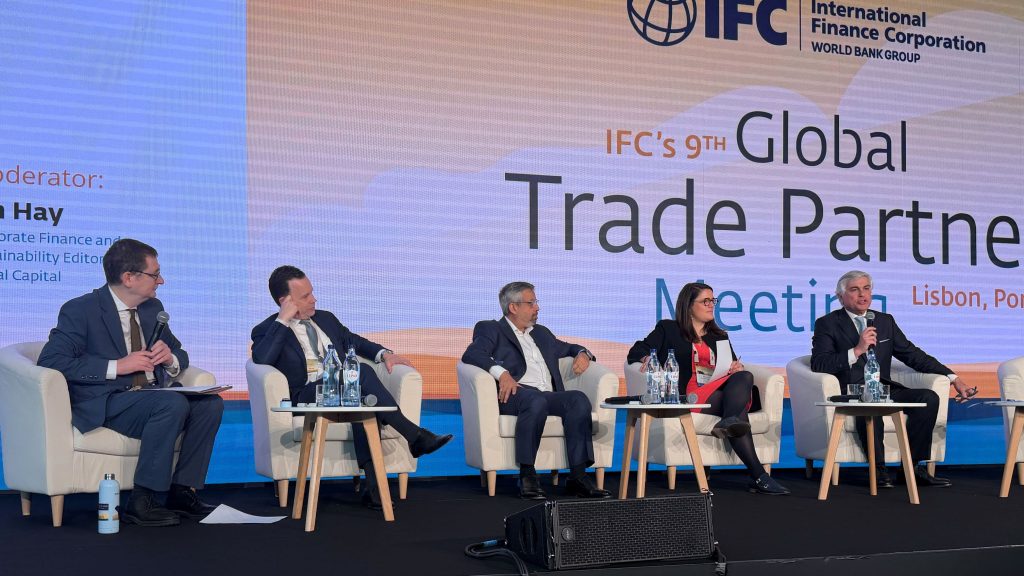
How do we de-risk and finance trade corridors in jurisdictions which are perceived as higher risk?
1. Take better risks 2. Reduce the actual risk3. Mitigate the risk through study and avoidance4. Share the risk with othersOn the panel:
- Neeraj Kapur, Group CEO, Crown Agents Bank
- Florian Witt, Group Executive International and Corporate Banking, ODDO BHF
- Alexia Boutin-Somnolet, Head of Political Risk, Structured Credit and Financial Institutions Practice Europe, Marsh
- Rodolfo Lavrador, Managing Director for International Business and Relations, Caixa Geral de Depósitos
- Jon Hay, Corporate Finance and Sustainability, GlobalCapital
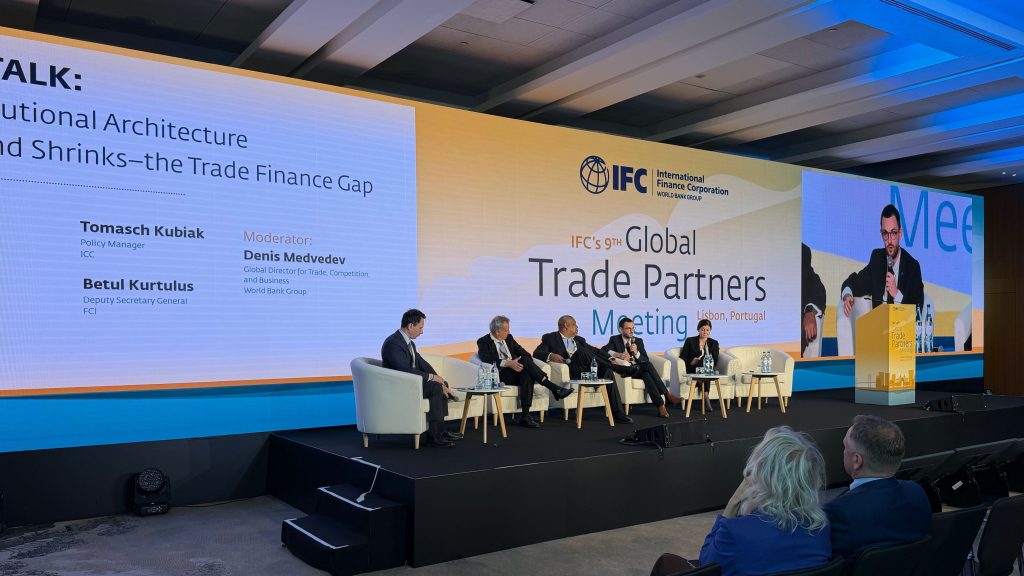
How do you actually shrink the trade finance gap?That was the focus of another discussion at IFC’s 9th Global Trade Partners Meeting in Lisbon, where policymakers, industry bodies and market practitioners explored how architecture, data and capital flows shape access to trade finance.Trade Treasury Payments was on the ground as a media partner covering the Trade Talk: How institutional architecture shapes — and shrinks — the trade finance gap session.Panellists:• Marc Auboin, Chief, Trade and Market Intelligence, World Trade Organization (WTO)• Tomasch Kubiak, Policy Manager, International Chamber of Commerce (ICC)• Tod Burwell, President and CEO, BAFT• Betul Kurtulus, Deputy Secretary General, FCIModerator:• Denis Medvedev, Global Director for Trade, Competition and Business, World Bank GroupSome of the key themes from the discussion:• Trade is growing fastest in emerging markets, where financial capacity to support trade is often weakest• Banking sector trade finance penetration remains low in many developing markets, highlighting continued reliance on international liquidity• The ICC Trade Register continues to demonstrate the low-risk nature of trade finance, supporting arguments for more proportionate capital treatment• Closing the trade finance gap requires progress across five pillars: digital infrastructure, data, legal frameworks, capacity building and funding sources• Supply chain finance remains one of the biggest untapped opportunities, particularly beyond tier-one suppliers• Institutional capital is increasing but often still targets large transactions rather than SMEs• Receivables finance continues to see strong adoption in developed markets but remains underdeveloped across many emerging economies• Compliance constraints and risk appetite remain major barriers despite improvements in technology and educationMore insights from IFC GTPM Lisbon to follow.
“The good, the bad and the ugly.”
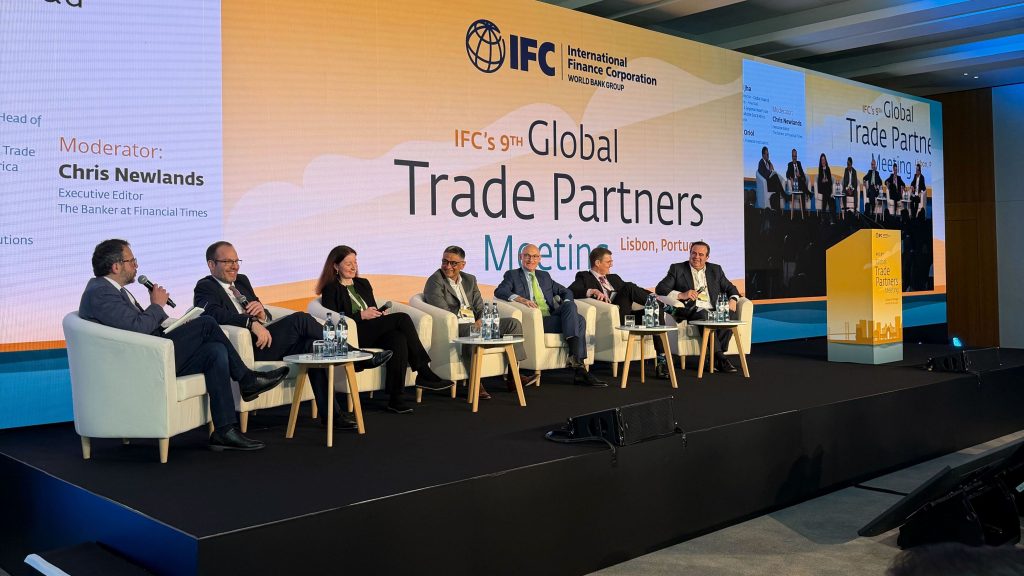
That was how one panellist at IFC’s 9th Global Trade Partners Meeting in Lisbon summed up the state of global trade finance today. Balancing geopolitical disruption, supply chain fragility and rising risk costs against technological progress and new opportunities is attempting to close the SME finance gap.
Trade Treasury Payments was on the ground as a media partner covering the Global Banks: Risk, Resilience and the Road Ahead panel, which brought together senior leaders from across the trade finance ecosystem:
• Natasha Condon, Global Head of Trade Sales, EMEA & Trade Region Head, J.P. Morgan• Nicolas Langlois, Managing Director, Global Head of Trade Distribution, Standard Chartered• Anand Jha, Managing Director, Global Head of Trade Finance (FIs) & Regional Head of Trade & Lending MEA, Deutsche Bank• Dirk Besdzik, Global Principal Trade Advisor, Institutional Clients & Transaction Banking, Commerzbank• Duarte Pedreira, Global Head of Trade, Working Capital & Structured Credit Solutions, Crown Agents Bank• Felipe Oriol, Global Head of Financial Institutions, CaixaBankModerator:• Chris Newlands, Executive Editor, The Banker (Financial Times)
Some of the key topics that emerged:
• Trade finance is being tested by geopolitical disruption but continues to demonstrate its value during periods of uncertainty• Liquidity demand, is expected to rise as corporates adapt to supply chain shocks• Risk pricing is increasing, particularly in traditional instruments such as letters of credit• Major trade corridors remain stable despite repeated global shocks• The conversation is shifting from defining the $2.5 trillion trade finance gap and the $8 trillion SME financing gap toward practical solutions• Technology, data and tokenisation are increasingly seen as tools to reach deeper supply chain tiers• Collaboration between banks, multilaterals and private capital remains critical to scaling access to financeFollow @Trade Treasury Payments for continued coverage from the IFC GTPM in Lisbon this week.
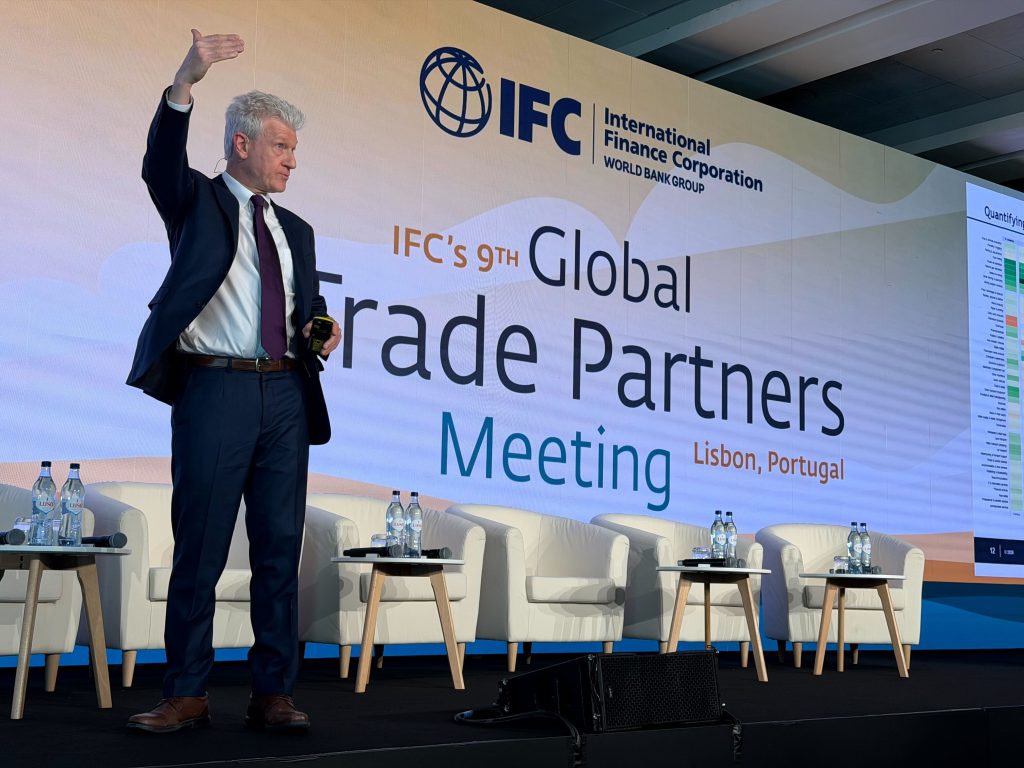
Discussions at the IFC Global Trade Partners Meeting this morning focused on the resilience of the global economy despite continued trade shocks, geopolitical tensions, and supply chain disruption.
Growth expectations remain relatively stable, with global growth projected around the mid-2% range, although with clear divergence between advanced economies and emerging markets.
A major theme was the impact of geopolitical risk on trade flows, particularly the sharp reduction in tanker movements through the Strait of Hormuz — a reminder of how quickly physical trade routes can become economic pressure points.
Irrespective of this, trade finance continues to play a central role in helping markets absorb shocks and maintain cross-border flows.
Trade Treasury Payments is reporting live from Lisbon.
Pictured: Paolo Mauro, Director, Economic and Market Research Department, IFC
What are IFC’s Trade and Supply Chain Finance Programmes?The International Finance Corporation (IFC), part of the World Bank Group, operates one of the largest development finance platforms focused on trade and supply chain finance in emerging markets. The programmes are designed to address structural gaps in access to trade finance, particularly in lower-income and higher-risk markets where global banks often face capital, risk, or compliance constraints.IFC supports trade primarily by providing guarantees and risk participation to international banks that confirm trade transactions issued by local banks.
Through this structure, IFC helps connect a network of more than 260 issuing banks in emerging markets with over 300 global correspondent and confirming banks, allowing transactions that might otherwise struggle to secure financing to proceed.Over the past 20 years, IFC reports it has supported more than US$250 billion in trade flows through these mechanisms. In fiscal year 2025, the institution committed approximately US$18 billion in trade and supply chain finance, with a significant share directed toward IDA countries and fragile or conflict-affected markets. Activity has also remained concentrated in sectors such as agriculture, food, and basic industrial supply chains, reflecting development priorities as well as demand from partner banks.Beyond transaction support, IFC also works with partner institutions on training and technical programmes aimed at strengthening local trade finance capabilities and maintaining correspondent banking relationships in more challenging jurisdictions. According to IFC materials, this combination of guarantees, funding support and capacity building is intended to help local banks remain connected to global trade networks and support SME participation in cross-border commerce.
Bom dia de Lisboa 
Today, the 9th IFC’s Global Trade Partners Meeting begins.
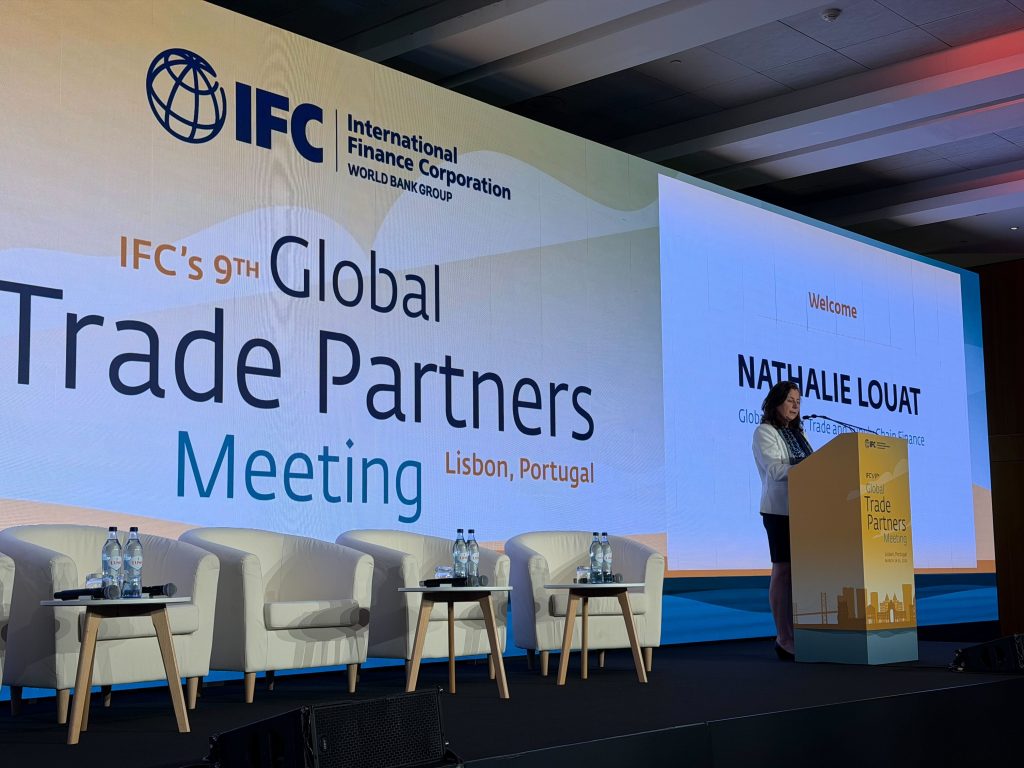
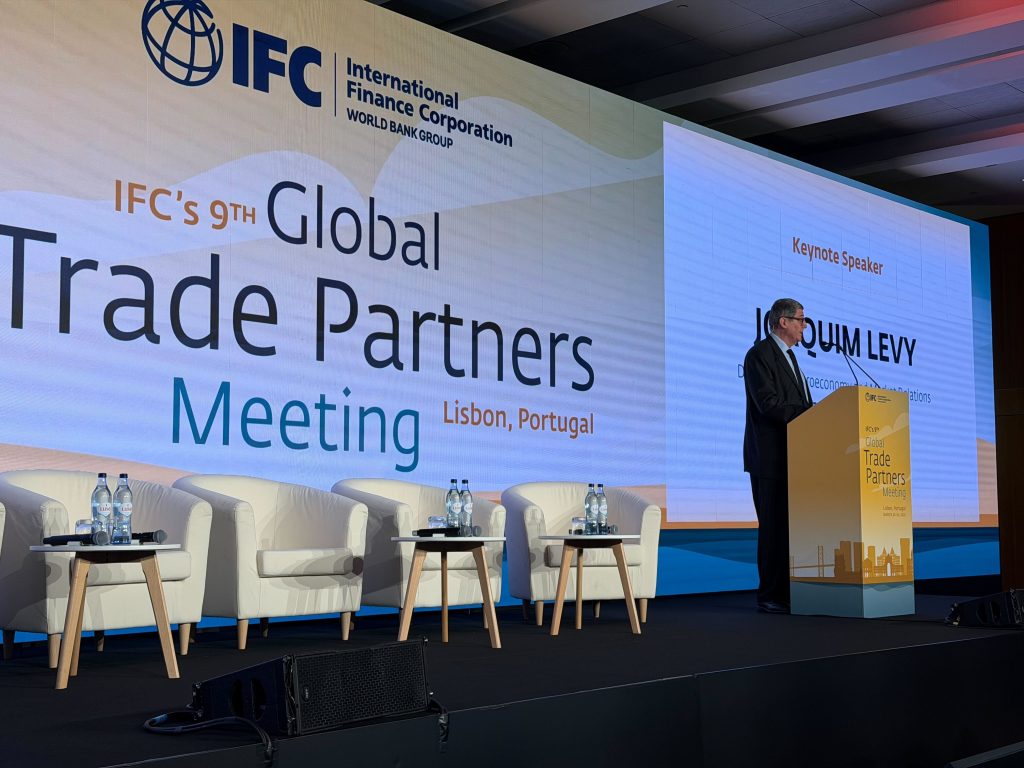
The conference opens with welcome remarks from IFC leadership, including Nathalie Louat and Mohamed Gouled, discussing the growth of the Global Trade and Supply Chain Finance Program, followed by keynote insights from Joaquim Levy, Banco Safra S.A., on the global macroeconomic and trade finance outlook.
Trade Treasury Payments are official media partners of this event. Reporting on the ground from Lisbon are Deepesh Patel, Editor in Chief, and Joy Macknight, Transaction Banking & Payments Editor. Stay tuned for updates.