
Davos 2026 unveils $2 billion blended finance model to decarbonise supply chains

Devanshee Dave
Reporter, Trade Treasury Payments
Published 22 Jan 2026
Live Updates
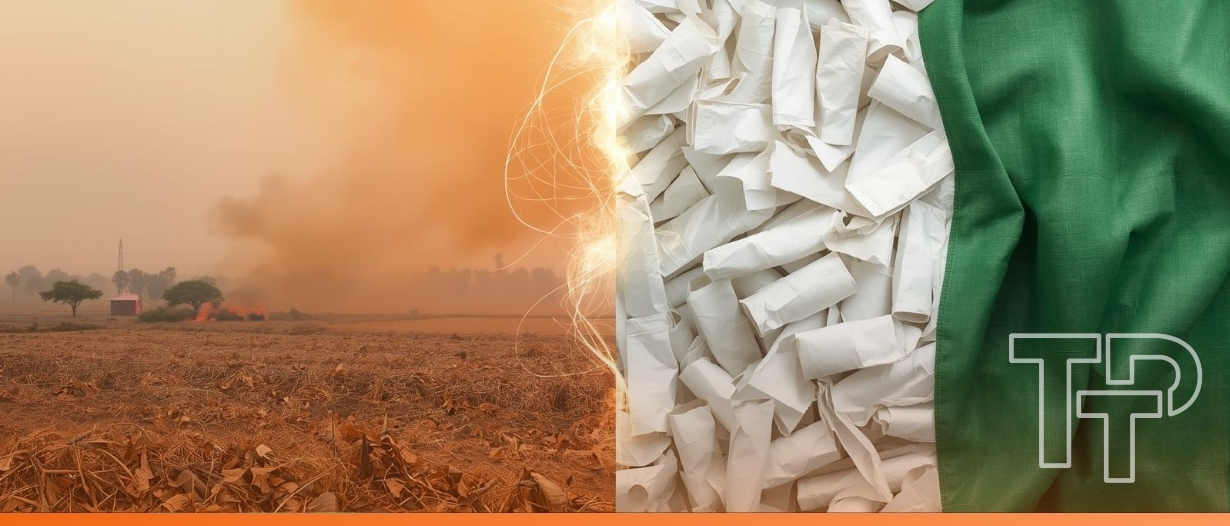
At Davos 2026, Canopy, a non-profit organisation and its partners, including the No. 17 Foundation and Tsao Pao Chee Group, announced a $2 billion blended finance blueprint to reduce carbon emissions by using recycled textiles and agricultural residues in packaging production.
This initiative seeks to phase out high-carbon, wood-dependent products in favour of next-generation alternatives. Although initially focused on India, the model is designed for global replication and supports a wider effort to mobilise $78 billion in infrastructure investment for sustainable materials by 2033.
“This is the moment to reimagine how capital flows to climate solutions at scale. The blended finance model that we’re unveiling today will lay the foundation for replacing high-carbon forest fibre in global paper, packaging, and textile supply chains, while establishing a finance blueprint that can be replicated in other key markets,” quoted Nicole Rycroft, founder and executive director of Canopy.
“If we want to transform high-impact global commodity sectors at the pace required, we need finance models that share both risk and reward with the market — and that can scale across borders. Investors and brands here today are helping build exactly that,” he added.
Finance architecture and objectives
The finance architecture is structured to de-risk early-stage investments and attract institutional capital. It aims to establish 1.5 million tonnes of packaging, paper, and textile production capacity in India.
Current finance flows toward climate, biodiversity, and land degradation targets are estimated at $200 billion, approximately one-third of the funding required by 2030. Scaling the transition to next-generation materials in India alone is projected to require $13 to $15 billion in investment.
Boosting market confidence and competitiveness
Canopy’s approach aims to boost market confidence, catalyse private capital alongside catalytic investors and public finance, and develop impactful project pipelines. The programme is expected to enhance India’s industrial competitiveness by creating new income opportunities for rural communities, reducing input volatility, and improving air quality.
Diverting agricultural waste from open-field burning is anticipated to mitigate seasonal air pollution in Delhi, while supporting rural incomes and modernising mills.
“With these targeted structures in place, we can drive the investment needed to turn waste into high-value and circular everyday commodities. Many agricultural residues are still being burned on the fields, when we know they can be used more sustainably, cutting air pollution and scaling a sustainable supply chain for paper, packaging, and textiles,” added Zoë Caron, strategic lead for Global Investments at Canopy.
The blended blueprint presented at Davos 2026 is a significant step, with implications for climate targets, rural economic development, and sustainable industrial growth in India and beyond.