
The collaboration between banks, insurance companies and insurance brokers is a delicate balance that oils the wheels of trade by bridging financing and risk mitigation. When their interests align, the relationship unlocks bank credit through insurance products, such as trade credit insurance (TCI), which effectively derisks transactions for financial institutions.
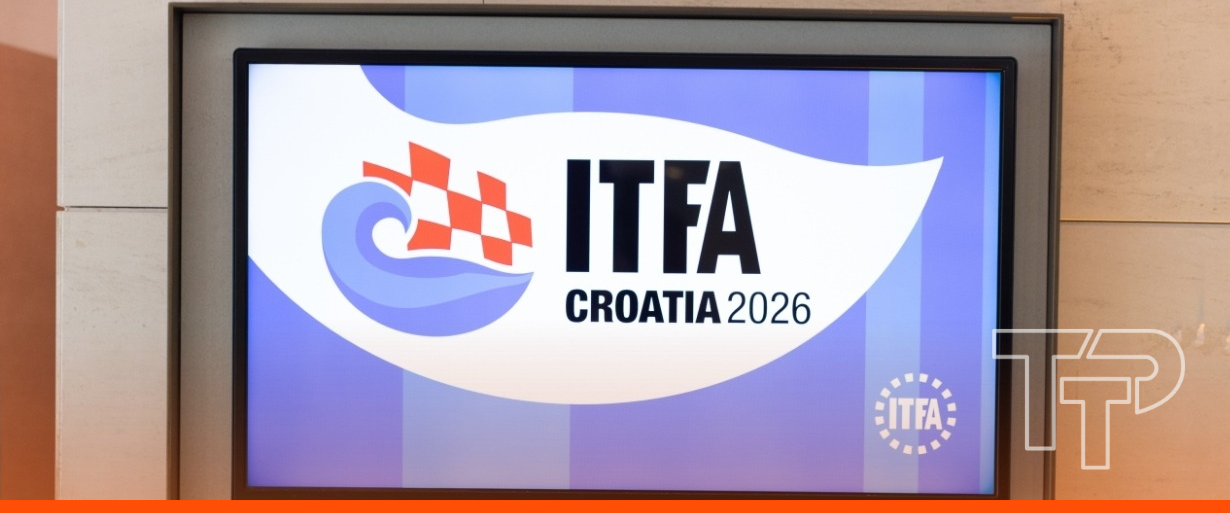
At the ITFA Annual Conference in Split, Croatia, a panel brought together banks, insurers and brokers to discuss how the current geopolitical environment is impacting risk appetite, distribution and capacity.
Clearly, there has been a shift in insurers’ risk appetite in the past year, but perhaps not as much as expected given recent geopolitical strife and international trade rows.
According to an insurance broker on the panel, risk appetite can’t be described simply by sector or geography, but must be defined by transaction type, tenor and the trade itself. They drew an important distinction between appetite and capacity.
“Underwriters help with capacity, but their existing risk concentrations may limit the incremental capacity they are able to deploy,” they said. “I haven’t seen a broad reduction in risk appetite nor available capacity. There is still capacity out there, but underwriters are becoming more selective.”
An insurer representative reported seeing increased volumes across the board on TCI and sovereign and political risk insurance side – and much greater demand.
However, the insurer representative confirmed that their organisation would be more selective going forward, particularly in the face of mounting insolvencies. “The risk exists. We need to adapt to that as credit insurers and be selective where we play,” the insurer representative said. “But there are many versatile credit insurance products in the market that can adapt to the crises the world is facing today.”
Both bank representatives on the panel agreed that insurance capacity was still possible to find, but the degree of concentration in the sector has meant greater competition for available capacity as insurers become more discerning as to the type of risk they’re taking and who they’re covering.
One bank representative said their bank had managed to find capacity on several transactions, although its geographical footprint presented particular challenges. “We have quite a large exposure across Latin America, Central America, and Turkey, so sometimes we’re looking for risk that isn’t for everyone,” they explained.
The first bank representative reported seeing more diversity in the available insurance cover, depending on geographies and currencies. “On the whole, it’s been well supported. Obviously, there are capacity constraints in certain sectors – we often struggle in the automotive sector following several notable fraud cases,” they added.
A second bank representative reported a boost in trade finance distribution demand, but stressed that it wasn’t due to an increase in risk perception. Instead, the demand is driven more by the rise in the price of cargo, which means that banks are needing to finance a higher value of cargo than previously.
“Insurance premiums are up, freight costs are up, and, as a result, the value of the cargo is going up, despite the reduction in volume, which means the trade finance demand is going up,” they said. “We are needing to distribute more, because we can only hold what we can hold.” They also pointed out that, while insurance is critical as one of the distribution tools, there are other tools, including development finance institutions and other investors.
Shift in deal flows
While the second bank representative said their bank was not currently facing financing capacity issues, they warned that if the Middle East conflict persists for much longer, then the banking sector might be forced to conserve liquidity for their core clients in the region. “At that point, insurance and other investment trusts should work to increase capacity and support trade finance,” they advised.
The second bank representative is seeing changes in deal flows. In the midst of supply chain disruption and rising oil prices in the Gulf Cooperation Council (GCC) nations, exporting companies are reporting a shift from a free on board trade to a delivered duty paid trade among their customers. For example, a supplier in the GCC is now expected to take care of everything (international freight, insurance, and destination customs clearance) and deliver to the customer’s door.
On the import side, while certain sectors are clearly impacted, many GCC companies were sitting on three to four months of inventory post-February 28. “With supply limited from China and other markets, and a disruption in the overall supply chain, prices went up, so some clients had a windfall gain because of the increased value of their inventory,” the second bank representative explained.
In addition, many governments in the region have actively supported businesses in terms of monetary and non-monetary benefits. As supply chains are re-established, with rail and road traffic flowing from east of UAE and west of Saudi, many GCC clients are well placed to deal with an increase in working capital. “I don’t see much need to distribute more from this perspective,” they said.
There are certain sectors that have been directly impacted by the change in trade flows because of the current Middle East conflict. The insurer representative reported seeing a move to diversify into sectors that haven’t been traditionally penetrated by TCI, such as technology/digital economy, pharmaceuticals/biotech, and defence/aerospace.
The first bank representative pointed out that banks are managing capital more aggressively as credit is finite, and therefore are looking more to insurance companies’ credit lines and balance sheets.
When looking at trade credit products, in particular, the first bank representative explained that their bank often finances entities which are not clients on behalf of an important client. These companies may operate in geographies where the bank has a limited presence or does not lend to smaller businesses. In these cases, the bank turns to major trade credit insurers, drawing on their risk analysts’ familiarity with those entities to enable financing.
But, as they pointed out, capacity also depends on the structure. Their bank’s receivables purchasing programmes, with thousands of debtors, rely on securitisation. Not having insurance cover can directly impact the amount of financing that the bank can extend to clients.
According to the insurer representative, trade finance structures remain the same volume-wise, but they have seen changes around the margins, such as an increase in larger programmes. “Over the past three or four years, we’ve seen a big increase [in the number of banks] participating in multi-bank deals,” they said.
Inventory finance
The panel also discussed a rising demand for new structures, such as inventory finance, which is a funding solution companies use to monetise their physical goods, raw materials or finished products; however, the lack of standardisation in the inventory finance market has hampered scaling the solution.
“We’d like to see greater uniformity so that we can scale [inventory finance], but each deal seems to be unique to the client’s needs, what the bank wants to do and the partners they’re working with,” the insurer representative explained.
The insurance broker agreed. They said: “The mechanics, and hence the risk, can be quite different. Some structures are intended to pass the title to the big buyer quickly, extending the terms of payment. Others are closer to an inventory hold type structure, where the supplier keeps the inventory until the buyer decides to draw those goods as needed and on a just-in-time basis.”
In their opinion, a key consideration is how strong the buyer’s commitment is when it comes to purchasing the specific inventory. “For non-payment insurance (NPI), for example, underwriters need to have a clear view on the credit risk. It comes down to when the payment obligation crystallises, whether that specific obligation is unconditional and irrevocable in the relevant jurisdiction, and other things such as how critical the goods are for the buyer,” the insurance broker explained.
The insurer representative stressed that communication is vital in the adoption of newer products that insurers are less used to. “The more information banks can give to insurers, whether by jumping on a call or sharing credit memos, helps us get comfortable and build our knowledge base, so we can explain inventory finance to our credit or fraud committees. The more information you can give us as insurers, the easier it will be for the bank to get that cover in the future,” they said.
The first bank representative said their bank was still in the early stages of inventory finance. The bank has several partnerships with specialised intermediary trading partners, or tradecos. “We’re examining different structures and exploring which ones are best from our perspective and fits our clients’ needs,” they said. “I’m interested to see how the insurers respond, and we’ll continue our education with insurers when it comes to inventory finance.”
Similarly, the second bank representative said their bank was also in the early stages of putting the appropriate structure around inventory finance, as it responds to increased client demand. It is working towards creating a structure which enables customers to buy just-in-time. Once the structure evolves, the second bank representative agreed that their bank will need to work closely with its partners, including insurers, to explain the risk.
Expanding capacity
A question from the audience asked the banks to identify the main driver behind buying protection on a trade asset. The first bank representative singled out releasing capital as slightly more important than moving risk off the bank’s balance sheet.
“Substituting the probability of default and loss given default of an underlying obligor – perhaps an SME in a jurisdiction with a restriction rating – with those of an insurance company makes a significant difference. It could be the difference between being able to finance it from a return on capital perspective or not,” the first bank representative said.
For the second bank representative, it’s a combination of both. They explained that their bank operates in documentary trade markets where lower country ratings constrain credit or country limits, making insurance and other mitigants useful tools for providing client solutions. “Whenever we work with clients which are a triple B category, then it becomes more a case of capital release because capital is at a premium.”
While finite capacity is a constraint on both sides of the equation, the insurer representative said their organisation was always open to a discussion on a specific strategic deal. “If there’s mitigants in their structure, or it’s for a credit line that is strategic for the bank and their client, we can listen and have been able to develop solutions,” they said.
Although syndication is common in the credit risk insurance market, it is less popular in the TCI world. That is changing, however, and the insurer representative reported seeing large placements in the market that necessitated syndication. “It’s not the easiest thing to do overnight and it takes a lot of work, so the deal needs to be on a certain size to make sense. But that seems to be the trend for these big placements,” they said.
The insurance broker agreed, adding, “The most well-established TCI providers are now keener to collaborate with other competitors under parallel or syndicated structures. That’s new because they tend to be protective with their own book.”
From the bank perspective, one of the main limitations with insurance solutions is policy wording. The first bank representative said their bank spends a lot of time working with insurers and external counsel to ensure policy wording meets the requirements for Capital Requirements Regulation (CRR) eligibility, which depends on the jurisdiction.
“Compared to the NPI market, the wording is quite distinct, which is an operational burden on both sides. It can limit how many trade credit insurers we’re prepared to onboard at any one time until we’ve justified the use case and see the pipeline building,” the first bank representative said. “We’ve seen top-up policies, minimum policies, etc with numerous complexities as to whether they meet the CRR requirements. If we don’t get capital relief, the economics tend not to make sense.”
They support syndicated placements in the TCI market using pre-agreed wording, as often the bank has previously onboarded the same insurance company on the NPI side.
In addition, one solution could be a fronting arrangement, the first bank representative suggested. “Trade credit insurers have agreed this wording. We understand how they operate; they understand the way we run our programmes and there is the agreed wording in place, which is key. Yet they’re constrained in certain areas. Could alternative insurers sit behind them with some sort of fronting arrangement? That could work from a bank perspective because we’re still facing the same insurance company,” they said.