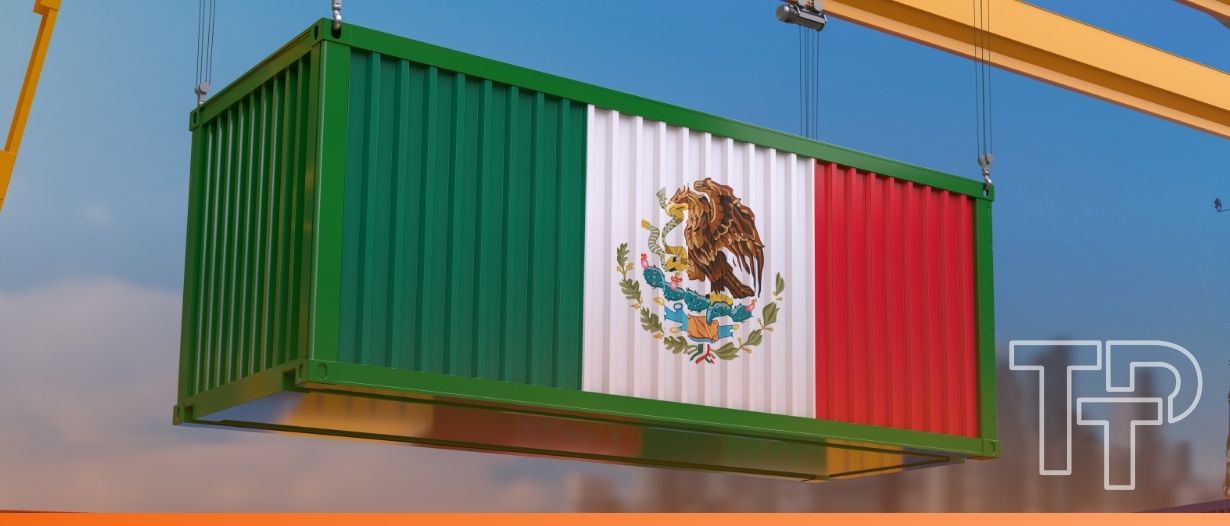

Mexico’s decision last week to authorise tariffs of up to 50% on a broad sweep of Chinese imports has reignited the conversations about North American supply chains and where Mexico fits into the mercurial trade relationship between Washington and Beijing.
The measure was approved by Mexico’s congress with relatively unusual speed. President Sheinbaum sent the tariff initiative to Congress on September 8th, where it took only 3 months for review and discussions with the Legislative branch, key economic players, and business organisations. The law is expected to come into force in January and imposes a series of duties that will apply to 11 countries with which Mexico lacks a trade agreement. In practice, they fall heaviest on China, which supplied roughly $130 billion of goods to Mexico last year. Automotive parts, textiles, plastics, steel, aluminium and household goods are all affected, all of which sit at the heart of Mexico’s manufacturing economy.
The United States has spent much of the past year intensifying efforts to curtail China’s influence in the Western Hemisphere. Indeed, the Trump administration’s newly released National Security Strategy places a strong emphasis on consolidating US influence in the region and discouraging partnerships with China. Mexican exports that incorporate Chinese components have drawn the particular ire of the US Administration since it came to power in January.
Many commentators feel that this is yet another manifestation of a country giving in to US trade demands. Given the scale of the Mexico trade relationship with its northern neighbour, which reached $840 billion last year, over six-fold more than with China, and the fact that negotiations to rework the USMCA are already underway, Washington does seem to hold a considerable amount of leverage.
From a Mexican perspective, however, the decision is not seen simply as an act of alignment with Washington. Several trade practitioners point instead to levelling the field of the underlying and growing asymmetry in the Mexico-China trade relationship (China’s exports to Mexico nearly doubled in value over the past decade, rising from $74 billion in 2017 to almost $130 billion in 2024). The Confederation of Industrial Chambers of Mexico (CONCAMIN) argues that the tariffs will help stop what it considers unfairly subsidised Chinese Imports in certain strategic manufacturing sectors, which are priced well below market benchmarks.
Unlike South American economies that export commodities to China, Mexico’s economy is primarily manufacturing-led. That has made it structurally more competitive than complementary with Chinese production.
Gerardo Gutierrez Olvera Cabrales, Executive Director, Head Trade Finance & International Business at BANORTE and Vice Chair of the ICC Banking Commission, told TTP, “Mexico does not export commodities in a relevant way to China (as many countries in South America do), and because Mexico is primarily a manufacturing country, we have always been much more competitive than complementary with China. Actually, outside of dealers of Chinese automobiles in Mexico and some other players in the retail sector that import finished consumer goods from China, private sector organisations and chambers in Mexico are mostly happy and backing the Government with the recent tariffs announcement.”
The expectation among manufacturers is that higher tariffs could accelerate North American supply-chain integration, creating space for Mexican firms (particularly SMEs) to move into tier-two and tier-three supplier roles.
While the geopolitical elephant in the room is impossible to ignore, these views largely align with how Mexico’s Government has framed the policy, which is chiefly as an industrial strategy, arguing that the tariffs are designed to strengthen domestic manufacturing and address the country’s large trade deficit with China, not to placate the USA.
Indeed, President Sheinbaum’s “Mexico Plan” calls for reinforcing the “Made in Mexico” brand and concept, and aims to substitute imports in some cases, incorporating SMEs, safeguarding and creating manufacturing jobs, and increasing the national content in production chains to 15%. The ultimate goal being to produce more and more in Mexico and gradually replace inputs that Mexico – and North America as a whole – need so that they are manufactured in the region, which will subsequently reduce reliance on Chinese imports.
Critics have raised concerns that the measures could lead to higher costs, particularly within automotive and manufacturing supply chains, which are still largely dependent on Chinese inputs. There are also concerns that tariffs are liable to create inflationary pressures in the form of short-term scarcity for components that are not yet produced at scale in Mexico or elsewhere in North America.
As expected, Beijing has reacted sharply. China’s Ministry of Commerce warned that the duties would “substantially harm” China and other partners and has urged Mexico to reverse what it considers to be unilateral and protectionist measures.
The full implications of the move will surface over time, shaped, in part, by how policymakers, manufacturers and international partners respond in the weeks and months ahead.