
Within the wider framework of exporter compliance, Incoterms® errors frequently sit at the intersection of customs, VAT, sanctions and contractual risk.
There are several common pitfalls that professionals using Incoterms® can fall into. We will explore some of these in the following section.
EXW vs FCA
In many cases, using FCA instead of EXW is much more practical and avoids exposing the seller to unnecessary legal complications.
Under EXW, the seller is only required to make the goods available for collection, meaning that loading the goods onto the vehicle is entirely at the buyer’s risk, which is often impractical. When applying EXW, the buyer would need to arrange a lorry with a tail lift or Moffett and ensure the driver is responsible for loading goods into the vehicle.
This becomes particularly problematic when the seller’s premises are fitted with the loading bays designed for non-tail-lift vehicles. If the seller’s warehouse staff operate forklifts, it is far more efficient for the seller to load the goods directly onto the vehicle. Such a scenario would be in line with the FCA Incoterms® rule (where risk passes from seller to buyer when goods are loaded onto the vehicle), which is why, from a practical standpoint, FCA would be far more suitable.
Another pitfall of EXW is that the seller/exporter is not obliged to arrange for the export declaration (where again, under the FCA, that would be fine). From the importer’s perspective, this creates significant problems because the buyer will most likely lack access to the technical specifications to classify goods under the harmonised system (HS).
Moreover, if goods are dual-use, the importer could be left responsible for obtaining an export licence, and EXW does not remove the seller’s responsibility to ensure goods are not supplied to a prohibited, sanctioned, or embargoed country or entity (EU sanctions factsheet). Businesses selling under EXW must therefore be particularly cautious from a sanctions-compliance perspective.
One of the biggest dangers under EXW from the seller’s standpoint concerns the legal obligations related to proof of export. Under EXW, as it is the buyer’s/importer’s responsibility, the buyer is not legally obliged to provide a copy of the export declaration. Additionally, since the seller is not responsible for the transport of goods, there is no certainty whether the goods were diverted elsewhere or even actually left the country. Normally, the exporter would zero-rate the invoice, but to apply the zero rate of VAT, evidence that the goods left the country must be present.
Without such proof, authorities have the right to demand repayment of VAT from the seller. Where the export declaration cannot be provided by the seller and/or authorities require further confirmation, the common commercial practice (subject to the seller country’s regulatory rules on alternative proof of export) is to request import declarations and shipping paperwork from the buyer, which creates an administrative burden that could have been avoided.
The EXW Incoterms® rule was ‘lightly’ revised in 2020 version, to accommodate sea transportation and bill of lading transfer (as per article A6/B6 explaining this change in more detail); nevertheless, as per Publication 723E, EXW should be carefully considered before being used for domestic sales of goods.
Dangers of DDP
DDP places maximum responsibility on the seller for costs and risks, including import clearance. What that means is that the seller must be registered for tax purposes in the importer’s country, to be able to deal with import VAT and duties and any other associated costs, which can be challenging to control.
From a practical perspective, obtaining VAT returns may also pose challenges if relevant registrations are not in place. In some cases, businesses attempt to bypass import clearance requirements by using freight forwarders, VAT arrangements, and/or duty deferment accounts. However, this falls into the grey area that can cause issues with VAT recovery and may lead to other complications.
Moreover, some countries, such as Brazil, do not accept DDP, and authorities worldwide are generally cautious about their application. For instance, the International Trade Administration at the US Department of Commerce is warning US exporters against shipping DDP to Brazil, because “In the Brazilian legal system, US or other foreign exporters do not have the legal status to participate in the clearance of goods at the port of entry. Only the Brazilian importer, or a third-party company legally established in Brazil operating on behalf of an importer, may clear goods and pay the respective duties and taxes.”
Additionally, in January 2025, the ICC academy issued a Secretariat Guidance Note, indicating that under DDP, foreign entities are “prohibited from carrying out import customs and tax formalities altogether” (National regulatory barriers to the Incoterms® 2020 rules ICCWBO), listing following countries it applies to: Brazil, Colombia, Cyprus, Denmark, Japan, Mexico, Morocco, Panama, Russian Federation, Turkey, Ukraine, UK, US.
Correct Incoterms® referencing
As referred to in section 4.2, the precise name of the location (named place or point) and Incoterms® reference is key to ensuring compliance and legality of the chosen delivery term. The following examples are poor practices and common inconsistencies:
‘FCA Factory’: The term ‘Factory’ is not precise enough to serve as a named place, making it impossible to determine the exact point at which risk passes from the seller to the buyer. It is also unclear which version of Incoterms® the contract refers to (i.e., 2000, 2010, or 2020). This is very problematic because there are differences between the 2010 and 2020 versions. For instance, if the goods are shipped by sea, it remains uncertain under which version of FCA (2010 or 2020) the bill of lading can be transferred.
‘DAP Singapore’: Stating only the country name is not the best practice, as it lacks a named place. ‘DAP Singapore’ can be anywhere in Singapore (the airport, sea terminal, port, or factory), a variety of different places within a wide area.
When things go wrong
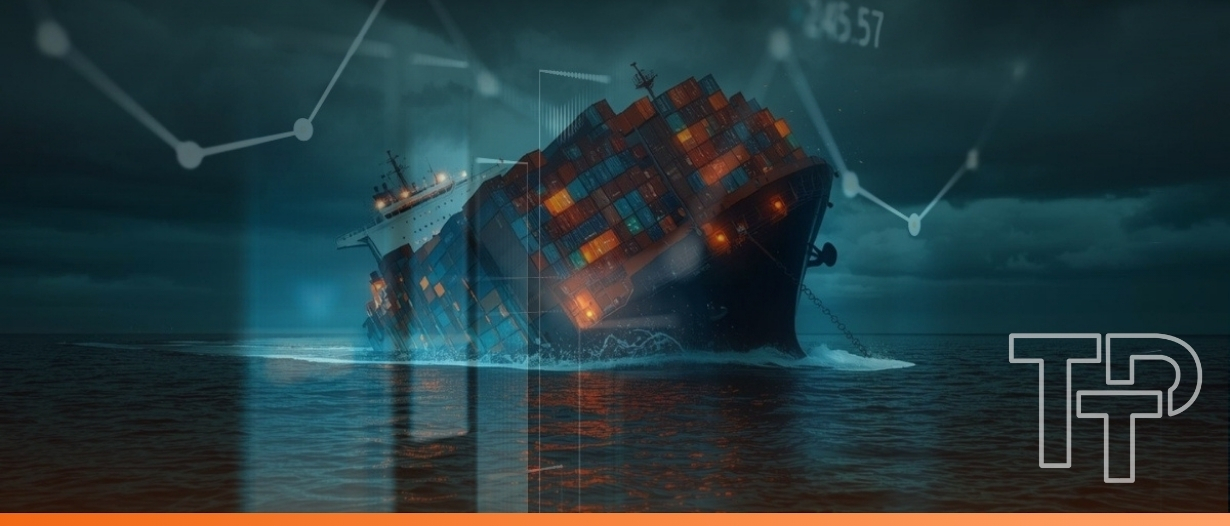
Although relatively rare, accidents do happen, such as shipping containers running aground or cargo getting lost at sea. One example is the Tokio Express incident in 1997, when a cargo of millions of Lego pieces fell overboard near the coast of Cornwall, UK. To this day, Lego pieces still wash up on Cornish beaches. A more recent and costly case occurred when a cargo ship carrying Norwegian weapons destined for Poland ran aground off Norway’s coast.
Examples of companies regretting the use of an incorrect Incoterms® rule are fairly frequent, and it is often only when things go wrong that the chosen terms are closely examined and/or correctly applied after the event.
For example, a machinery supplier in Birmingham, UK, arranged for a 20ft shipping container to ship goods to a South Korean customer, using FOB (named port) 2000 Incoterms®.
Despite the incorrect term used (FOB is for non-containerised goods), the ship ran aground and lost a lot of cargo it was carrying, including BMW motorbikes, puppy food, Bibles, and other varied commodities. There were reports of goods being stolen along a beach in Devon, UK, including 15 BMW motorcycles.
As for the Birmingham supplier, the goods were severely damaged, and the customer placed another order after the seller offered a discounted price. Both parties pointed out that the risk of loss or damage was transferred to the buyer, as the ship ran aground during the journey and away from the port. This raises the question: should the customer have proceeded with another order, even at the discounted rate, when the wrong Incoterms® rule was used? Fortunately for both parties, favourable commercial practices and good business relations prevailed; however, many companies in similar circumstances could have faced disputes.
Commercial practices
Some businesses seek to accommodate their customers to secure new or repeat business, with sales departments sometimes tempted to ‘oversell’. This extends to the use of Incoterms®. For instance, to make an offer more attractive, some sellers agree to cover the customer’s import duties and taxes under DDP. In other cases, the seller ships warranty replacement items under DDP, ensuring the customer pays nothing further. Such customer-friendly approaches place additional responsibility and risks on the seller.
Additionally, there are cases where the seller arranges carriage and even loads the goods into the vehicle under EXW. In practice, this often happens because the seller has established transport contracts or benefits from preferential rates with local carriers, and then passes the delivery costs on to the buyer (adds transport to sales invoice). Such commercial arrangements, particularly when used for regular shipments between the same exporter and importer, fall into a grey area.
They should therefore be carefully assessed by customs/trade professionals or logistics teams to ensure that both parties fully understand the risks and liabilities that Incoterms® may entail if things go wrong, and to adjust the chosen terms to fit the actual scenario. Moreover, these commercial arrangements should be regularly reviewed and, where necessary, renegotiated to reflect operational changes and new transportation scenarios.
Know your Incoterms®
Incoterms® play a key role in international trade, not only by defining risks, costs and responsibilities, but also by simplifying sales contracts as they prevent third parties from negotiating transportation and risk transfer separately.
From the incorrect application of EXW or FOB to containerised shipments, to the complications of DDP import formalities, the risks of misuse are significant. To mitigate these risks, businesses should acknowledge Incoterms® as a strategic tool rather than a formality, especially when negotiating new customer or supplier contracts, and ensure regular training and database checks are conducted on a regular basis.
Correctly applied Incoterms® rules reduce uncertainty towards the obligations between sellers and buyers and also help to avoid unnecessary disputes or loss of trust between the parties, which is crucial from a good customer relations standpoint.
With the compliant approach and best practices discussed in this chapter, businesses can turn Incoterms® into a source of clarity and resilience in their international trade operations.
Explore the full Exporters Playbook for deeper insight into Incoterms®, customs compliance and risk management across international trade here