Mexico raises $1.78 billion in Samurai bond issuance, marking a return to the Japanese market

Devanshee Dave
Reporter, Trade Treasury Payments
Published 31 Aug 2026
Live Updates
Mexico successfully raised YN¥282.8 billion (US$1.78 billion) through a four-tranche Samurai bond issuance, marking the federal government’s return to Japan’s financial market after a two-year hiatus.
The Ministry of Finance and Public Credit (SHCP) announced the debt placement on 28 August 28, involving senior unsecured transactions with maturities of 3.5 to 20 years.
Strong demand despite sovereign credit concerns
Demand for the offering surpassed expectations from participating bankers, who had thought Mexico’s sovereign credit rating might deter conservative Japanese investors. The multi-tranche transaction was successfully secured.
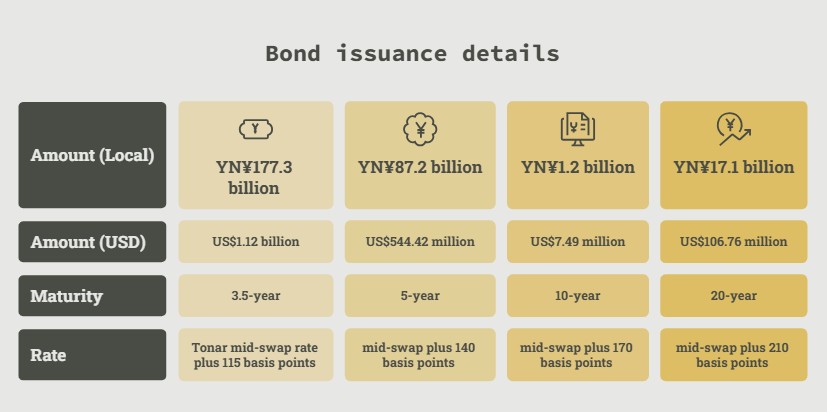
Federal debt managers initially marketed additional seven-year and 15-year tranches but withdrew them prior to placement.
Proceeds from the senior unsecured bonds will fund general budgetary requirements and Sustainable Development Goal (SDG) expenditures under the 2026 federal budget.
This transaction represents Mexico’s first yen-denominated debt placement since August 2024, when the sovereign issued YN¥152.2 billion (US$955.03 million).
The placement would expand federal credit activity in Asian capital markets following two years of inactivity in the region.
Why move toward credit diversification?
The primary objective of the Samurai bond issuance is to diversify public credit sources and reduce structural reliance on traditional Western capital markets.
Official fiscal projections for 2026 indicate Mexico’s net public debt consists of 84.2% internal financing and 15.8% external debt. Among foreign-currency obligations outside national borders, 62.4% are denominated in US dollars and 19.6% in euros.
Although yen-denominated obligations represent a small proportion of overall sovereign liabilities, maintaining a regular presence in Tokyo allows Mexico to access specialised institutional investor profiles, including regional Japanese banks, credit cooperatives, life insurance companies, and specialised investment funds that rarely participate in dollar- or euro-denominated sovereign auctions.
Japanese institutional investors have consistently taken a major portion of Mexico’s Asian debt offerings, buying 63% of the 2024 issuance.
Typically, commercial and regional banks focus on short- and medium-term maturities, while life insurance companies invest in longer 20-year bonds to align with their long-term liabilities.
A glance at the risk management
Macroeconomic changes in Japan have led to tighter pricing for the 2026 placement compared to past sales. The Bank of Japan has raised its benchmark policy rate to 1%, marking the end of years of negative and ultra-low interest rates.
The adjustment in monetary policy forced Mexican debt managers to raise coupon yields to compete with appealing local returns on Japanese debt instruments, while the Bank of Mexico keeps its reference rate at 6.50%.
Foreign exchange exposure adds risk to servicing sovereign debt. Mexico collects tax revenues in pesos, but Samurai bond payments must be made in yen.
Exchange rate fluctuations impact debt servicing costs. For example, a 10% appreciation of the yen against the peso leads to a 10% increase in total debt service costs.
Federal debt managers use cross-currency swaps to stabilise exchange rates throughout the life of bonds, adding operational and execution fees to the overall costs.
Mexico’s Samurai bond issuance highlights its strategy for credit diversification and engagement with Asian capital markets, balancing investor demand with effective risk management in changing global monetary conditions.