ICC UK proposes a five-step blueprint to reset the UK-EU trade relationship without renegotiating the TCA

Devanshee Dave
Reporter, Trade Treasury Payments
Published 6 Jan 2026
Live Updates
The International Chamber of Commerce United Kingdom (ICC UK) has launched a five-step plan to revitalise the United Kingdom’s trade relationship with the European Union. The proposal seeks to boost UK-EU trade before the end of the current parliamentary term without reopening the Trade and Cooperation Agreement (TCA). TCA is the post-Brexit treaty that governs trade and cooperation between the UK and the EU.
“The government has rightly identified the need to reset our relationship with Europe, but businesses cannot afford to wait years for new treaties, nor need them in the short term. The ‘reset’ doesn’t require reopening the TCA; it requires opening our eyes to the digital tools already at our disposal,” quoted Chris Southworth, Secretary General of ICC United Kingdom
Trade with the EU remains vital amid lingering challenges
Trade between the UK and the EU accounts for approximately 40% of all UK trade and supports millions of jobs. Despite this, UK goods exports to the EU remain nearly 20 per cent below pre-pandemic levels. An estimated 13,000 UK small and medium-sized enterprises (SMEs) have ceased trading with the bloc, with administrative friction cited as the primary barrier rather than market demand.
“We have the legal framework, innovation capabilities and the technology to cut border processing times by 80% and slash costs and risks for our struggling MSMEs. The 13,000 businesses that have left the EU market don’t need more politics they need a system that works. We urge the government to adopt these five steps and turn the UK into the world’s most advanced digital trading nation by the end of this parliament,” said Southworth.
Five measures to enhance UK-EU trade
The UK can improve its trade relationship with the EU through specific actions that don’t require changing existing agreements.
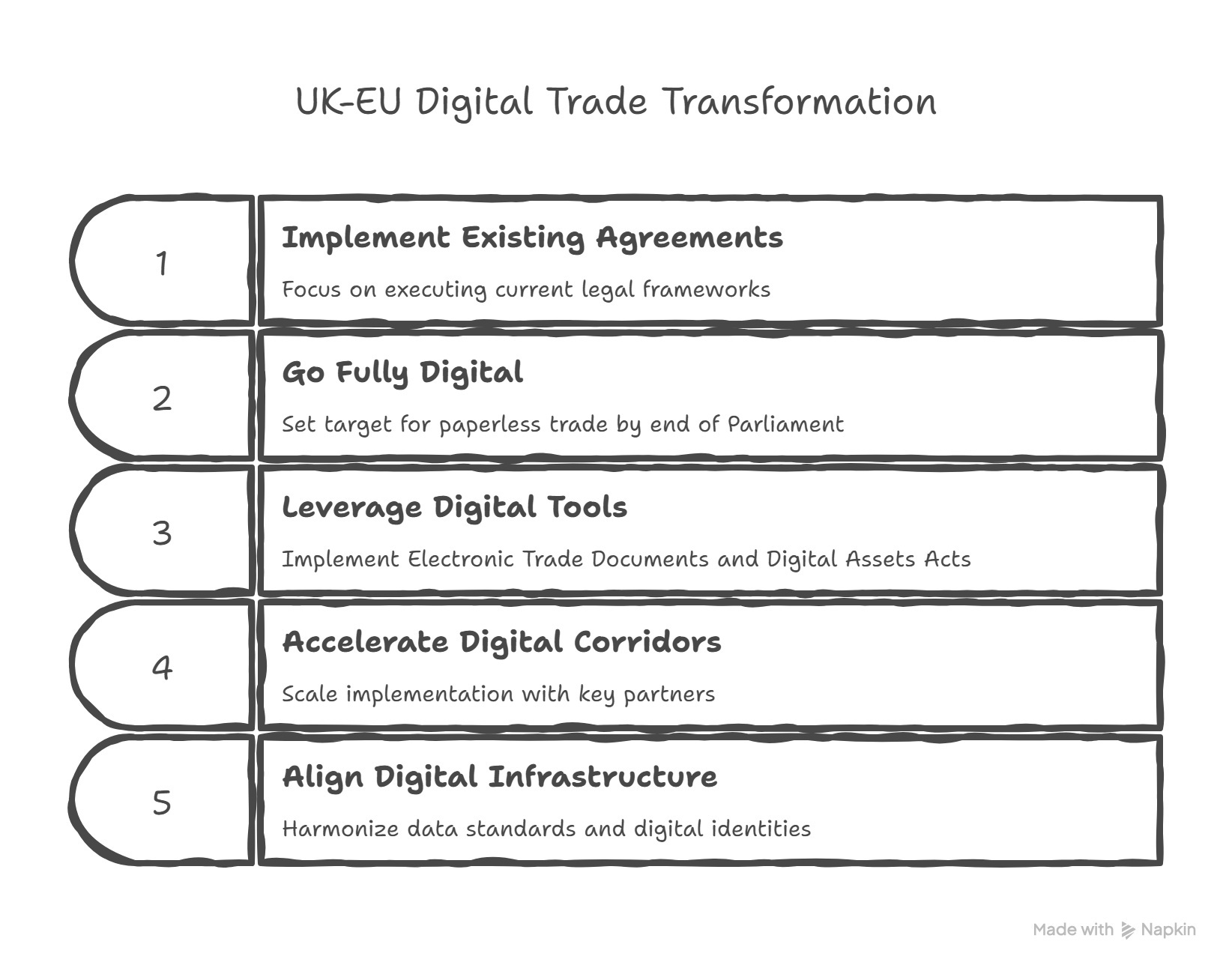
The ICC UK proposes focusing on implementing current international legal frameworks set by the G7, G20, and WTO to gain their benefits.
A key priority is the transition to a fully digital trade environment by the end of the current parliamentary term, aiming for seamless, paperless, and interoperable processes.
This digital transformation includes the comprehensive adoption of electronic trade documents and digital assets, supported by legislation such as the Electronic Trade Documents Act and the Digital Assets Act, with government procurement processes leading by example.
Accelerating the development of digital trade corridors with principal EU partners, including Belgium, France, Germany, Ireland, and the Netherlands, leverages existing innovation hubs to facilitate smoother transactions.
Lastly, aligning business-to-business digital infrastructure with EU standards, including interoperable digital identities and harmonised data protocols, is important. It enhances the flow of information and makes compliance obligations easier, especially those concerning ‘Know Your Customer’ protocols.
These measures aim to lower administrative burdens and costs, especially for SMEs. They also foster a more competitive and accessible trading environment.
Digitalisation offers significant economic benefits
The current trade environment is characterised by fragmented information and duplication, with 70% to 80% of required data being repetitive. Transitioning to a fully digital model could reduce border processing times by up to 80%, operational costs by 80%, and shipping costs by 20%.
ICC UK estimates that digitalisation across G7 countries could increase trade volumes by $9 trillion and reduce trade costs by an average of 84%. Establishing an open and interoperable digital economy would particularly benefit MSMEs by reducing administrative burdens.
Southworth stated that “The legal frameworks are already in place, the technology exists, and our European partners are moving ahead,” Southworth added. “These are practical, implementable steps that could be taken today. If ministers are serious about growth, competitiveness and backing British small businesses, then removing unnecessary friction from UK-EU trade is the single biggest prize.” He also highlighted that removing unnecessary friction from UK-EU trade represents the single largest opportunity to support exporters, MSMEs, and the wider economy post-Brexit.