
The WTO Agreement on Fisheries Subsidies officially entered into force on 15th September, establishing the first multilateral trade agreement focused on environmental sustainability. At a special General Council meeting, WTO Director-General Ngozi Okonjo-Iweala received acceptance documents from Brazil, Kenya, Viet Nam and Tonga, pushing the total number of acceptances past the required 75% threshold of WTO members. This was a requirement for the agreement to take effect.
“At a time when the international trading system faces profound challenges, the Agreement on Fisheries Subsidies sends a powerful signal that WTO members can work together in a spirit of cooperation and shared responsibility to deliver solutions to global challenges. The entry into force of this Agreement stands as a reminder that many of the biggest challenges we face are more effectively addressed at the multilateral level. People and nations need a multilateralism that delivers – which is why today is so reassuring.” Okonjo-Iweala said at the ceremony.
The Director-General signed the official depositary notification and handed it to General Council Chair Ambassador Saqer Abdullah Almoqbel of Saudi Arabia, officially integrating the agreement into the WTO legal framework. Ambassador Almoqbel also stated that the agreement “is a testament to our shared vision for sustainable global fisheries.” He noted that the acceptance process demanded not just the engagement of ambassadors in Geneva but genuine political will and careful coordination in capitals worldwide.
What does the fisheries agreement entail?
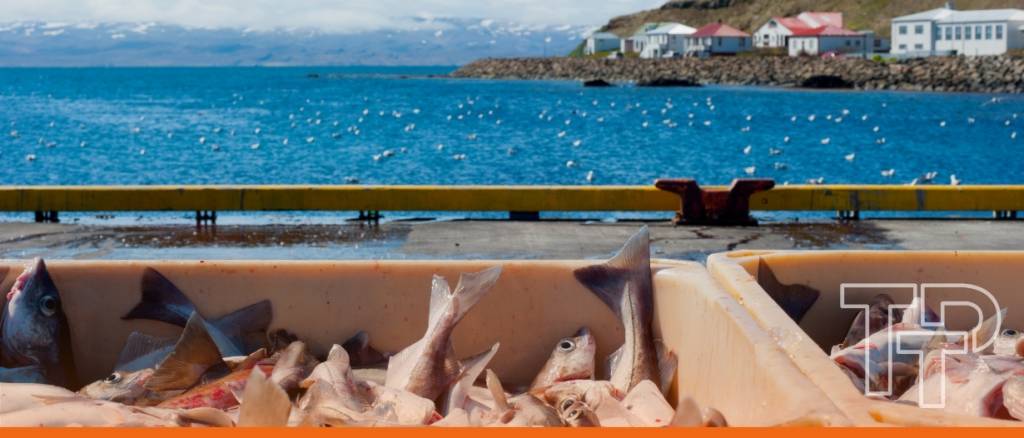
The agreement addresses harmful fishing subsidies that contribute to overfishing and the depletion of global marine resources. The agreement was adopted by consensus at the WTO’s 12th Ministerial Conference in June 2022.
It establishes rules that prohibit i) government support for illegal, unreported and unregulated fishing ii) subsidies for fishing already endangered stocks iii) subsidies for unregulated fishing on the high seas iv) the practice of reflagging finishing vessels to other jurisdictions.
The timing of this agreement proves critical as marine resources face pressure. In 2021, 35.5% of global fish stocks were classified as overfished, compared to just 10% in 1974. These measures directly address an estimated $22 billion in annual harmful subsidies out of approximately $35 billion in total subsidies to marine fishing activities worldwide.
By imposing these prohibitions, the WTO aims to help restore fish stocks, protect the livelihoods of fishing communities, and promote food security.
The implementation framework
A dedicated Committee on Fisheries Subsidies will be established to oversee implementation, maintain regular dialogue on members’ fishing practices and subsidies, and increase transparency on governments’ practices. This institutional framework will help ensure that members adhere to their commitments and make progress toward more sustainable fisheries management.
Additionally, ministers have established the WTO Fish Fund to provide developing economies and least-developed countries with technical assistance and capacity-building needed to implement the new obligations and manage their fisheries more sustainably. Seventeen members have pledged more than $18 million to this fund.
In early June, the Fund launched its first Call for Proposals, inviting eligible members who have ratified the Agreement to submit requests for project grants. These grants aim to support implementation efforts, with applications due by 9th October 2025.
The WTO Agreement and the High Seas Treaty bring complementary ocean protection
The WTO Fisheries Subsidies Agreement comes into implementation as another important ocean agreement – the High Seas Treaty gained momentum. In June 2025, more countries have ratified the High Seas Treaty, bringing the total to 50. A ratification of 60 countries is needed for it to take effect.
The WTO agreement addresses the economic side by prohibiting harmful fishing subsidies, while the High Seas Treaty tackles the legal side by establishing a framework to create protected areas in international waters. These two agreements work together to protect oceans in different but complementary ways.
At the border level, it also complements the European Ocean Pact implemented by the EU. This pact focuses on promoting a healthy blue economy while also supporting the well-being of people living in coastal areas.
Way forward: Turning policy into practice
While celebrating this milestone, Okonjo-Iweala emphasised the work ahead, calling for all remaining WTO members to complete their acceptances expeditiously. “One of my key aspirations is to see the Agreement ratified by all members by the 14th Ministerial Conference (scheduled for March 2026), where we will have the opportunity to celebrate this collective achievement together,” she added.
It’s important to note that only part of the agreement has taken effect. A second part, which concentrates on subsidies that produce overcapacity in the large-scale fishing industry, such as for building ships, has not been finalised.
The implementation process, ongoing technical negotiations, and broader adoption patterns will ultimately determine whether this agreement marks the beginning of a sustainable new chapter in marine resource management or merely will be an initial step in addressing the complex challenges facing global fisheries.
How this plays out, we will sea!