

On 19th November 2025, the United Nations Commission on International Trade Law (UNCITRAL) hosted a webinar on paperless trade and digitalisation. Silvia Sorescu, Policy Analyst, Project Lead, Trade Facilitation Trade Policy Division, Trade and Agriculture Directorate at OECD and Satya Prasad Sahu, Senior Trade Facilitation Specialist at the World Bank, discussed the legal, policy, and operational frameworks for cross-border trade in a digital world.
Even though digital trade has been discussed for over thirty years, paperless trade needs special focus because of its complexity and broad impact. It includes digitising trade documents and processes across the entire supply chain, including buying, shipping, and payment.
The discussions set the stage for the upcoming Colloquium on Digital Payments and Paperless Trade scheduled for January 2026 in Vienna. It is going to be an important event aimed at improving international cooperation and creating practical legal frameworks to support smoother and more reliable global trade.
Paperless trade today and tomorrow
Luca Castellani, Legal Officer at UNCITRAL Secretariat, opened the session by highlighting the need for clear legal frameworks that support complete trade digitalisation.
On this, Silvia Sorescu from OECD said, “Many supply chain disruptions in recent years have put a spotlight on the role of paperless trade, not only for visibility and resilience but also for managing daily challenges. At the same time, these disruptions have revealed a significant gap between what is technically possible and what is legally permitted or recognised across jurisdictions.”
These frameworks are important to ensure interoperability, transparency, and legal certainty across different countries.
Sorescu covered findings from the report, the Digitalisation of Trade Documents and Processes: Going Paperless Today, Going Paperless Tomorrow, during the webinar, shedding light on the transition from paper to digital and the framework around it.
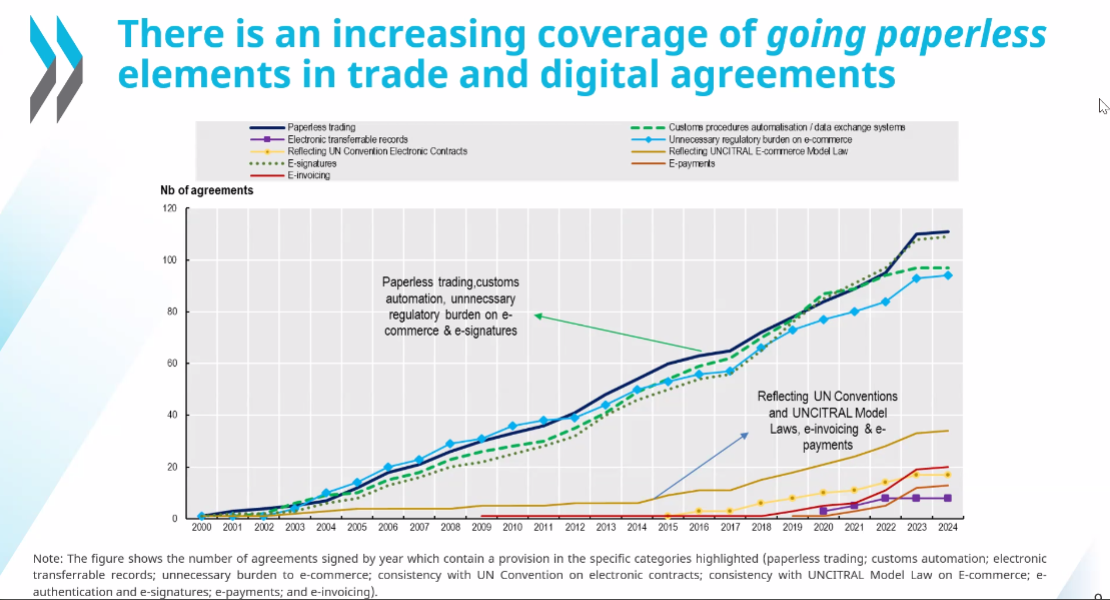
Sorescu identified three main pillars supporting paperless trade:
Electronic Transaction Frameworks. This includes laws on electronic contracts, e-signatures, digital identities, and electronic transferable records. These must be strong and harmonised to build trust and secure international legal recognition.
Digital Border Processes. Customs and other border agencies are adopting automated risk management, single window systems, and electronic payment of duties. However, cooperation among border agencies remains a global challenge, limiting the full benefits of digitalisation.
Cross-Border Data Exchange. Secure and efficient data flow across borders is crucial. Despite progress, regulatory complexity and increasing barriers related to data localisation and cybersecurity remain significant obstacles.
Sorescu shared data showing that improving border trade policies for paperless trade by 10% could increase global goods exports by up to 18%. Also, small changes to digital services trade rules, like easing data flow and electronic payment barriers, could boost global exports by as much as 37%.
World Bank’s DTRR database
“Paperless trade is not just at the border, not just with customs and regulatory agencies, but covers the entire trade process, including buying, shipping, and payment, ” stated Satya Prasad Sahu of the World Bank. He also introduced a new tool called the Digital Trade Regulatory Readiness (DTRR) database. This database helps assess how countries’ laws and regulations support digital trade.
The DTRR database covers regulatory frameworks in 121 countries, including enabling regulations like e-signatures and e-payments, trust-building regulations such as cybersecurity and data protection, and platform regulations addressing cross-border data rules and intermediary liability.
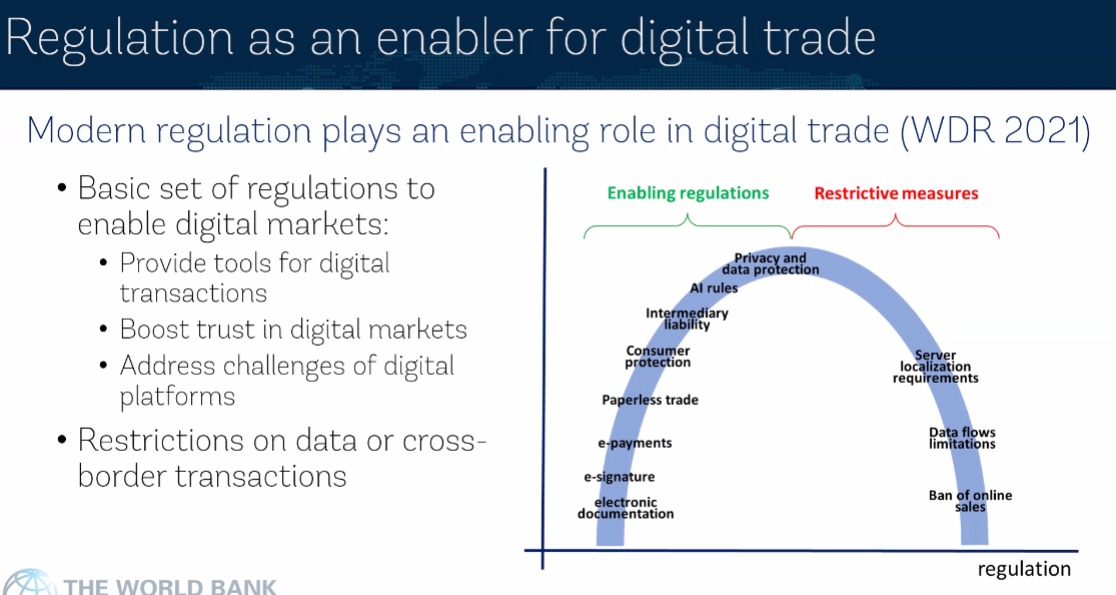
Along with that, Sahu talked about four essential requirements for effective paperless trade, which are i) legal recognition of electronic transactions. ii) interoperable technology standards iii) secure digital infrastructure for data exchange. iv) simplified digital processes for trade data flow.
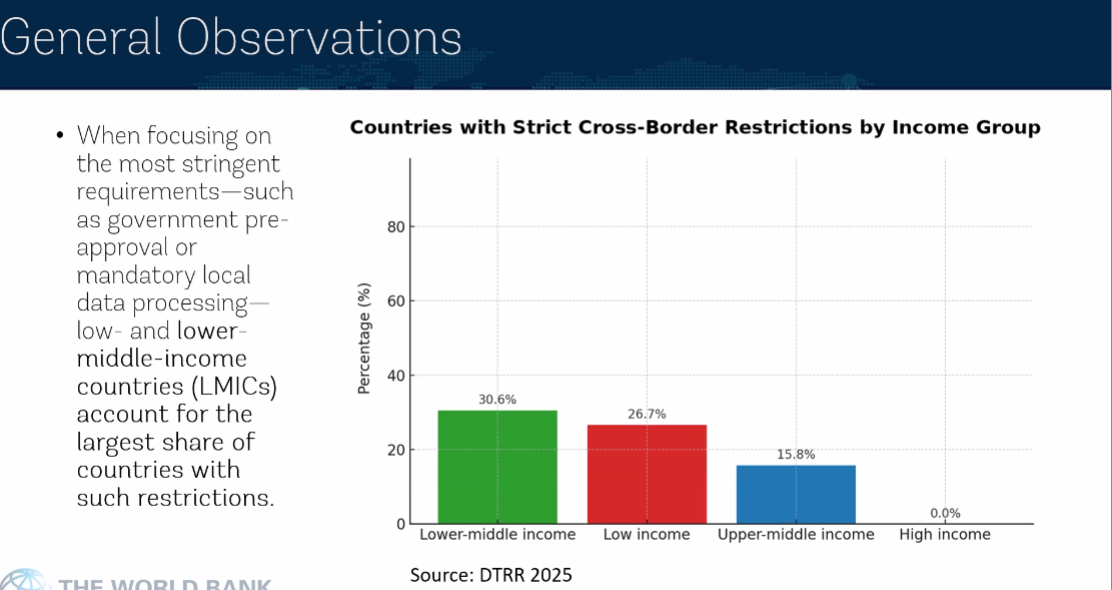
Sahu pointed out that legal readiness does not always translate into operational readiness. Many countries have enabling laws but lack practical implementation or widespread use of digital tools like electronic signatures. He also talked about how lower-income countries have more restrictive cross-border data measures, while high-income countries have fewer restrictions.
Building a fully digital global trade system
While progress has been made in digitising border processes and enabling electronic transactions, challenges remain in harmonising regulations, improving agency cooperation, and managing complex cross-border data governance.
The webinar made clear that paperless trade requires coordinated action at international, regional, and domestic levels.
Multilateral agreements like the WTO Trade Facilitation Agreement, bilateral and regional digital economy agreements, and private sector initiatives all play roles in shaping the landscape.