

John F. Kennedy once said, “Change is the law of life. And those who look only to the past or present are certain to miss the future.” This quote reflects today’s time, where we have transitioned from paper documents to digital trade documents, no longer a distant vision but an unfolding reality. The complexities of international trade demand speed, transparency, and reliability, qualities that legacy systems struggle to deliver.
On this note, Enigio organised a webinar on “What it takes to digitalise in trade: 3 Success stories” on 8th December, moderated by Merisa Lee Gimpel, founder of Digital Trade Works. Enigio provides secure digital trade document platforms that enable seamless, legally compliant electronic exchange of trade documents across global supply chains.
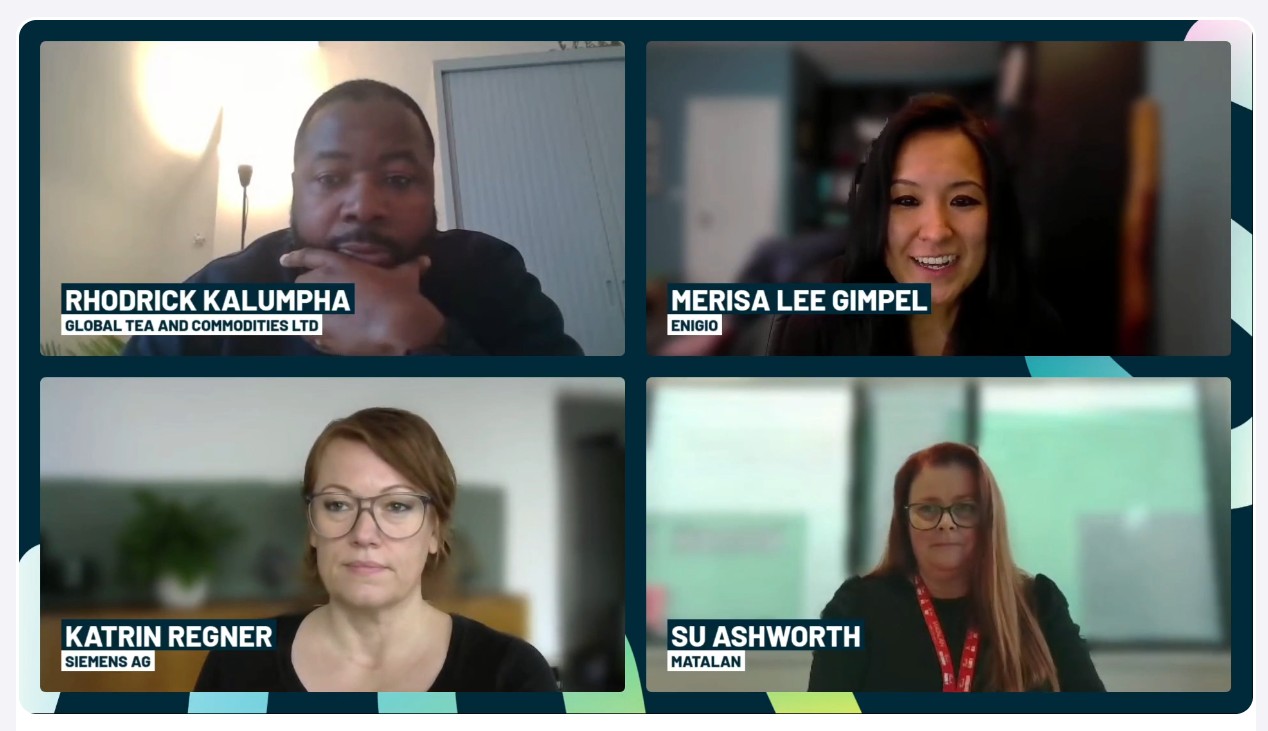
The webinar featured industry leaders, including Rhodrick Kalumpha from Global Tea and Commodities, Susan Ashworth from Matalan, and Katrin Regner from Siemens, who shared their firsthand experiences, challenges, and lessons learned in adopting digital trade documents.
The pre-digital years were a paper-heavy burden; what changed?
Rhodrick Kalumpha from Global Tea and Commodities recalled the pre-pandemic era as a time when everything was paper, with bills of lading and shipping documents physically couriered and stored, often turning his living room into a paper factory. Susan Ashworth also highlighted the immense workload her team handles each year, processing over 15,000 bills of lading and 1,000 documentary collections.
Then it changed, but why? The answer is – for faster and reliable processes and cost savings.
Katrin noted that digitalisation is embedded in the company’s culture as it transitions from an industrial to a tech company. She stressed that “We want to make trade finance fit for the future. It’s hard to convince young talent to join when the whole world is embracing AI and digital tools, yet we’re still printing out 40-page packing lists tenfold. Digitalisation is essential to attract the next generation.”
Starting with the complexity to simplify the process
The panellists unanimously agreed on the value of tackling the most complex use cases early to maximise learning and impact. Katrin shared Siemens’ decision to start with digital bills of lading under letters of credit, a notoriously complicated multi-party process. She explained that “We deliberately chose to dive into the most difficult scenario: digital bills of lading under letters of credit. If this works, it paves the way for simpler documents to be digitised more easily. It was a strategic decision to start with the hardest use case.”
Ashworth described Matalan’s approach of hitting the ground running by digitising high-volume promissory notes aligned with the enactment of the Electronic Trade Documents Act in 2023. This pilot saved three days in acceptance time, a significant efficiency gain. Rhodrick focused on transactions that would unlock working capital quickly, such as term factoring, choosing use cases with clear financial benefits to justify the change. He noted that “Our main criterion was speed. We chose transactions that would unlock cash quickly, helping our working capital. This practical approach made the business case easier to justify.”
He also emphasised the importance of risk mitigation, stating that “The key was to have technology that mitigated all the risks we faced with paper documents. Ensuring reliability and compliance was crucial to gain internal trust.”
“Digitising documents simplified processes, sped up workflows, and gave us better visibility. We reduced over half a million sheets of paper annually in trade finance and cut detention and mortgage costs,” added Susan.
Externally, the challenge was greater due to the complex ecosystem involving banks, shipping lines, customs, and other parties. Katrin described the multi-party environment as one of the highest barriers, requiring ongoing dialogue to address legal uncertainties and local law adoption of model laws like the Model Law on Electronic Transferable Records (MLETR). She emphasised the fact that “We have to talk about digitalisation, speak about what is possible, and take existing doubts seriously.”
Susan and Rhodrick emphasised this collaborative approach, sharing success stories of working with banks in India, Africa, and Europe, as well as shipping lines like Maersk. Rhodrick noted that the biggest hurdle was convincing banks in Africa, where legal compliance concerns initially caused hesitation. “We had to work with the bank in Africa and the banks here to ensure open communication,” he said.
Pilot successes: Proof of concept to live transactions
The panellists discussed their successful pilots for digital trade. Siemens’ proof of concept showcased the full digital issuance and transfer of bills of lading within 15 minutes, involving all parties from issuing banks to freight forwarders. Katrin found the experience “really fantastic,” as it provided clear audit trails and ownership visibility, alleviating concerns about digital documents replacing physical ones.
Matalan’s pilots demonstrated significant time savings, cutting processing time for digital promissory notes from three days to under 24 hours.
Susan emphasised the importance of quick wins to build confidence and momentum: “We onboard suppliers who are now fully committed to digital and will not return to paper.”
Global Tea reported that since starting digital trade in March, about 25% of their transactions are digital, with a goal of 75% by next year. Rhodrick described the platform as user-friendly and interoperable across continents, enabling seamless document exchange from Africa to the UK.
Tackling legal issues and achieving milestones
Legal and compliance risks are big concerns, particularly in areas where there are no clear laws recognising digital originals.
Katrin added that “In Germany and the UK, laws already accommodate digital documents, giving us a strong foundation. Where laws are lacking, bilateral agreements can bridge the gap temporarily.”
The panellists agreed that waiting for perfect legal clarity could stall progress for years. Katrin urged, “We cannot wait until everything is perfectly regulated, or we risk delaying progress by 15 years. A pioneering spirit is needed to move forward now.”
They outlined ambitious plans to expand digital trade across more corridors and document types. Matalan aims to extend digital transactions from India and China to neighbouring countries like Pakistan, Vietnam, and Bangladesh, anticipating that legal reforms will accelerate adoption.
Global Tea is preparing to digitise letters of credit fully, recognising this as a critical milestone. Rhodrick emphasised the generational shift: “The new generation of trade finance experts will not tolerate paper-based processes.”
Siemens is organising its first real letter of credit transactions with digital documents, confident that this will establish a sustainable digital trade finance model.
Words of wisdom: Digital trade is a team sport
The transition to digital trade documents is complex, requiring collaboration across finance, logistics, banks, shipping lines, and regulators. The panellists concluded the session with candid advice for companies embarking on their digital trade journeys – i) start small but think big ii) be patient iii) focus on cost savings and efficiency.
The paper we have had for long enough. The future is digital. The momentum is building, and with continued pioneering efforts, digital trade documents will soon become the norm rather than the exception.