

The shadow of a liquidity crisis looms over India’s corporates in 2025, as they confront an alarming surge in payment delays that threatens financial stability.
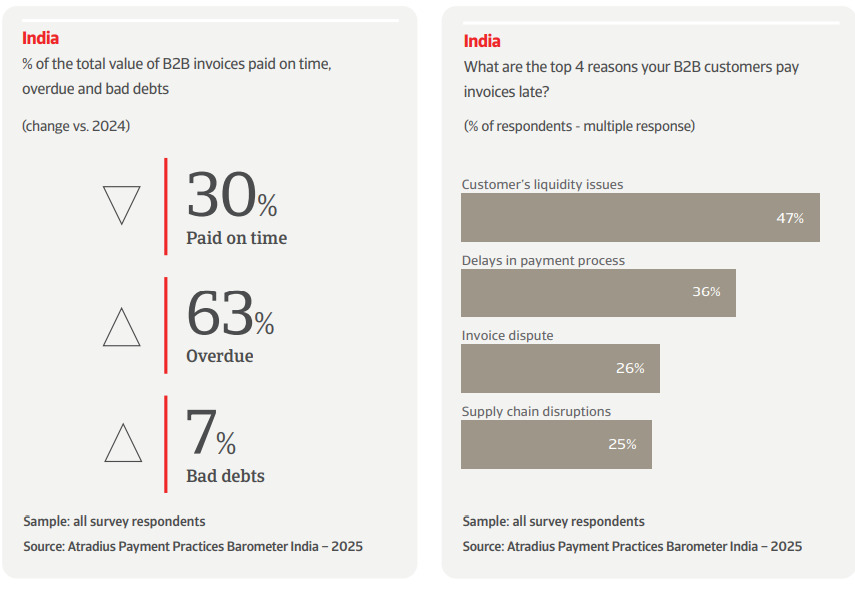
Nearly 3 in 5 Indian firms now report worsening customer payment behaviour, according to the Atradius Payment Practices Barometer report. Overdue invoices affect an average of 63% of all credit-based B2B sales, while bad debts have surged to 7% of total invoices, translating to billions in lost revenue, directly eroding profit margins across the economy.
The growing payment problem
The annual report highlights that payment reliability, once the basis of business trust, has now become a systemic risk in India. The main issues are customer liquidity constraints (47%), followed by delays in payment processes (36%), invoice disputes (26%), and supply chain disruptions (25%).

Additionally, 50% of all B2B sales in India are made on credit, with an average payment term of 52 days.

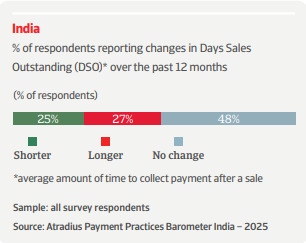
The working capital scenario reveals businesses are nearly evenly split between those seeing stable payment collection timelines (48%) and those experiencing significant fluctuations (52%).
However, a surprising element is how Indian companies are responding to these challenges. While a conventional approach might suggest tightening credit terms during periods of increased risk, most businesses have actually relaxed their payment policies, offering longer terms to support B2B customer relationships through difficult times.
Sector breakdown shows uneven impact
The payment crisis manifests differently across key sectors of the Indian economy.
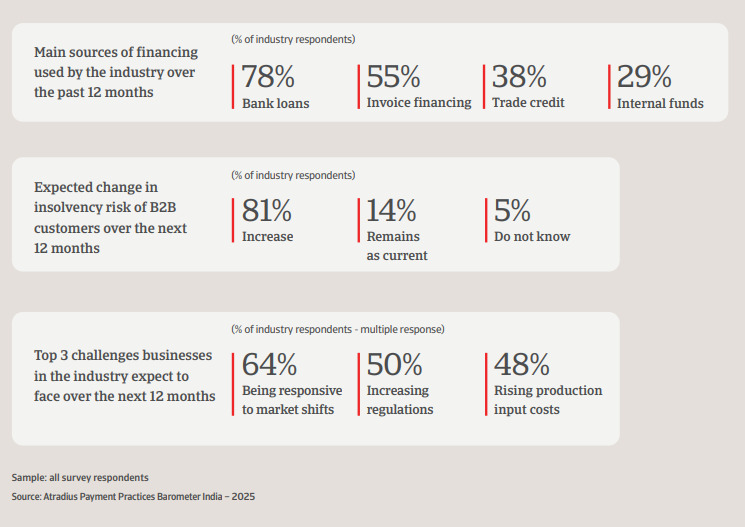
India’s agri-food is the most cautious approach, with only 44% of sales done on credit, which is well below the national average. Despite this conservative stance, overdue payments affect 60% of invoices. Additionally, 81% of agri-food businesses expect customer insolvencies to increase. This is also the highest percentage across all sectors surveyed by Atradius.

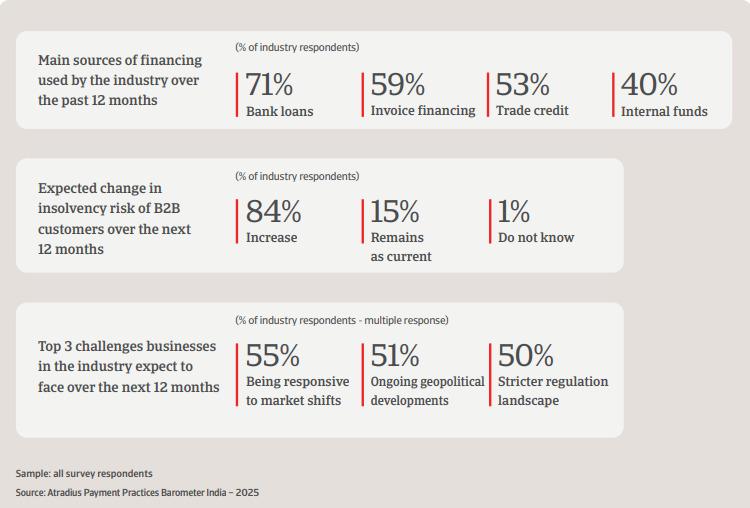
The chemical industry shows a completely opposite picture. With 52% of transactions on credit and payment terms stretching to nearly 60 days, the longest in any sector, chemical companies have adopted the most liberal credit policies. However, this generosity comes at a price. Over 70% of invoices now face payment delays, with settlements arriving more than a month past due.

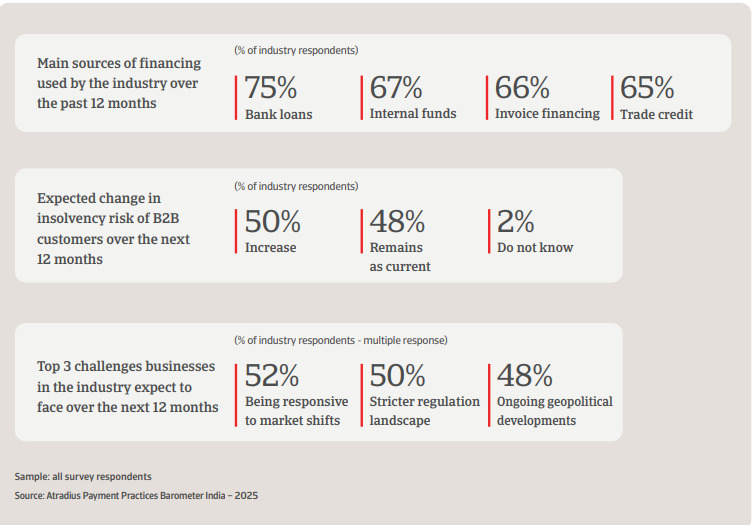
Most concerning is the textile and clothing sector, where fierce competition has driven 53% of sales to credit terms. While overdue invoices (56%) track near the national average, bad debt write-offs have surged to an alarming 10%, the highest across all sectors and a direct threat to profitability in an industry already characterised by razor-thin margins.

Indian businesses diversifying their financing options
As payment delays stretch corporate balance sheets to breaking point, Indian businesses have started to adopt diversified financial strategies.
Bank financing continues to dominate, with 3 in 4 businesses leveraging institutional credit to bridge widening cash flow gaps. Apart from this, invoice financing has surfaced as a primary alternative, adopted by 60% of surveyed companies. It offers immediate liquidity without adding a debt burden.

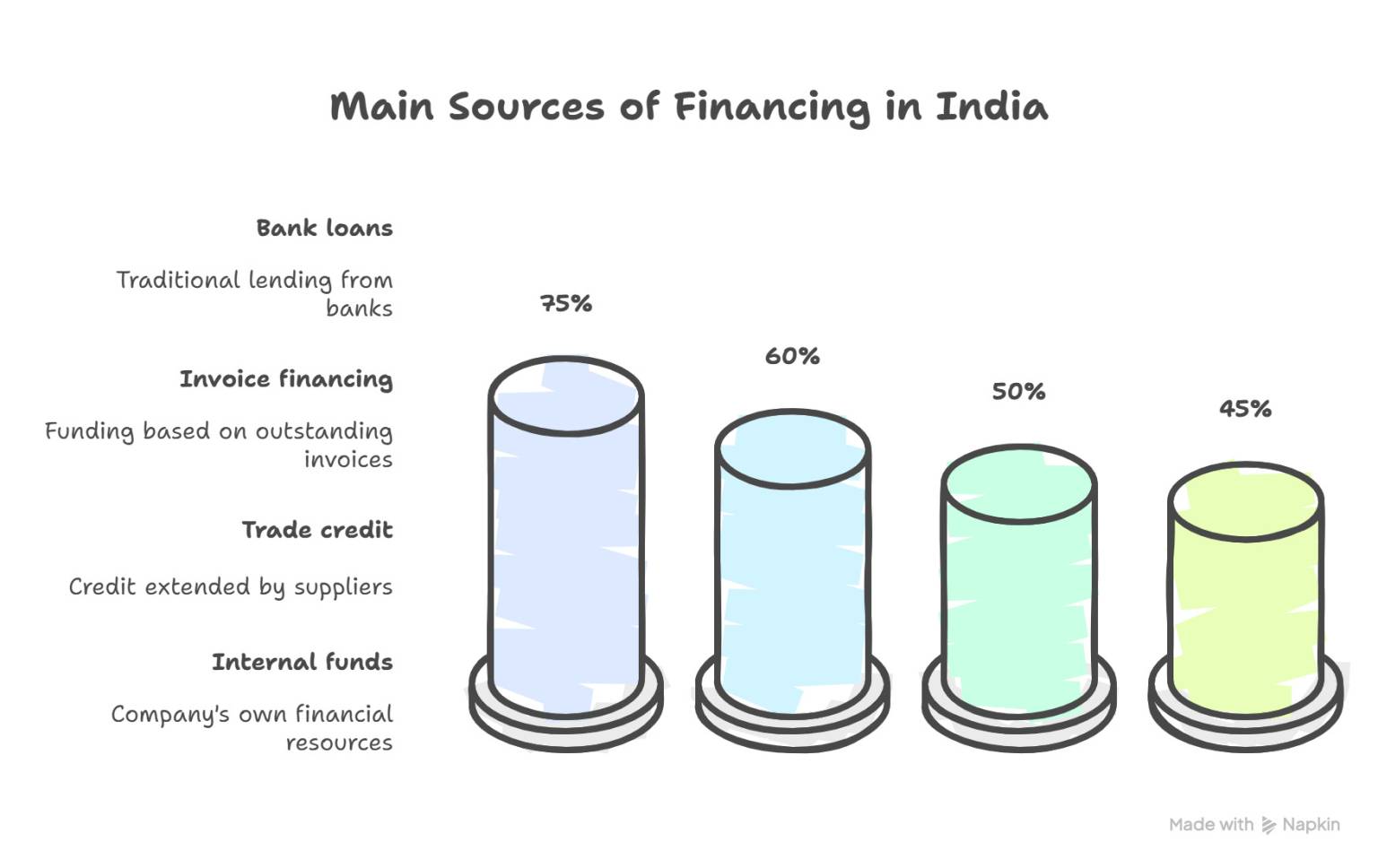
Trade credit ranks third with 50% of businesses actively managing their supplier credit as part of their liquidity strategy. Internal funding also accounts for 45% of businesses using their own resources.
The road ahead
The outlook for India’s B2B credit space remains troubling. Nearly 72% of companies expect customer insolvencies to increase in the coming months. These payment challenges require businesses to face a fundamental strategic choice: i) adapt to this new reality with innovative credit management approaches, or ii) risk being swept away by unpaid invoices that show no signs of receding. Overall, the path forward requires a delicate balance between maintaining customer relationships and protecting financial stability.
The Atradius Payment Practices Barometer for India 2025 surveyed 300 companies across the agri-food, chemicals, and textile/clothing sectors during the second half of Q2 2025. Read the full report here.