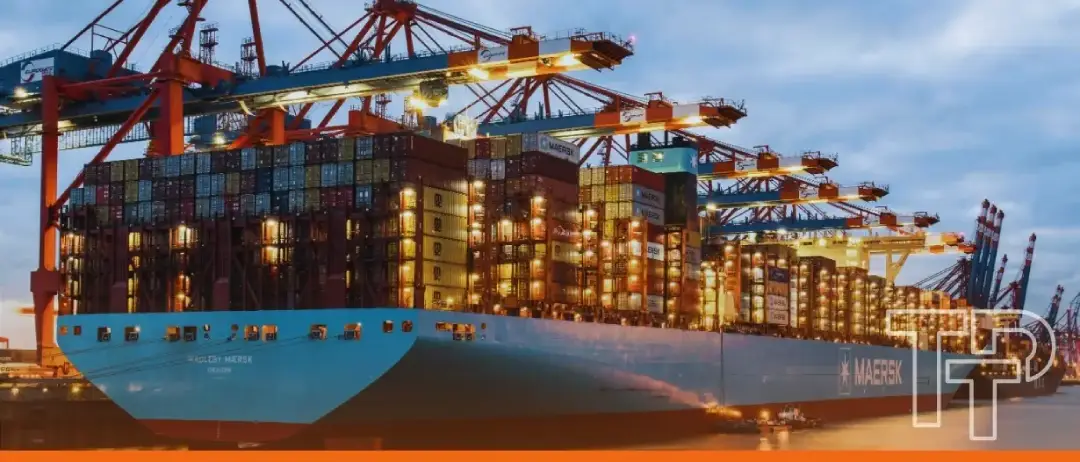

A.P. Moller-Maersk has completed its first trial shipment from Japan to Europe via the Trans-Caspian International Transport Route, commonly known as the Middle Corridor.
The shipment originated in Japan and transited through China, Kazakhstan, Azerbaijan, Georgia, and Turkey before reaching its final destination in Europe.
The Middle Corridor provides an alternative to traditional routes, giving shippers diversified transportation options, something that has become increasingly desirable over the last few years as headline-worthy shocks, like those in the Suez canal or the Red Sea, have caused costly delays on multiple main corridor routes.
By bypassing Russia, the Middle Corridor offers a land-sea hybrid transit option that reduces dependence on existing rail and maritime routes between Asia and Europe.
Maersk’s Central Asia & Caucasus Region Business Development Head, Irakli Danelia, said, “This milestone reinforces our commitment to enhancing our service offerings and presence in the Japanese market through the Middle Corridor”
Minyoung Kim, Head of Cargo Risk Management & Cross Border Transportation at Maersk North East Asia, said, “The Middle Corridor presents an invaluable opportunity for both South Korean and Japanese companies exporting to Europe, offering a reliable and efficient logistics solution that enhances supply chain resilience and reduces transit times
Middle Corridor’s role in global trade
The Middle Corridor is gaining attention as an alternative trade route between China and Europe. While historically considered secondary to the Northern Corridor (via Russia) and the Southern Corridor (via the Suez Canal), increased investments and infrastructure developments are improving its viability.
A report by the World Bank, “The Middle Trade and Transport Corridor: Policies and Investments to Triple Freight Volumes and Halve Travel Time by 2030,” outlines necessary policy and infrastructure upgrades to enhance efficiency.
The current transit times range from 10 to 15 days, with efforts underway to improve reliability and cost-effectiveness.
With Maersk having now successfully completed a trial shipment along the route, the Middle Corridor may start to have a more pronounced role in supply chains that are becoming increasingly diversified.
Further assessments will be needed to evaluate long-term feasibility, cost competitiveness, and operational scalability for large-scale shipments.