

In 138 BC, the ancient Silk Road was established to expand trade across Asia, the Middle East, Europe, and Africa. Since then, global trade has continued to evolve into the 21st Century. Digitalisation has penetrated every corner of the world; however, outdated, paper-based processes continue to hinder transactions, inflate costs, and create barriers for small and medium-sized enterprises (SMEs) in global trade.
As a solution, the International Chamber of Commerce United Kingdom (ICC UK) has launched its latest report – “Next-Generation Trade Corridors: Building Digital Trade Superhighways”, which focuses on modernising these trades with interoperable digital systems and common data standards, which will deliver the most significant efficiency gains.
Rethinking trade in a digital world
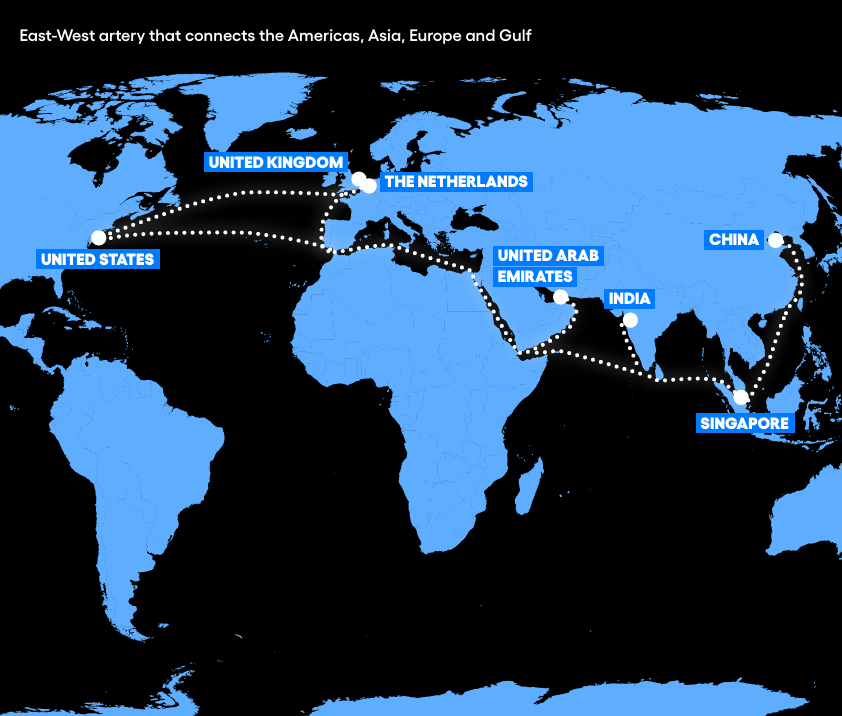
This report aims to rethink the movement of goods, data, and finance across borders in the digital age, linking key trade and finance centres such as China, India, Singapore, the UAE, the Netherlands, the UK, and the US.
The report estimates that digitalising key trade corridors could unlock over $10 trillion in economic value, both cutting costs and accelerating trade.
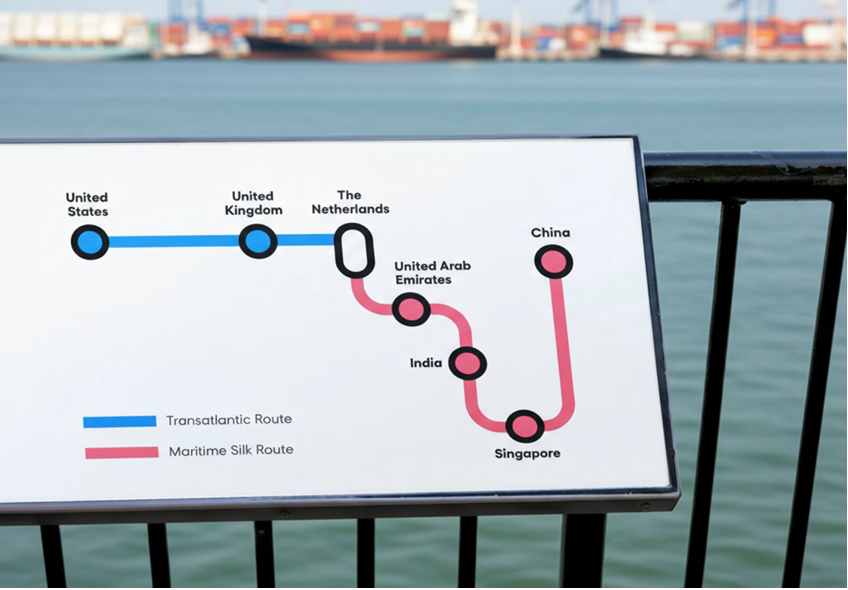
“There are thousands of trade corridors around the world, but just like with road networks, you wouldn’t upgrade every route at once. Our focus initially is on the major trade superhighways, the arteries of the global economy, such as the transatlantic and Europe–Asia routes, where digitalisation will deliver the biggest gains,” said Chris Southworth, Secretary General of ICC United Kingdom.
“Digital superhighways are the future. By connecting the world’s key trade and finance hubs through shared digital infrastructure, we can dramatically improve speed, transparency and inclusion in global trade by creating an interoperable network that will uplift all economies. Digitising trade is about removing bureaucracy so that goods, data and finance can move more cheaply, quickly and simply across borders,” he added.
For example, tools like electronic bills of lading (eBLs) and digital identity checks have been reported to reduce costs by up to 70%. What used to take weeks can now happen in hours or even minutes. Additionally, technologies like blockchain and distributed ledgers make trade records more transparent and trustworthy, reducing fraud risks. Digital platforms also help SMEs get access to financing, with some stakeholders predicting that these will unlock as much as $100 billion in loans, which would be a game-changer for smaller businesses.
However, even with all this promise, the most significant hurdles aren’t technological but about mindset and coordination.
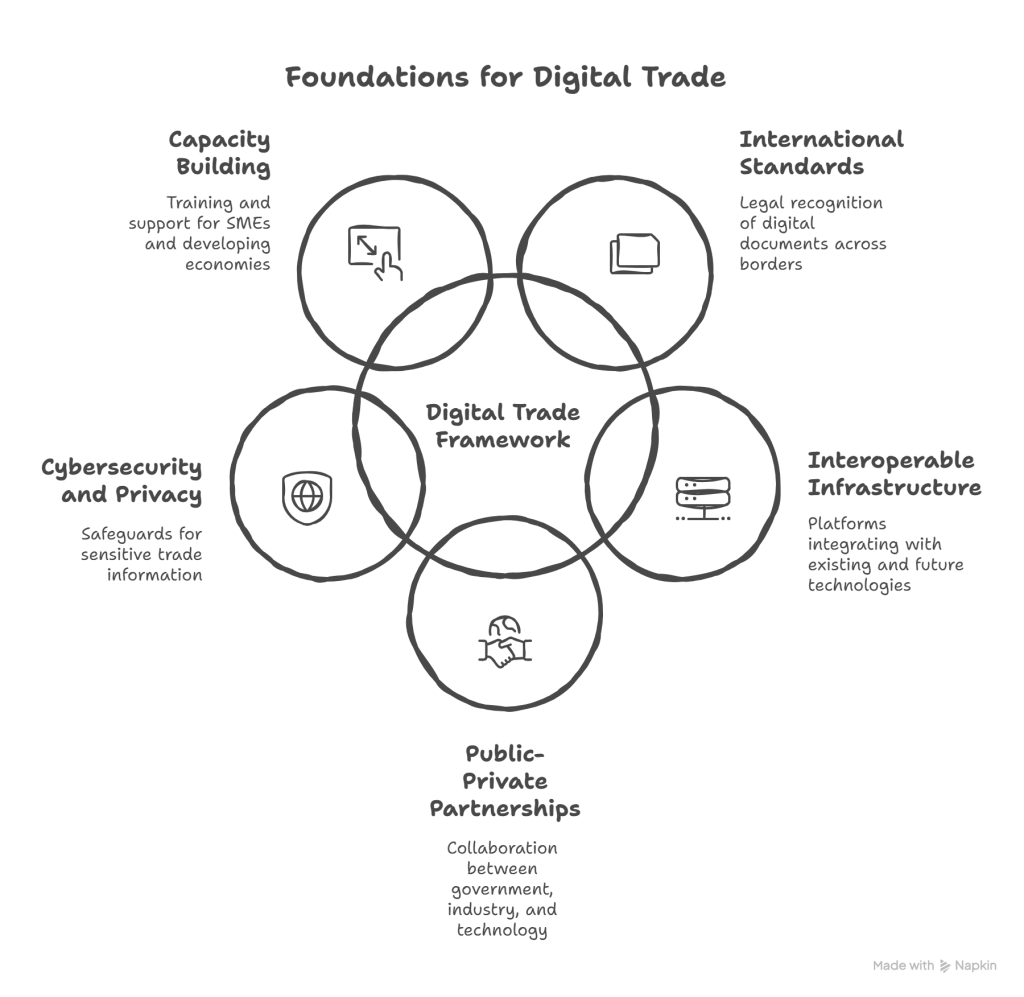
A framework for action
The report stresses that policymakers, regulators, and business leaders need to focus their efforts on the busiest trade routes first, where digitalisation can make the most difference. They also need to connect logistics and finance hubs by developing open data standards and APIs that allow different systems to work together smoothly. The key recommendations are as follows.