
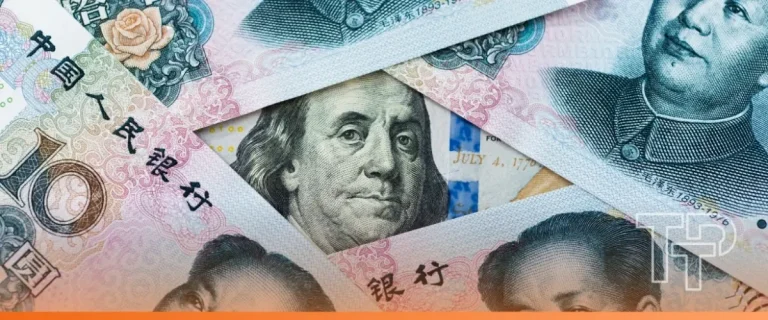
China authorises Renminbi clearing network across 19 African countries, deepening Yuan’s role in African trade
China authorises Renminbi clearing network across 19 African countries, deepening Yuan’s role in African trade
Live Updates
China has authorised Standard Bank Group Ltd. and Industrial and Commercial Bank of China (ICBC) to establish a Renminbi (RMB) clearing network spanning 19 African countries.
This initiative is an expansion of Beijing’s efforts to embed the Yuan more deeply into one of its fastest-growing trading relationships, reflecting a strategic push to internationalise its currency amid shifting global economic dynamics.
The People’s Bank of China’s approval enables businesses and financial institutions across much of Africa to access China’s domestic financial infrastructure directly. This allows cross-border transactions to be settled in Renminbi without relying on intermediary currencies such as the U.S. dollar.
The two lenders, Standard Bank and ICBC, will jointly operate as the Renminbi Clearing Bank of Africa, representing the continent’s largest coordinated Yuan-clearing initiative to date.
This development facilitates smoother, faster, and more cost-effective trade settlements between China and African countries by eliminating the need for currency conversions through third-party currencies, which often add complexity and expense.
China’s broader Yuan internationalisation campaign
The move is part of Beijing’s broader campaign to internationalise the Yuan. Geopolitical tensions and changing trade patterns are pushing emerging markets to reduce their dependence on the US dollar for payments.
China is increasing its financial infrastructure, including the Cross-Border Interbank Payment System (CIPS), currency swap agreements, and offshore Yuan clearing centers, while the dollar continues to be the main global settlement currency.
Africa has become a crucial test case for this strategy, given its growing economic ties with China and increasing demand for direct Renminbi settlement.
Strengthening China-Africa trade relations
China remains Africa’s largest trading partner, with bilateral trade rising nearly 18% in the previous year, according to Chinese customs data. Beijing has also eliminated tariffs on imports from 53 African countries, further strengthening commercial ties and increasing the demand for Renminbi-denominated transactions.
Standard Bank, Africa’s largest lender by assets, received approval to join CIPS in late 2025.
In the first four months on the network, the bank processed around $500 million in Yuan transactions, mainly from trade finance.
The expansion aligns with a clear trend of African businesses increasingly turning to Asian suppliers.
Standard Bank’s latest Africa Trade Barometer found that 35% of companies across ten African markets now identify Asia as their preferred trading partner, up from 24% a year earlier. China is cited as the leading source of imports by the majority of respondents.
This trend underscores the growing economic integration between Africa and Asia, with China playing a central role.
Implications for global finance and African markets
While the new clearing arrangement is unlikely to challenge the U.S. dollar’s dominance in global finance in the near term, it offers tangible benefits to African companies. These include lower transaction costs, shortened settlement times, and enhanced access to Chinese capital markets.
Additionally, the initiative strengthens China’s long-term objective of promoting the Yuan as a widely used trade and reserve currency across emerging markets, particularly in regions where Beijing has established itself as a dominant investor and infrastructure partner.